Court Rules Road Expansion Near Mahakal Temple Does Not Violate Religious Rights or Constitutionality, Emphasizing Compliance with Legal Procedures and Urban Development Needs
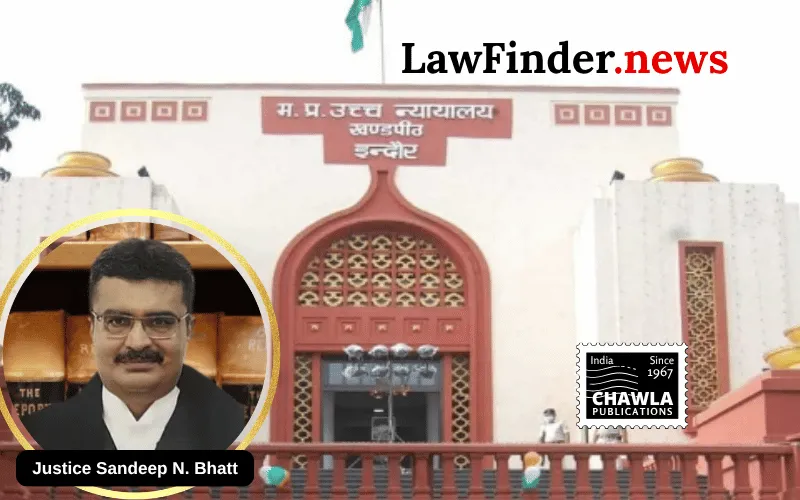
Indore, September 9, 2026 — In a significant judgment concerning the balance between urban development and religious rights, the Madhya Pradesh High Court dismissed writ petitions filed by the Shahi Masjid Waqf Panchayat Mochiyaan challenging the Municipal Corporation’s decision to demolish a portion of the mosque for road widening under the Ujjain Development Plan, 2035. The court, presided over by Justice Sandeep N. Bhatt, held that the Corporation’s action was lawful, non-arbitrary, and in the larger public interest, especially considering the upcoming Simhastha Kumbh of 2028, which will see an influx of millions of devotees to Ujjain.
The petitioners had contended that the proposed demolition, which involved part of the mosque’s prayer hall (Jamat Khana), a 120-foot minaret, and the Mazhar Chouk Shahi, violated their fundamental rights under Articles 14 (Equality before Law), 25 (Freedom of Religion), 26 (Management of Religious Affairs), and 300A (Right to Property) of the Indian Constitution. They argued that the mosque is an ancient registered Waqf property and that the demolition would disrupt religious practice and offend constitutional protections granted to places of worship.
However, the Court found that the Municipal Corporation had followed due legal process in issuing notices under Section 305 of the Madhya Pradesh Municipal Corporation Act, 1956. The petitioners were granted hearings and opportunities to present objections, which were duly considered before the final order was passed. The Court referred to several precedents, including the Supreme Court’s ruling in In Re Manoj Tiberwal Akash (2024), emphasizing that “justice through bulldozers” without due process is unacceptable, but that lawful, procedural action in the public interest is permissible.
The Court acknowledged the religious significance of the mosque but underscored that religious structures are not immune from acquisition or partial demolition in extraordinary circumstances involving urban development and public safety. It cited the judgment of the Gujarat High Court in Gulam Kadar Ahmadbhai Menon vs. Surat Municipal Corporation (AIR 1998 Gujarat 234), which holds that places of worship with essential religious significance deserve protection, but other structures may be subject to acquisition or removal when justified by larger public needs.
Notably, the Court also dismissed the petitioners' claims of discrimination, stating that the Corporation had acted uniformly by removing encroachments and obstructing structures of various religious institutions, including 10 temples and 1 mosque along the same road. The Court found no evidence of bias or arbitrariness violating Article 14.
The Court rejected alternative suggestions by the petitioners to widen the road using adjacent gardens or vacant lands, deeming them impractical given the road’s existing layout and urban conditions. It further affirmed that compensation mechanisms and options like Floor Area Ratio (FAR) transfers were offered in accordance with the law, negating claims under Article 300A.
In its detailed order, the Court reminded that the right to practice religion under Article 25 is personal and can be exercised anywhere, and acquisition or demolition of a particular religious site does not extinguish this right. The Court also emphasized the necessity of widening the road connecting major religious sites like the Mahakaleshwar Temple to manage the heavy traffic during religious festivals and large-scale events such as Simhastha Kumbh.
Ultimately, the High Court held that the Municipal Corporation’s actions were justified, lawful, and balanced the constitutional rights of the petitioners with the imperatives of public safety, urban planning, and development. The writ petitions were dismissed, allowing the road widening project to proceed.
This judgment reinforces the principle that while religious structures must be respected, they do not enjoy absolute immunity from statutory actions aimed at public welfare, provided due process and principles of natural justice are observed.
Summary of Key Legal Points:
1. Constitutional Rights vs Public Interest: The Court balanced the petitioners’ fundamental rights with the public interest of road widening necessary for traffic management and safety, especially in view of major religious congregations.
2. Due Process and Natural Justice: The Corporation complied with statutory procedures by issuing valid notices, conducting hearings, considering objections, and providing compensation options.
3. No Arbitrary or Discriminatory Action: The authority acted uniformly regarding religious and non-religious structures, negating claims of discrimination under Article 14.
4. Religious Structures Not Absolutely Immune: While places of worship enjoy protection, they may be acquired or partially demolished in extraordinary situations following law and procedure.
5. Right to Practice Religion is Personal: The right under Article 25 is exercisable anywhere; demolition of a particular site does not extinguish religious freedom.
6. Legal Precedents: The judgment relied on Supreme Court and High Court decisions that emphasize rule of law, procedural safeguards, and balancing of competing rights.
This decision provides clarity on the application of constitutional protections to religious properties vis-à-vis urban development imperatives and will guide future cases involving similar conflicts between religious rights and public infrastructure projects.
Bottom Line:
Constitutional Law - Action of local authorities to demolish a portion of a religious structure for public interest such as road widening does not violate Articles 14, 25, 26, or 300A of the Constitution if due process, natural justice, and public interest are observed.
Statutory provision(s):
Articles 14, 25, 26, 300A of the Constitution of India; Sections 305, 322, 323, 387 of the Madhya Pradesh Municipal Corporation Act, 1956; Madhya Pradesh Bhumi Vikas Rules, 2012; Waqf Act, 1995.