Court rules notarized agreements cannot replace formal divorce or marriage under Hindu law; appellant denied pension claims
In a significant ruling, the Madhya Pradesh High Court dismissed an appeal by Ram Kripal Singh, who sought family pension benefits following the death of Smt. Suman Bai, a government employee. The court reaffirmed the necessity of adhering to the procedural requirements of the Hindu Marriage Act, 1955, ruling that marital relationships under Hindu law cannot be dissolved or established through notarized agreements.
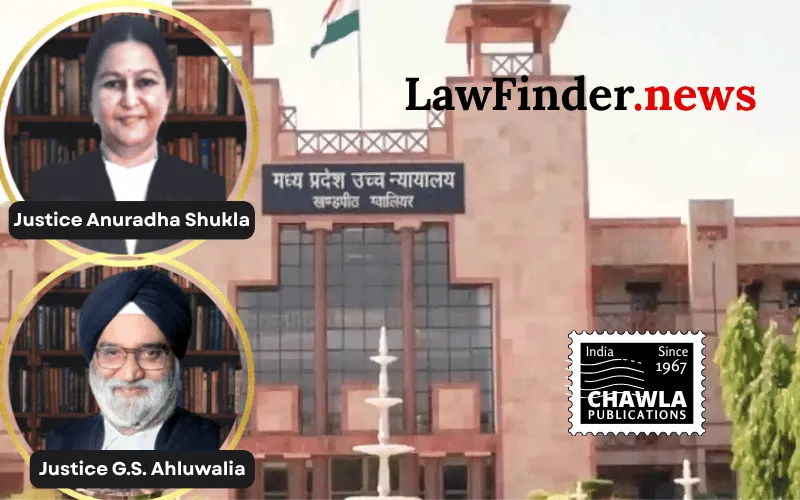
The division bench comprising Justices G. S. Ahluwalia and Anuradha Shukla delivered the judgment on July 1, 2026, in response to the appellant's challenge against a single judge's order that previously rejected his claims. Singh contended that he was married to the deceased employee, Smt. Suman Bai, following her alleged notarized divorce from her first husband, Kok Singh. However, the court found no legal basis for his claims due to the absence of a formal decree of divorce under Section 13 of the Hindu Marriage Act.
The court further emphasized that Hindu marriage is not merely a contractual agreement, thus cannot be validated through notarized documents. It noted that Singh failed to prove the existence of any customary practice that recognizes marriage by notarized agreement. Moreover, the court highlighted that Smt. Suman Bai's service records consistently identified Kok Singh as her husband, undermining Singh's claims.
Despite Singh's assertion of a long-standing relationship with Smt. Suman Bai, the court clarified that long cohabitation cannot presume a valid marriage if it violates the conditions of Section 5 of the Hindu Marriage Act. The ruling reiterated that any marriage contravening these conditions is void under Section 11.
The judgment underscores the court's commitment to upholding the statutory requirements for marriage and divorce under Hindu law, dismissing practices that bypass these legal frameworks. The decision serves as a reminder of the importance of formal legal processes in matrimonial matters and the limitations of informal agreements in claiming legal entitlements.
Bottom line:-
Hindu Marriage Act - Marriage under Hindu law cannot be solemnized through a notarized agreement of marriage, as marriage is not a contract under Hindu law. Divorce cannot be effected merely by executing a notarized agreement of divorce; a decree of divorce under Section 13 of the Hindu Marriage Act is mandatory.
Statutory provision(s): Hindu Marriage Act, 1955 Sections 5, 11, 13, 27.