Court holds arbitral tribunal retains jurisdiction post-dissolution to settle partners' rights and assets; sets aside lower court's interference with awards governing winding-up and asset distribution.
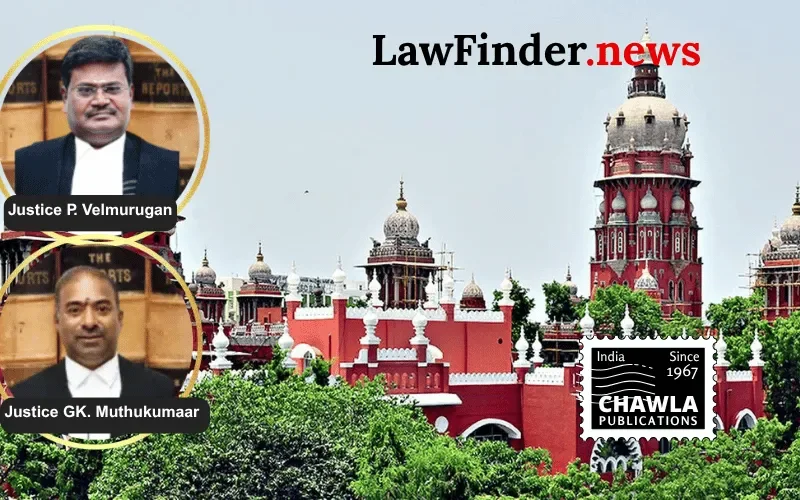
In a significant ruling on October 28, 2026, the Madras High Court (Division Bench) delivered a comprehensive judgment in a high-profile dispute involving the dissolution of the partnership firm behind the Tamil daily newspaper "Dinamalar." The bench, comprising Justices P. Velmurugan and G.K. Muthukumaar, addressed a series of seventeen appeals challenging the interference by a Single Judge with three interim arbitral awards passed by a tribunal constituted to resolve intra-family partnership disputes.
Background:
The partnership firm M/s Dinamalar was established in 1951 by late T.V. Ramasubbiyer, subsequently managed by his five sons who were equal partners holding 20% shares each under a 1997 partnership deed. The firm operated through ten editions in various cities such as Chennai, Madurai, Coimbatore, Salem, and others.
Over the years, disputes arose among the partners related to management, accounts, assets, advertisement revenues, and use of the "Dinamalar" trademark. Litigation ensued, culminating in a 2007 order referring all disputes to arbitration. The arbitral tribunal framed 45 issues and conducted detailed proceedings.
Key Developments and Arbitration:
During arbitration, one partner, R. Sathyamurthy, issued a notice in 2012 to dissolve the partnership under the "partnership at will" clause and Indian Partnership Act Section 43. The tribunal held it had jurisdiction to consider dissolution, a decision upheld by the courts including the Supreme Court. The tribunal issued three interim awards: the first (2013) confirming equal shares; the second (2014) declaring dissolution effective from the notice date; and the third (2018) dealing with winding up, asset distribution, goodwill, and trademark issues.
Contested Issues:
The Single Judge had upheld the first award but set aside the consequential directions in the second award and the entire third award, citing concerns about jurisdiction, failure to properly invite claims from third parties, and valuation inadequacies. The tribunal was accused of exceeding jurisdiction by acting as a liquidator and deciding matters affecting third parties.
High Court Findings:
The Division Bench restored the second and third interim awards, emphasizing that:
1. Jurisdiction Continuity Post-Dissolution: The tribunal did not become functus officio upon dissolution. Dissolution ends the partnership relationship but does not end the need to settle accounts, assets, and rights inter se among partners. The tribunal could continue to adjudicate consequential disputes arising from the dissolution as part of the original reference.
2. Distinction Between Partnership Dissolution and Company Winding Up: Unlike companies, partnership firms do not require court-supervised winding up. The tribunal's role in settling accounts and distributing assets was within its jurisdiction and did not equate to statutory liquidation.
3. Absence of Third-Party Claims: Notices of dissolution were published in the official gazette and newspaper, and no third party came forward claiming interest. Therefore, the tribunal's decisions did not adversely affect third-party rights or involve rights in rem, but were limited to rights in personam between partners.
4. Limited Scope of Judicial Interference: The Court reiterated that under Section 34 of the Arbitration and Conciliation Act, 1996, courts cannot sit in appeal over arbitral awards or reappraise evidence merely because an alternative view exists. Interference is permissible only on narrow grounds such as public policy violation or patent illegality.
5. Trademark and Goodwill Issues: The tribunal's consideration of the "Dinamalar" trademark as a partnership asset for dissolution purposes did not amount to adjudication of trademark rights against the world at large. Hence, it was arbitrable and within the tribunal's jurisdiction.
6. Accounts and Valuation: While objections were raised about the completeness of accounts and valuation, the tribunal had conducted audits and considered evidence extensively. The Court found no ground under Section 34 to interfere with the tribunal's findings.
7. Consent and Competence-Competence: The parties' consent before the Supreme Court to the tribunal deciding dissolution and consequential matters, along with the principle of kompetenz-kompetenz (tribunal's authority to rule on its jurisdiction), supported the tribunal's jurisdiction.
Outcome:
The Madras High Court set aside the Single Judge's order to the extent it interfered with the second and third interim awards and restored these awards, affirming the tribunal's authority to adjudicate dissolution consequences and settle partners' rights and assets. The first interim award remains unaltered. The Court declined to grant costs.
Significance:
This ruling clarifies that in arbitration relating to partnership disputes, the dissolution of the partnership does not terminate arbitral proceedings. The tribunal can continue to resolve consequential issues including settlement of accounts, distribution of assets, and usage rights to trademarks as between partners. It reinforces the limited scope of judicial intervention under the Arbitration Act and differentiates winding up of partnership firms from company liquidation.
Bottom Line:
Arbitration - Partnership firm - Dissolution of partnership at will - Arbitral Tribunal does not become functus officio on dissolution of firm - Tribunal can continue arbitral proceedings to determine consequences of dissolution and settle inter se rights of partners, including affairs, assets, goodwill and trademark of firm - Section 34 Court cannot reappreciate evidence or set aside consequential directions and interim award in absence of recognised statutory ground.
Statutory provision(s):
Arbitration and Conciliation Act, 1996 Sections 16, 28, 34, 37; Indian Partnership Act, 1932 Sections 43, 44, 46, 47, 48, 55
R. Sathyamurthy v. R.Raghavan (Deceased), (Madras)(DB) : Law Finder Doc Id # 3011038