Court says Podhu Dikshitars’ denominational rights do not include a right to maladminister; flags heritage damage, poor accounts and commercialisation inside Sri Sabanayagar Temple
In a significant ruling on temple administration, the Madras High Court has upheld a Tamil Nadu government order allowing devotees to climb the Kanagasabai at the Chidambaram Sri Sabanayagar Temple for darshan, while also constituting a high-level Board of Management to take over the temple’s administration until alleged maladministration is remedied.
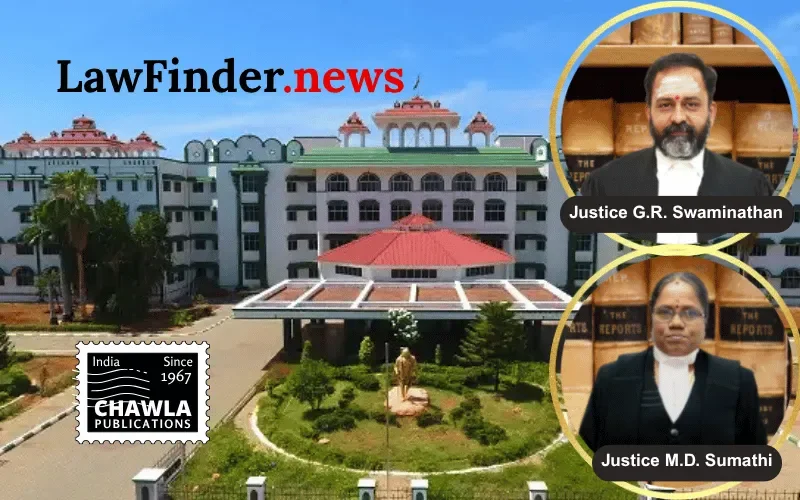
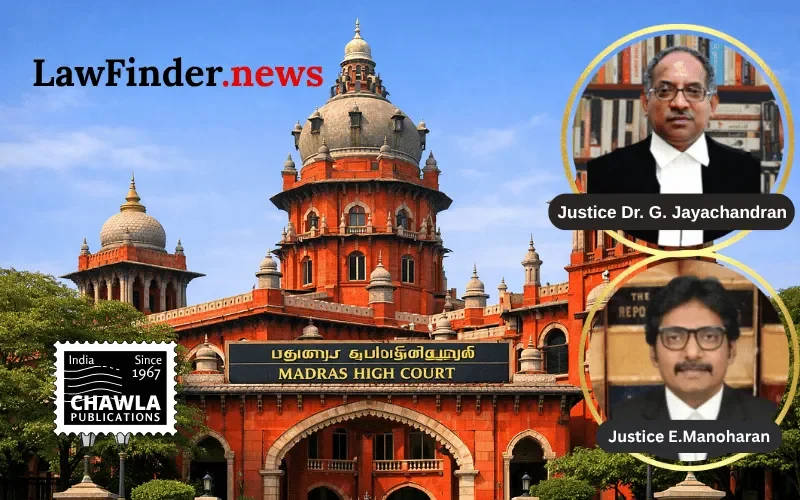
A Division Bench of Justice Dr. G. Jayachandran and Justice E. Manoharan delivered the common order in a batch of writ petitions challenging G.O.(Ms) No.115 dated 17 May 2022. The government order had permitted devotees to climb the Kanagasabai Mandapam to worship Lord Sabanayagar, restoring what the State described as the pre-Covid practice.
The petitioners, including the Sri Sabanayagar Temple represented by the Podhu Dikshitars and other individuals, argued that the order violated the denominational rights of the Podhu Dikshitars under Article 26 of the Constitution. They relied heavily on the Supreme Court’s 2014 ruling in Dr. Subramanian Swamy v. State of Tamil Nadu, which recognised the Podhu Dikshitars as a religious denomination entitled to administer the temple’s affairs.
Rejecting the challenge, the High Court held that the impugned government order was not a colourable exercise of executive power and did not unlawfully intrude into the religious autonomy of the Podhu Dikshitars. The Bench said the right to administer a denominational institution cannot be stretched to deny or unreasonably restrict the public’s right to worship in a public temple.
The court underlined that the Chidambaram temple is a public temple and that the public’s right to worship must co-exist with the denominational group’s right to perform rituals. It observed that the Podhu Dikshitars retain exclusive control over daily rituals and periodical festivals, but this does not confer an unrestricted right to regulate worship in a way that excludes ordinary devotees.
The Bench also noted material placed before it suggesting that, despite claims that devotees were barred from the Kanagasabai during pooja hours for safety and ritual reasons, some devotees were allegedly being allowed access on payment of money through token-based entry. The court found a lack of transparency in the darshan arrangement and said the system appeared to favour select devotees while limiting access for the general public.
Beyond the darshan dispute, the judgment sharply focused on the state of the temple’s heritage and finances. Acting on reports from the Tamil Nadu Heritage Commission and other materials on record, the court found that the ancient temple structure had suffered extensive damage under the management of the Podhu Dikshitars.
The Heritage Commission had identified numerous unauthorised and incompatible interventions inside the temple complex, including concrete mandapams, sheet-roofed sheds, new shrines, painted-over inscriptions, concealed murals, altered stone passages, tiled platforms around sculptured pillars, and construction of rooms within historic prakarams and mandapas. The court said these changes had adversely affected the architectural integrity, artistic value and historical character of the temple.
Calling the situation “disheartening,” the Bench said the heritage damage, if not immediately addressed, could become irretrievable. It further observed that both the HR&CE Department and the Podhu Dikshitars had failed in their duty to protect temple properties and maintain proper records.
On the financial side, the court found that temple properties, including lands and kattalai endowments, were not being properly accounted for. It recorded that the accounts produced by the Podhu Dikshitars were merely unaudited rough day-book ledgers and did not inspire confidence. The Bench also noted allegations that kattalai income was being directly received without proper disclosure and that valuable temple assets had not been systematically inventoried or audited.
In light of these findings, the High Court constituted a five-member Board of Management headed by retired judges Justice V. Bharathidasan and Justice R. Suresh Kumar, with retired IAS officer C. Rajendran as member. The Secretary of the Podhu Dikshitars and the Secretary to Government, HR&CE Department, will serve as ex-officio members.
The Board has been directed to take charge forthwith and oversee secular and administrative matters of the temple. Its mandate includes ensuring fair and equal access for devotees to have darshan from the Kanagasabai, removing unauthorised constructions in consultation with the Heritage Commission, retrieving encroached temple properties, improving income from temple lands, maintaining proper accounts, securing movable valuables and supervising restoration of the heritage structure.
At the same time, the court made it clear that daily rituals and periodical festivals will remain the exclusive prerogative of the Podhu Dikshitars and must continue in accordance with established customs and practices. The Bench emphasised that the intervention is temporary and only to cure maladministration, in line with the Supreme Court’s caution that denominational administration cannot be permanently displaced.
The court also ordered that all donations to the temple must hereafter be routed through a single-window e-payment system under the Board’s supervision. Income from temple properties and kattalais must be separately accounted for and submitted to the Board every month.
Disposing of the writ petitions, the High Court expressed hope that the newly formed Board would restore the temple’s glory, protect its heritage and ensure transparent administration while preserving the religious customs of the Podhu Dikshitars.
Bottom Line:
Hindu Religious and Charitable Endowments - Chidambaram Sri Sabanayagar Temple - Government Order permitting devotees to climb Kanagasabai for darshan upheld - Such order not violative of Article 26 rights of Podhu Dikshitars - Right of denominational administration does not include right to maladminister or to curtail public right of worship in a public temple - On finding damage to heritage structure, improper accounting of temple properties and maladministration, High Court constituted Board of Management of independent experts to take over administration till defects are remedied, while preserving exclusive religious prerogatives of Podhu Dikshitars in daily rituals and festivals.
Statutory provision(s): Articles 25, 26, 226, 161 of the Constitution of India, Section 107 of the Tamil Nadu Hindu Religious and Charitable Endowments Act, 1959, Section 45(1) of the Tamil Nadu Hindu Religious and Charitable Endowments Act, 1959, Tamil Nadu Hindu Religious and Charitable Endowments Act, 1959, Tamil Nadu Heritage Commission Act, 2012, Ancient Monuments and Archaeological Sites and Remains Act, 1958
Sri Sabanayagar Temple v. State of Tamil Nadu, (Madras)(DB) : Law Finder Doc id # 3008119