Court highlights delay in notification of key provisions of Mediation Act, 2023; issues guidelines for representation of entities in mediation
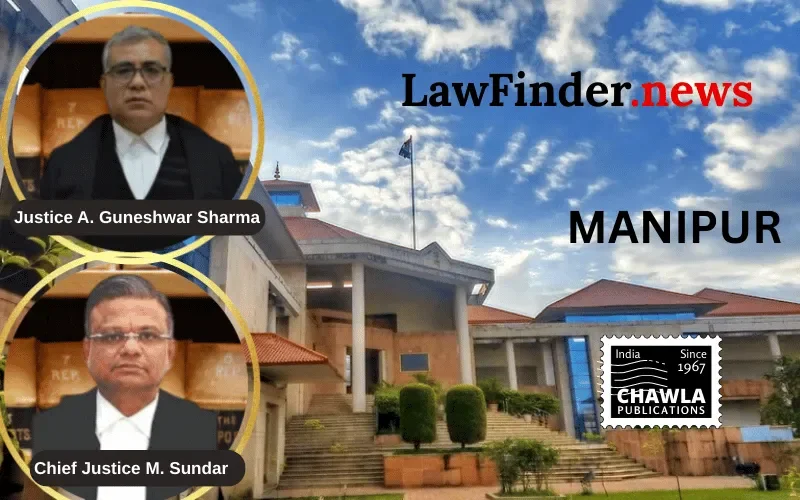
In a significant judgment delivered on November 5, 2026, the Division Bench of the Manipur High Court, comprising Chief Justice Mr. M. Sundar and Justice A. Guneshwar Sharma, disposed of a Regular First Appeal (RFA No. 2 of 2022) by recording a mediated settlement agreement between the State of Manipur and the respondents, while simultaneously addressing critical procedural issues concerning mediation under Indian law.
The appeal arose under Section 96 of the Code of Civil Procedure, 1908, and was referred to the High Court Mediation Centre under the High Court Legal Services Committee. The mediation was successful, and the parties signed a formal settlement agreement dated November 2, 2026. Counsel for both sides jointly requested the Court to record this agreement and dispose of the appeal accordingly.
However, the Court took the opportunity to clarify two pressing issues frequently encountered in mediation proceedings, especially involving juridical persons such as the State or companies.
Firstly, the Court noted that despite the enactment of the Mediation Act, 2023 (Act No. 32 of 2023) on September 14, 2023, and its publication in the Gazette of India on September 15, 2023, only 21 of its 65 sections have been brought into force as of October 9, 2023. Critically, Sections 19(1) and 27, which grant mediated settlement agreements the status of enforceable decrees without the necessity of further judicial orders, have not yet been notified.
Consequently, until these provisions come into force, mediated settlement agreements do not automatically possess the force of a decree and require a judicial order for enforcement. This position was reaffirmed by the Court, referring to its earlier judgment in Meitankeisangbam (Ongbi) Ibemcha Devi v. Meitankeisangbam Indrajit Singh, 2026 MNHC 137-DB, which had similarly highlighted the need for judicial endorsement of mediated settlements in the absence of full enforcement provisions under the Mediation Act, 2023.
The Court urged the Central Government to expedite the notification of these crucial sections to enhance the efficacy and enforceability of mediation as a dispute resolution mechanism, thereby reducing the burden on courts and expediting justice delivery.
Secondly, the Court underscored the importance of proper representation by entities involved in mediation. It stressed that when a juridical person such as the State or a company participates in mediation, it must be represented by a natural person authorized through a written mandate. This representative should have the authority to take binding decisions during the mediation and sign the settlement agreement on behalf of the entity. The Court noted that the absence of such authorized representatives had caused procedural difficulties in the initial mediation round in the present case, leading to delays and the need for repeated judicial intervention.
In the present appeal, although the authorized officers signed the settlement agreement, their official designations and the extent of their authority were not mentioned on the agreement itself. Nonetheless, the written mandates submitted to the Mediator and the Court sufficed for the Court to accept the settlement and dispose of the appeal accordingly.
The Court thereby disposed of the Regular First Appeal in terms of the settlement agreement dated November 2, 2026, and directed the Registry to draw up a decree accordingly. There was no order as to costs.
This judgment is a timely reminder of the evolving legal landscape around mediation in India, emphasizing the need for legislative clarity and procedural rigor to ensure that mediation fulfills its promise as a swift and effective mode of dispute resolution. It also provides practical guidelines to litigants and legal practitioners on ensuring proper representation during mediation, particularly when the State or corporate entities are parties.
Bottom Line:
Mediation settlements require judicial orders for enforceability due to certain provisions of the Mediation Act, 2023, not being notified. Guidelines provided for mediation involving entities like the State or companies, requiring an authorized natural person to represent them during mediation.
Statutory provision(s):
Code of Civil Procedure, 1908 - Section 96; Mediation Act, 2023 - Sections 1, 3, 19(1), 27