Court Recognizes Social Realities and Informed Consent in Quashing FIR; Directs State to Ensure Victim and Child Receive Government Scheme Benefits
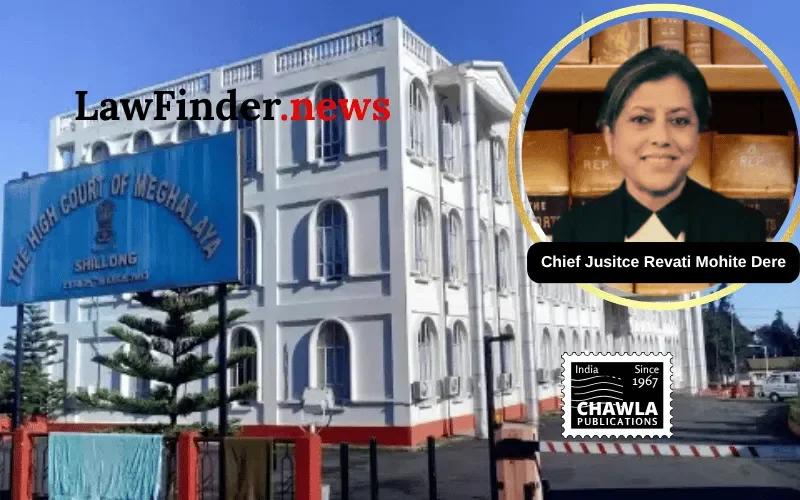
In a landmark judgment dated 15th September 2026, the Meghalaya High Court, led by Chief Justice Mrs. Revati Mohite Dere, quashed the First Information Report (FIR) and subsequent criminal proceedings under the Protection of Children from Sexual Offences (POCSO) Act, 2012, against Shri Sunil Sangma. The petitioner was accused in a case arising from a consensual relationship with respondent No.3, a minor at the time, with whom he has been living as husband and wife since 2017. The couple also has a child.
The case, registered as Sadar P.S. Case 274(11) of 2017, involved allegations under Sections 4 and 6 of the POCSO Act. The petitioner moved the court through the High Court Legal Services Committee seeking quashing of the FIR and related proceedings before the Special Judge (POCSO), East Khasi Hills District, Shillong.
The court carefully examined the facts, including the petitioner's age (18 years) and the survivor's age (17 years, 11 months, and 27 days) at the time of the alleged offence. Crucially, the survivor and her mother (respondent No.2) expressed no objection to the quashing of the case, affirming that the relationship was consensual and that the petitioner had taken responsibility for the survivor and their child.
The High Court also relied on a detailed report from the Secretary of the High Court Legal Services Committee, which confirmed the survivor's informed consent, the couple's cohabitation as husband and wife, and their child's welfare. The report further revealed that the survivor and her child had not yet received benefits under any government schemes but expressed a willingness to avail assistance, including opening a shop for livelihood.
In its judgment, the Court referred to its earlier decision in Shri Shalenbor Wahlang v. State of Meghalaya (2026), recognizing the unique social fabric of Meghalaya, including the matrilineal tribal systems where women enjoy autonomy and lineage passes through the mother. The Court acknowledged the high incidence of consensual adolescent relationships culminating in marriage or living together, which are socially accepted.
The Court held that quashing of POCSO proceedings is permissible under Section 528 of the Bharatiya Nagarik Suraksha Sanhita, 2023 (earlier Section 482 Cr.P.C.), even though the POCSO Act is a special statute. However, this discretion must be exercised with caution, ensuring that consent is genuine and informed, and the welfare of the survivor and child is paramount.
Importantly, the Court emphasized that sending the petitioner to jail in such cases could cause more harm than good, disrupting the family unit and adversely affecting the child. Justice must be tempered with fairness, compassion, and empathy.
The Court ordered the quashing of the FIR, chargesheet, and all pending proceedings in the matter. It further directed the authorities to ensure that the survivor and her child receive all benefits applicable under various State and Central Government schemes, including but not limited to:
- Scheme for Care and Support to Victims under Sections 4 and 6 of the POCSO Act (Nirbhaya Fund)
- Mission Vatsalya (Child Protection Services)
- Beti Bachao, Beti Padhao Scheme
- Meghalaya Victim Compensation Scheme, 2022
- Meghalaya Health Insurance Scheme and Ayushman Bharat-PM-JAY
- Mission 1000 Days-Meghalaya
- Rashtriya Bal Swasthya Karyakram (RBSK)
- Chief Minister's Safe Motherhood Scheme
- Educational schemes including Samagra Siksha and Back to School Campaign
- NALSA schemes for child-friendly legal services and support for persons with disabilities
- Mission Shakti for women's safety and empowerment
The District Child Protection Officer and Secretary of the District Legal Services Authority were directed to facilitate the survivor and child in accessing these benefits within eight weeks and to appoint support persons for assistance. A compliance report was to be submitted to the High Court.
This judgment marks a progressive step by the Meghalaya High Court in balancing the strict provisions of the POCSO Act with the lived realities of adolescent consensual relationships, reflecting a humane approach to justice that prioritizes rehabilitation and welfare over punitive measures.
Bottom Line:
Quashing of POCSO proceedings permissible under Section 528 BNSS (earlier Section 482 Cr.P.C.) in cases of consensual adolescent relationships culminating in marriage or living together, considering social realities, informed consent, and child welfare.
Statutory provision(s):
Sections 4 and 6 of POCSO Act, 2012; Section 528 of Bharatiya Nagarik Suraksha Sanhita, 2023 (earlier Section 482 Cr.P.C.)
Sunil Sangma v. State of Meghalaya, (Meghalaya) : Law Finder Doc Id # 2980326