Supreme Court Quashes Domestic Violence Proceedings, Upholds Settlement Agreement, Supreme Court reaffirms the sanctity of settlement agreements in domestic disputes, allowing claims only when agreements are legally challenged.
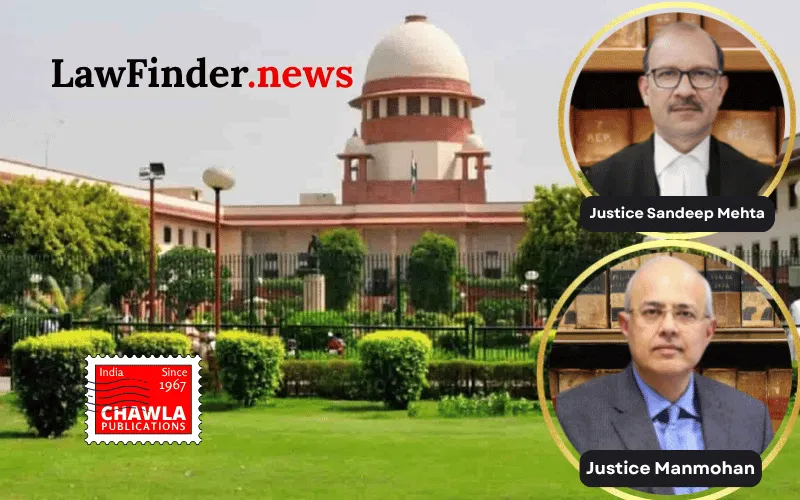
In a significant ruling, the Supreme Court of India has quashed the domestic violence proceedings initiated by Subi Mary against Reji Baby, emphasizing the binding nature of settlement agreements in marital disputes. The bench, comprising Justices Sandeep Mehta and Manmohan, delivered the judgment on August 24, 2026, underlining that once monetary claims are waived through a legally valid settlement agreement, they cannot be revived through subsequent domestic violence proceedings unless the agreement is legally challenged and set aside.
The case stemmed from a complaint filed under the Protection of Women from Domestic Violence Act, 2005, by the respondent, Subi Mary, after having entered into a settlement agreement with her former husband, Reji Baby. The agreement, executed on July 23, 2016, and followed by a joint divorce application, saw both parties relinquishing their monetary claims against each other. The appellant, Reji Baby, contended that the proceedings under the DV Act were an abuse of process since all claims were settled amicably.
The respondents, however, claimed the agreement was signed under duress, as they were in a rush to finalize the divorce due to plans to migrate to the USA. They argued that the absence of consideration or maintenance provision in the settlement agreement rendered it void against public policy. Despite these claims, the Supreme Court noted that no legal proceedings were initiated to challenge the validity of the settlement agreement.
The Court observed that both parties, being well-educated and aware of their rights, voluntarily entered into the settlement agreement. The judgment highlighted that mere allegations of coercion are insufficient without a legal challenge to the agreement. The decision drew upon precedents such as the case of Dhananjay Rathi v. Ruchika Rathi and Gimpex Private Limited v. Manoj Goel, reinforcing the principle that settlement agreements subsume prior claims and should not be easily disregarded.
However, the judgment made a significant exception for the couple's daughter, who was not a party to the settlement agreement. The Court clarified that the daughter retains the right to initiate separate proceedings for monetary claims, as her rights were not covered by the parental settlement.
The ruling underscores the importance of upholding settlement agreements to ensure legal certainty and discourage frivolous litigation. It also reaffirms the autonomy of major children in pursuing independent legal remedies, separate from the parental settlements.
Bottom Line:
Revival of monetary claims or domestic violence proceedings under the DV Act is not permissible once such claims have been voluntarily relinquished through a legally valid settlement agreement unless the agreement or decree is challenged and set aside on valid grounds like coercion or duress.
Statutory provision(s): Protection of Women from Domestic Violence Act, 2005, Divorce Act, 1869