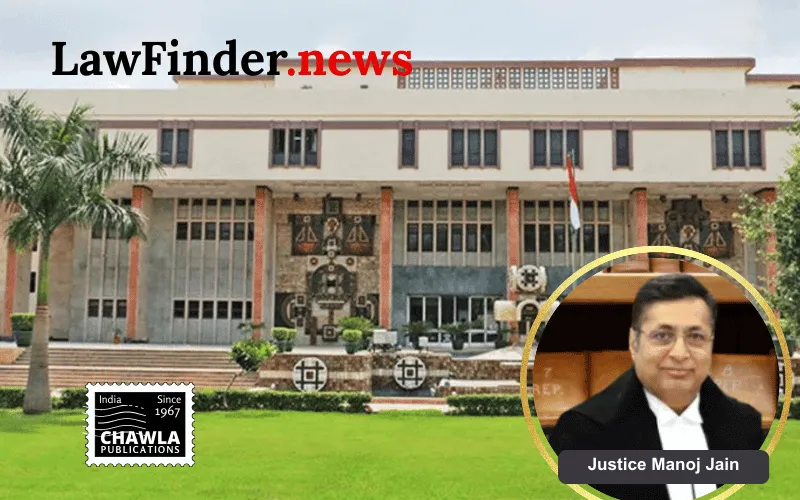
New Delhi, Aug 17 The Delhi High Court on Monday refused to first rule on the maintainability of CBI's challenge to the discharge of AAP leaders Arvind Kejriwal, Manish Sisodia and others in the excise policy case, saying it would hold "comprehensive" hearings in the matter and not decide it in "piecemeal".
Justice Manoj Jain granted four weeks to all discharged accused persons, including the politicians, to respond to the written submissions by the CBI, as it listed the agency's petition against their discharge on October 5 and 6.
Former Delhi chief minister Kejriwal, Sisodia and former MLA Durgesh Pathak have filed applications seeking dismissal of the CBI's revision petition for being non-maintainable.
Senior advocate Vikram Chaudhari, appearing for Pathak, urged Justice Jain to first decide the issue of maintainability of the CBI's petition, contending that it goes to the "root of the case".
Chaudhari argued that the petition was "thoroughly misconceived" and the court "need not touch the file if it doesn't cross the threshold".
Asking the senior counsel not to get into "hyper technicalities", Justice Jain said, "We will hear you but don't make it a pre-condition. We don't want to decide piecemeal."
"Arguments will be heard in a comprehensive manner. No piecemeal. We will start with CBI and end with you. Arguments will be heard in one go," the court stated.
Justice Jain added that the court's earlier order has already clarified that the aspects of maintainability and the main merit would be heard together and the counsel cannot "re-open" the issue at this stage.
Senior advocate N Hariharan, appearing for Kejriwal, contended that the CBI has now filed a 103-page written submission in the matter, raising "substantial grounds" which are absent in the main petition, and sought four weeks to respond to them.
"Are you actually interested in filing a reply?" the court asked, as it observed that the AAP leaders were yet to do so despite being given several opportunities in the past.
Senior counsel Rebecca John, who appeared for Sisodia, and Hariharan said the petition has "generic grounds" and since substantial grounds have only been raised in the written submissions, a response would be filed.
Solicitor General Tushar Mehta, appearing for CBI, said the request seeking four more weeks for filing replies was "not fair".
"Let them exhaust all pretensions. They were proclaiming this is a brilliant order. I am saying it is not worth the paper it is written on," Mehta stated.
"We are giving four weeks to everyone, including those who have already filed. But nothing beyond that. Then we fix the date for beginning arguments from the side of the petitioner (CBI). Week beginning October 5," the court concluded.
Kejriwal and Sisodia, who had earlier boycotted the proceedings in the case before Justice Swarana Kanta Sharma, have claimed that the CBI's plea was filed with "unprecedented haste" and in the "most unserious manner", and that they have been unable to even discern the agency's case against them in the "bare-shell" and "non-specific" petition.
They have asserted that the trial court discharged all accused persons after hearing the matter in detail for more than three months, but the CBI has not pointed out any specific finding that is "perverse" or shows any irregularity.
On the last occasion, Justice Jain had granted a final opportunity to Kejriwal, Sisodia and Pathak to respond to the CBI's plea within two weeks, and listed it for August 17 and 18 to hear the agency's submissions.
On February 27, the trial court discharged Kejriwal, Sisodia and 21 others in the liquor policy case, ruling that it was wholly unable to survive judicial scrutiny and stood discredited in its entirety.
In its revision petition, the CBI has said that the discharge order was patently illegal, perverse and suffered from errors apparent on the face.
The petition has contended that the trial court conducted a mini-trial at the stage of framing of charges and passed the discharge order on a "selective reading of the prosecution case".
Not only did the trial court fail to appreciate the facts of the case but it also passed unwarranted adverse remarks against the investigating agency and the investigating officer, the plea has claimed.