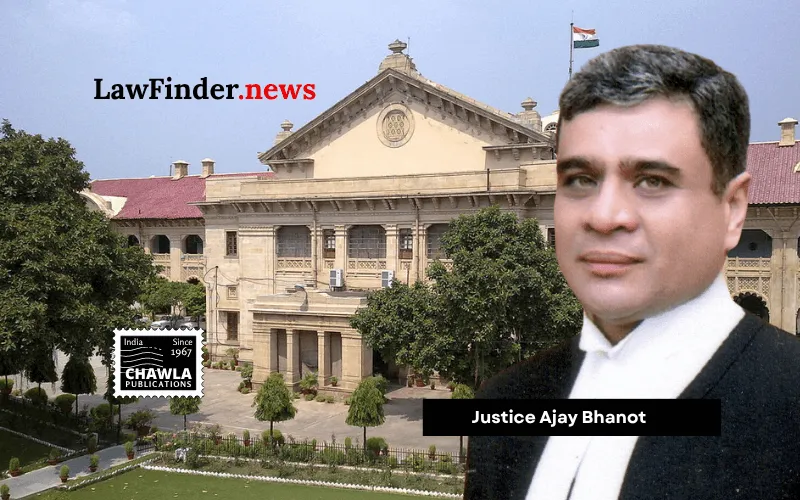
Prayagraj, Sep 1 The Allahabad High Court has observed that the objective of the Juvenile Justice Act is not merely to punish child offenders, but to ensure their rehabilitation, development and reintegration into society.
Justice Ajay Bhanot observed that the Juvenile Justice Act, 2015 has shifted away from a harsh punitive system to embrace the concept of rehabilitative justice.
The Juvenile Justice Board and Children's Courts must fulfil the responsibility of rehabilitation and reintegration alongside their judicial duties, it said in its orders on appeals from two juvenile offenders from Kasganj and Jalaun.
In its judgment dated August 31, the court highlighted key principles under Section 3 of the Juvenile Justice Act, including the best interest of the child, positive measures, institutional care as a last resort and non-judicial alternative measures.
The court held that every decision must prioritise the best interest of the child and provide a conducive environment for the full development of their potential.
The court stated that the nature of the juvenile justice system has evolved from punitive to rehabilitative justice. According to the court, the aim of the law is not to isolate children from society through punishment, but to empower them and bring them back into the mainstream.
The Juvenile Justice Board and Children's Courts also act as guardians of the child. In this system, courts discharge their responsibilities under the principle of parens patriae (guardian of the child).
The High Court stressed that the Juvenile Justice Board must ensure informed participation of the child and their parents or guardians at every stage of the process.
The rights of the child must be continuously protected from arrest to investigation, care and rehabilitation. If a child in conflict with the law is also found to be in need of care and protection, provisions exist to refer the matter to the Child Welfare Committee and Board Responsible for Ensuring Continued Education, it said.
Citing provisions of the Juvenile Justice Rules, the court stated that, if necessary, the Board should issue a rehabilitation card to monitor the child's progress.
If a child's education has been disrupted due to pending inquiries or a stay at a child care institution, appropriate orders should be passed to re-enrol them in school or facilitate the continuation of their education.
The court stressed that the process of rehabilitation and social reintegration does not end with the child's release. The Juvenile Justice Board must continue its oversight and care. When handing over a child to a fit person, institution, or probation officer, ensuring proper care, education, and welfare remains essential.
The court said that the Board's proceedings must take place in a child-friendly environment and should be as simple as possible. The judicial process must not instil fear, pressure, or subject the child to social exclusion.
The court also emphasised that a Social Investigation Report must be obtained before passing any final order regarding a child. Every dispositional order must include an Individual Care Plan for the child to establish a concrete framework for their rehabilitation, education, development, and reintegration into society.