Court Rules No Prejudice to Accused in Charge Framing on Same Day as Police Papers Supply Under Bharatiya Nagarik Suraksha Sanhita, 2023
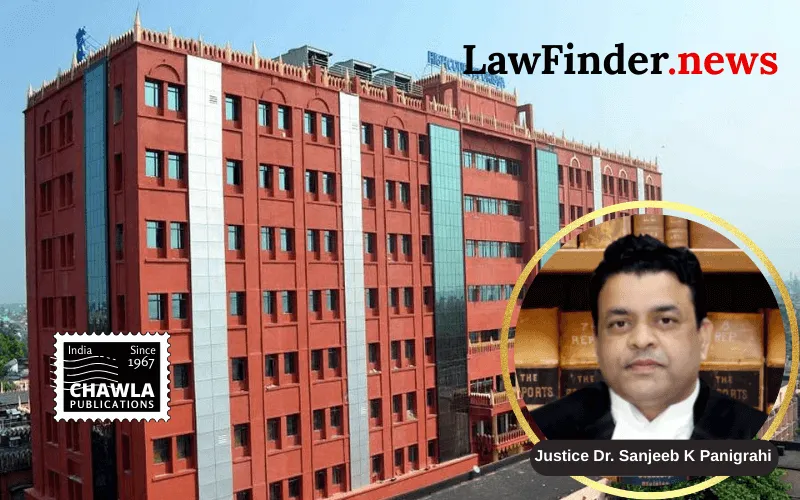
In a significant ruling delivered on August 21, 2026, the Orissa High Court, presided over by Justice Dr. Sanjeeb K Panigrahi, dismissed a criminal revision petition challenging the framing of charges against Rajesh Kumar Mohapatra and others. The petitioners contended that the trial court erred by framing charges on the very same day the police papers were supplied to them, thereby violating their statutory right under Sections 230 and 262 of the Bharatiya Nagarik Suraksha Sanhita (BNSS), 2023.
The case arose from a complaint lodged on November 11, 2025, alleging offences related to illegal mining under Sections 303(2) and 3(5) of the BNSS, 2023, read with Rule 18 of the Odisha Minerals (Prevention of Theft, Smuggling and Illegal Mining and Regulation of Possession, Storage, Trading and Transportation) Rules, 2007, and Section 21 of the Mines and Minerals (Development and Regulation) Act, 1957. Following the investigation, police papers were submitted on December 29, 2025, and cognizance was taken on December 31, 2025.
The petitioners were supplied copies of the police report and related documents on February 18, 2026. However, on the same date, the learned Judicial Magistrate First Class (JMFC) framed charges against them. The petitioners argued that under Section 262(1) of BNSS, they were entitled to a reasonable interval of up to sixty days after receiving police papers to file an application for discharge, and the simultaneous framing of charges deprived them of this statutory right. They alleged this procedural irregularity rendered the charge framing illegal and arbitrary.
The State opposed the petition, highlighting that the petitioners had subsequently filed discharge applications, which were considered and rejected on merits by the trial court on June 23, 2026. The State contended that no demonstrable prejudice was caused by the trial court’s approach and that the petitioners had a full opportunity to exercise their rights under Section 262(1).
In its detailed judgment, the Orissa High Court acknowledged the statutory framework under BNSS, 2023, emphasizing the intended purpose of Sections 230 and 262 to ensure timely supply of police papers and a meaningful opportunity for the accused to seek discharge before trial. However, the Court observed that procedural deviations must be weighed against the presence or absence of prejudice to the accused.
Referring to precedents such as State of Punjab v. Jagir Singh (1974) and Rafiq Ahmed v. State of U.P. (2011), the Court underscored that a breach of a mandatory procedural requirement does not automatically vitiate proceedings unless the accused suffers real and demonstrable prejudice. The Court noted that the petitioners had not requested additional time to file discharge applications before framing of charges, nor had they demonstrated any prejudice resulting from the practice.
The Court also highlighted the legislative intent behind the BNSS, 2023, which aims at expeditious disposal of criminal trials and cautioned against a rigid interpretation of Section 262(1) that would convert a protective right into a procedural sword causing undue delay. Nevertheless, the Court advised trial courts to adopt the prudent practice of allowing a reasonable interval between the supply of police papers and framing of charges to avoid procedural disputes and enhance fairness in the justice delivery process.
Concluding, the Orissa High Court held that the trial court’s framing of charges on the same day as the supply of police papers, though not ideal, did not vitiate the proceedings in the absence of demonstrable prejudice to the accused. The Court dismissed the criminal revision petition but left open the question of merits of the charge and the discharge order for adjudication in due course.
This judgment sets a balanced precedent on procedural compliance under the BNSS, 2023, reinforcing that procedural safeguards must be enforced without undermining the objectives of swift justice and avoiding technicalities that do not affect substantive fairness.
Bottom Line:
Framing of charge on the same date as the supply of police papers under Section 230 of the Bharatiya Nagarik Suraksha Sanhita, 2023, without granting a reasonable interval for filing a discharge application, does not vitiate the proceedings in the absence of demonstrable prejudice to the accused.
Statutory provision(s): Bharatiya Nagarik Suraksha Sanhita, 2023 Sections 230, 262(1), 528; Odisha Minerals (Prevention of Theft, Smuggling and Illegal Mining and Regulation of Possession, Storage, Trading and Transportation) Rules, 2007 Rule 18; Mines and Minerals (Development and Regulation) Act, 1957 Section 21
Rajesh Kumar Mohapatra v. State of Odisha, (Orissa) : Law Finder Doc Id # 2975947