Court Rules Resignation Becomes Effective Only Upon Formal Acceptance; Sets Aside State's Notification Relieving Officer Amidst Personal Hardship
In a significant judgment delivered on September 10, 2026, the Orissa High Court (Division Bench) quashed the State Government's notification accepting the resignation of Ipsita Mohanty, a Judicial Officer, and ordered her reinstatement. The Court held that her resignation submitted under compelling personal circumstances was validly withdrawn before its formal acceptance by the competent authority, rendering the acceptance and subsequent relieving notification legally untenable.
Ipsita Mohanty, serving as an Additional Civil Judge (Junior Division)-cum-Sub-Divisional Judicial Magistrate at Hindol, had tendered her resignation on November 29, 2022, citing the inability to provide proper medical treatment and therapy to her autistic son due to transfer to a location lacking specialized facilities. The petitioner had earlier submitted a representation requesting transfer to Bhubaneswar, the headquarters where adequate medical support was available, but the request was deferred without final consideration.
Following the submission of her resignation, Ipsita Mohanty sought to withdraw it on December 21, 2022, based on medical advice that her son required ongoing treatment and therapy. However, before this withdrawal could be formally considered by the Full Court of the High Court, the State Government, on the recommendation of the High Court's Full Court meeting held on December 20, 2022, accepted her resignation and issued a notification on January 2, 2023, relieving her from service with immediate effect.
The petitioner challenged this acceptance and relieving notification through a writ petition, contending that her resignation was withdrawn prior to acceptance and that the authorities had failed to consider her withdrawal application. She further argued that the acceptance of resignation without considering the withdrawal application violated principles of natural justice.
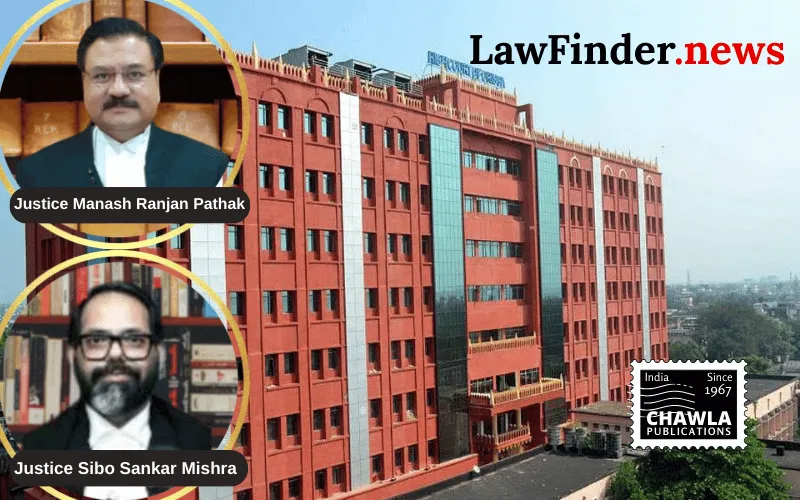
The Orissa High Court bench comprising Mr. Manash Ranjan Pathak and Mr. Sibo Sankar Mishra, JJ., extensively examined the constitutional provisions under Articles 233, 234, and 235 governing judicial services, the Odisha Superior Judicial Service Rules, 2007, and the Odisha Civil Services Pension Rules, 1992 relating to resignation and its withdrawal.
The Court observed that unlike Constitutional Judges who resign under Articles 124 or 217 of the Constitution, whose resignation operates ex proprio vigore (by its own force) and does not require acceptance, judicial officers under the subordinate judiciary governed by service rules require formal acceptance by the appointing authority (the Governor of Odisha) for resignation to become effective. Consequently, a resignation can be withdrawn at any time before such acceptance.
Further, the Court noted that the petitioner's resignation was tendered under compelling personal hardship, specifically the need to care for her autistic son, and that her withdrawal application was submitted before acceptance. The Court criticized the authorities for failing to communicate and consider her withdrawal request properly, resulting in a procedural lapse that led to wrongful acceptance of her resignation.
Applying the relevant legal precedents, including the Supreme Court's ruling in Union of India v. Gopal Chandra Misra (1978) and Ms. X v. Registrar General, High Court of Madhya Pradesh (2022), the Court held that the petitioner's resignation was not voluntary but under duress and that the withdrawal was timely and valid.
The Court also highlighted that the petitioner continued to perform her duties till January 3, 2023, and was free from any departmental or vigilance proceedings. It accepted her affidavit stating she would not claim back wages for the intervening period of absence.
Consequently, the Orissa High Court set aside the Government's notification dated January 2, 2023, and directed the authorities to reinstate Ipsita Mohanty forthwith as Additional Civil Judge (Junior Division)-cum-S.D.J.M., without back wages but with continuity of service and consequential benefits from January 3, 2023.
This verdict underscores the legal principle that resignation of judicial officers becomes effective only upon formal acceptance by the appointing authority and that withdrawal prior to such acceptance is valid. It further reinforces the need for authorities to act fairly and consider personal hardships sympathetically in service matters, especially concerning officers with special family circumstances.
Step-by-step guide to understanding the judgment:
1. Factual Background:
Ipsita Mohanty, a judicial officer, was transferred from Bhubaneswar to Hindol, a place lacking adequate medical facilities for her autistic son. She requested transfer back for the child's treatment, but the request was deferred indefinitely.
2. Resignation and Withdrawal:
Due to inability to care for her son, she tendered resignation on November 29, 2022. Subsequently, on December 21, 2022, she withdrew the resignation, citing medical advice for continued treatment.
3. Procedural Developments:
The High Court's Full Court accepted her resignation on December 20, 2022, before her withdrawal application was placed before it as directed by the Chief Justice on December 22, 2022. The State Government, unaware of the withdrawal, accepted the resignation on December 31, 2022, and issued relieving notification on January 2, 2023.
4. Legal Issue:
Whether a judicial officer's resignation, withdrawn before formal acceptance by the appointing authority, can be treated as valid and the acceptance ignored.
5. Constitutional and Statutory Framework:
The Court distinguished between Constitutional Judges and subordinate judicial officers. Constitutional Judges' resignations under Articles 124 and 217 are unilateral and effective upon communication, whereas subordinate judicial officers' resignations require acceptance under service rules.
6. Relevant Rules:
The Odisha Civil Services Pension Rules, 1992 Rule 34(4) permits withdrawal of resignation in the public interest if tendered for compelling reasons without reflection on integrity or conduct, and if withdrawal is due to material change in circumstances.
7. Precedents Considered:
- - Union of India v. Gopal Chandra Misra (1978) laid down that resignation can be withdrawn before it becomes effective by acceptance.
- - Ms. X v. Registrar General, High Court of Madhya Pradesh (2022) recognized the balancing act required by a judicial officer between duty and personal hardship.
8. Findings:
- - The petitioner's resignation was under duress due to personal hardship.
- - Withdrawal was timely, before acceptance.
- - Authorities failed to place withdrawal application before the Full Court and did not inform the Government or Governor about this crucial development.
- - Acceptance and relieving notification were therefore invalid.
9. Relief Granted:
The Court set aside the Government notification accepting the resignation and ordered reinstatement without back wages but with continuity of service from the date of relieving.
10. Significance:
This judgment clarifies the law on resignation and withdrawal for subordinate judicial officers, emphasizing procedural fairness and humane consideration of personal difficulties.
Bottom Line:
Resignation of a Judicial Officer - Withdrawal of resignation prior to acceptance by the appointing authority deemed valid - The petitioner was compelled to resign due to personal hardships, including the need for medical treatment for her autistic son, but later withdrew her resignation before formal acceptance by the competent authority.
Statutory provision(s):
Articles 233, 234, 235 of the Constitution of India; Odisha Superior Judicial Service Rules, 2007; Odisha Judicial Service Rules, 2007; Odisha Civil Services Pension Rules, 1992 (Rule 34(4)); Odisha Civil Services (Pension) Amendment Rules, 2025; DoPT OM No. 28034/25/87-Estt. (A) dated 11.02.1988; All India Services (Death-cum-Retirement Benefits) Rules, 1958
Ipsita Mohanty v. State of Orissa, (Orissa)(DB) : Law Finder Doc Id # 2977578