New Delhi, Sep 8 The Centre on Tuesday told the Supreme Court that it is setting up a three-member panel to suggest a statutory framework for ensuring that pharmaceutical companies do not indulge in unethical practices to lure doctors.
The government sought two-month time during which the committee would submit its report that will be placed before the court for approval.
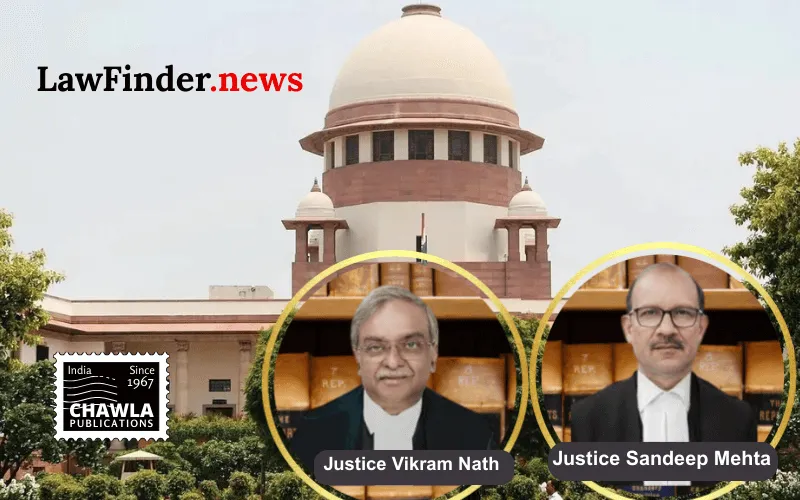
A bench of Justices Vikram Nath and Sandeep Mehta said it is reserving its order on the pleas filed by Federation of Medical and Sales Representatives Associations of India and others, which sought direction that till an effective law was enacted, the top court may lay down the guidelines to control and regulate unethical marketing practices by pharmaceutical companies.
The Centre agreed that there is a need to strengthen the mechanism to ensure that pharmaceutical companies do not indulge in any unethical practices.
"The detailed discussions have taken place and with a view to find out the possible solution, it is decided to constitute a three-member committee requesting them to provide their report on the issues as to whether and if yes, what can be the statutory framework to ensure that pharmaceutical companies also do not indulge into such unethical practices," the government said.
It said till such time the report is received and a decision is taken based thereupon, the Uniform Code for Pharmaceutical Marketing Practices, 2024 will govern the field.
Solicitor General Tushar Mehta, appearing for the Centre, said there are several aspects involved in the matter which involves various departments under different ministries.
"We will be taking a holistic approach on the issue. There are several factors involved in it. Big pharma companies are normally not involved in these practices but smaller ones do and it is mostly a local issue. There is a need to strengthen the mechanism so that pharma companies do not indulge in unethical practices," he submitted.
Mehta said the committee would submit its report in two months and suggest what kind of statutory framework can be implemented to regulate these pharma companies.
"The committee will be constituted in a day or two if not done by now as it is the top most priority of the government. We will be apprising the court, there will be no lethargy," he told the bench on the query of the court whether the panel has been constituted.
Senior advocate Sanjay Parikh, appearing for the Federation, submitted that there was nothing new in the matter and what the government has done is copy-pasted the earlier guidelines and changed the headline.
He sought urgent directions from the court for the pharma companies and the medical practitioners against indulging in the unethical practices.
Senior advocate Kapil Sibal, appearing for some parties, submitted that the petitioner can give their suggestions to the committee, so that action can be taken on their grievances.
The bench said it would pass orders which would strengthen the hands of the committee.
It posted other matters related to generic medicines on September 22.
The government in its affidavit said so far as the medical practitioners are concerned, under the existing statutory and regulatory framework, original disciplinary jurisdiction in matters of professional misconduct of registered medical practitioners lies with the concerned State Medical Council (SMC).
"This position is recognised under Section 30 of the National Medical Commission Act, 2019, which provides the appellate framework in respect of disciplinary action taken by an SMC," it said, adding that a registered medical practitioner aggrieved by an order of the SMC may prefer an appeal to the Ethics and Medical Registration Board (EMRB) in accordance with Section 30 of the NMC Act and the applicable regulatory provisions.
It said for determining professional conduct and misconduct, the Indian Medical Council (Professional Conduct, Etiquette and Ethics) Regulations, 2002 (IMC Regulations), which presently remains the applicable ethical framework, are followed and it prescribes a code of conduct for healthcare professionals in their relationship with pharmaceutical and allied health sector industry.
"The IMC Regulations prohibit medical practitioners from abetting or committing such acts which are unethical in nature. It prohibits receipt and acceptance of gifts, travel facilities, hospitality and cash or monetary grants by medical practitioners from pharmaceutical and allied health sector companies," the affidavit said.
It added that the IMC regulations specifically provides for penalties which include censure, removal from the Indian Medical Register or the State Medical Register of a medical practitioner for a period of three months, six months, one year or more than one year depending on the value of cash, gift, travel or hospitality received in contravention of Section 6.8 of the said regulation.
Earlier, the top court said the actual "difficulty" was in the implementation of the existing norms.
The plea filed by Association claimed though termed as "sales promotion", in fact, direct or indirect advantages were offered to doctors (as gifts and entertainment, sponsored foreign trips, hospitality, and other benefits) in exchange for an increase in drug sales.