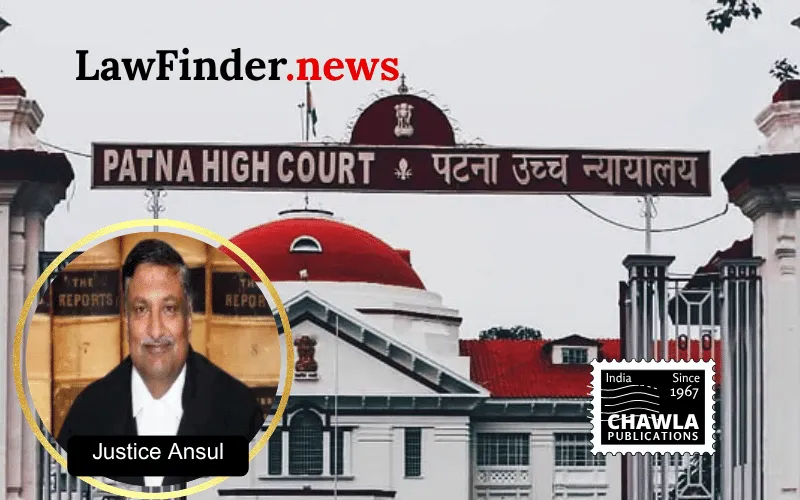
Court Issues Directives to Control Prejudicial Reporting, Emphasizes Right to Fair Trial for Accused
In a significant ruling, the Patna High Court, presided over by Justice Mr. Ansul, has intervened to curb prejudicial media reporting in the case of Rishu Shree v. State of Bihar. This decision underscores the imperative of safeguarding the accused's right to a fair trial amidst extensive media coverage. The court's directive comes in response to media portrayals of the petitioner, Rishu Shree, accused in a high-profile tender scam, as guilty even before the commencement of the trial.
The petitioner, represented by Senior Advocate Ms. Nandita Rao, highlighted the adverse impact of media trials that have been conducted by various platforms, including print, electronic, digital, and social media. The court acknowledged that such reporting could potentially influence public opinion, prejudice potential witnesses, and create an environment hostile to a fair trial.
Justice Ansul emphasized that while freedom of the press is a fundamental right under Article 19(1)(a) of the Indian Constitution, it is subject to reasonable restrictions to maintain public order, morality, and to prevent defamation under Article 19(2). The judgment makes it clear that media trials and portraying an accused as guilty before a verdict are impermissible and could amount to defamation or immoral acts.
Citing precedents, including the Supreme Court's rulings in cases such as Sahara India Real Estate Corporation Ltd. v. SEBI and M.P. Lohia v. State of West Bengal, the court reinforced that it holds the power to impose prior restraints on publications in exceptional circumstances where there is a real and substantial risk to the fairness of a trial.
The court directed all media platforms to refrain from describing the accused as guilty or portraying them as having committed the alleged offenses. It also prohibited the publication or broadcasting of material that determines criminal liability before trial. However, the court allowed for fair, accurate, and objective reporting of judicial proceedings.
These measures aim to balance the freedom of the press with the necessity of ensuring a fair trial, marking a significant step in addressing the issue of media trials in India. The case is scheduled for further hearing on July 10, 2026.
Bottom line:-
Media trials and prejudicial reporting against an accused during pendency of trial are impermissible and violate the right to a fair trial. Courts can issue directions to control irresponsible reporting to safeguard the rights of the accused.
Statutory provision(s): Article 19(1)(a), Article 19(2) of the Constitution of India
Rishu Shree v. State of Bihar, (Patna) : Law Finder Doc id # 2930264