Court Rules Absence of Physical Injuries Does Not Negate Legal Finding of Rape; Disputed Facts to be Decided at Trial
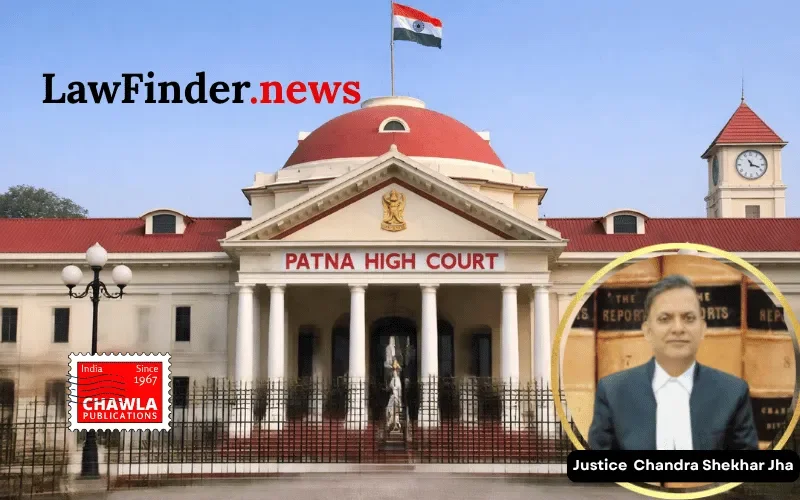
In a significant judgment delivered on October 29, 2026, the Patna High Court, through Justice Chandra Shekhar Jha, dismissed a petition seeking to quash the cognizance order in a high-profile gang rape case involving a minor deaf and dumb girl at a middle school in Jehanabad, Bihar. The case, registered as Jehanabad Mahila Police Station Case No. 02 of 2017, accused four persons, including teachers and the headmaster, of gang raping the victim on the school roof.
The petitioners challenged the cognizance order dated February 2, 2019, passed by the 1st Additional District and Sessions Judge-cum-Special Judge, Jehanabad. The petitioners contended they were falsely implicated due to personal vendetta by the informant, the victim's mother, who allegedly had strained relations with them. They also relied on the police's closure report submitted after investigation, which found no sufficient evidence for trial. Furthermore, the defense argued that the blood stains found on the victim's clothes were attributable to the menstrual cycle, not sexual assault, and highlighted the absence of injuries on the victim's body as evidence negating the allegation of gang rape.
However, the Court emphasized the legal principle that the Magistrate is empowered to take cognizance of an offense based on the materials available on record even when the police submit a closure report. Referencing the Supreme Court's ruling in Mrityunjay Kumar Chaudhary v. State of Bihar (2026), the Court reiterated that a closure report does not bind the Magistrate, who may independently evaluate the materials and take cognizance if satisfied that an offense has been committed.
Importantly, the Court held that the absence of physical injuries or seminal stains does not ipso facto disprove the occurrence of rape. Citing the Supreme Court's judgment in State of Tamil Nadu v. Ravi @ Nehru (2006), the Court observed that rape is a legal finding rather than a medical one. Partial penetration or attempt to penetrate without causing injuries or leaving seminal stains may still constitute rape under the law. Medical evidence may show lack of injuries but cannot conclusively negate the legal conclusion of rape.
Regarding the defense contention about the blood stains being caused by the victim's menstrual cycle, the Court clarified that such factual disputes cannot be adjudicated in quashing proceedings. These questions of fact are to be determined during the course of the trial.
The Court also noted that the cognizance order was reasoned and based on a comprehensive review of the FIR, charge-sheet, statements recorded under Section 164 of the Criminal Procedure Code (CrPC), medical reports, and forensic science laboratory (FSL) reports. The matter even reached the Human Rights Commission due to complaints of police bias and evidence tampering, underscoring the serious nature of the allegations.
In light of these observations, the Patna High Court upheld the Magistrate's cognizance order and dismissed the petition for quashing, allowing the trial to proceed. The judgment affirms the principle that the judicial process must independently scrutinize allegations of serious offenses such as gang rape, ensuring that procedural technicalities or absence of medical injuries do not hinder justice for vulnerable victims.
Bottom Line:
Magistrate is empowered to take cognizance on materials available on record even when police submits closure report. Absence of injuries on victim does not by itself rule out rape, as rape is a legal finding and not a medical one. Disputed defence regarding blood stains being due to menstrual cycle cannot be examined in quashing jurisdiction and is a matter for trial.
Statutory provision(s):
Criminal Procedure Code, 1973 Section 190(1)(b), 164, 482; Indian Penal Code, 1860 Sections 376D, 376, 34; Protection of Children from Sexual Offences Act, 2012 Section 4
Ataur Rahman @ Md. Ataur Rahman v. State of Bihar, (Patna) : Law Finder Doc Id # 3007199