Supreme Court Upholds Independence of Sanctioning Authority in Corruption Cases, Apex Court Dismisses State's Plea, Reiterates Importance of Non-Interference in Sanctioning Decisions
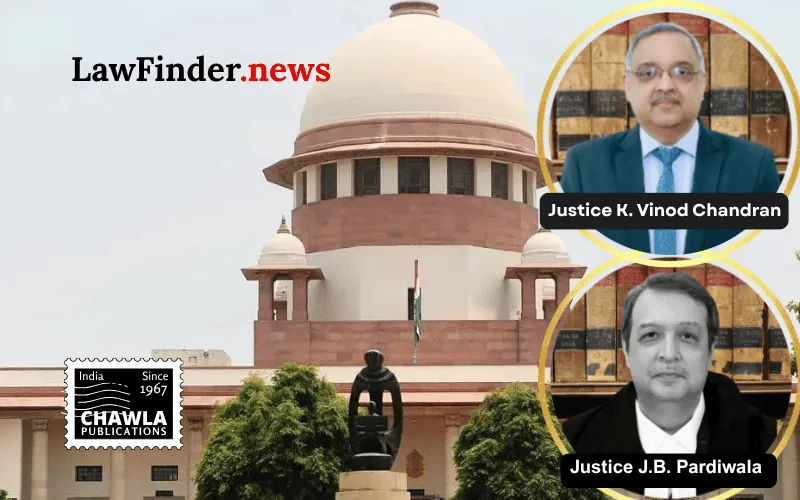
In a significant judgment, the Supreme Court of India has dismissed the Special Leave Petition filed by the State of Rajasthan in the case of "State of Rajasthan v. Dev Kant Meena," emphasizing the critical importance of the independence of sanctioning authorities in corruption cases against public servants. The Court, comprising Justices J.B. Pardiwala and K. Vinod Chandran, underscored that reconsideration of sanction without fresh material is impermissible and that any political interference in such decisions is strongly deprecated.
The case arose from allegations against Dev Kant Meena, a public servant, accused of demanding a bribe for facilitating a knee surgery. The sanction for prosecution was initially declined by the competent authority after an in-depth review of the evidence, which did not unequivocally establish the demand or receipt of a bribe. However, under alleged political pressure, the matter was reconsidered, leading to the grant of sanction without any new evidence being presented.
The Supreme Court noted that such political interference in the reconsideration of sanctions is not only improper but also leads to unnecessary harassment of public servants. The judgment referenced several precedents, including "Mansukhlal Vithaldas Chauhan v. State of Gujarat" and "State of H.P. v. Nishant Sareen," reinforcing that sanction is a safeguard for the innocent and should not be influenced by extraneous pressures.
The Court imposed a cost of Rs. 50,000 on the State, to be paid both to the High Court and the Supreme Court, highlighting the unnecessary litigation caused by the State's actions. The judgment serves as a reminder of the principles enshrined in Section 19 of the Prevention of Corruption Act, 1988, aimed at protecting public servants from frivolous and baseless allegations.
This judgment is a significant reaffirmation of the need for administrative decisions to be made with proper application of mind, free from undue influences, ensuring that public servants can perform their duties without fear of harassment from baseless charges.
Bottom Line:
Section 19 of the Prevention of Corruption Act, 1988 aims to prevent harassment of public servants on false and frivolous allegations. Reconsideration of sanction without fresh material is impermissible, and political interference in such decisions is strongly deprecated.
Statutory provision(s): Prevention of Corruption Act, 1988 Section 19, Code of Criminal Procedure, 1973 Section 197
State of Rajasthan v. Dev Kant Meena, (SC) : Law Finder Doc id # 2949145