Court Emphasizes Welfare of Minor as Paramount; Orders Immediate Custody Transfer from Father Amidst Allegations of Harassment and Dowry Demand
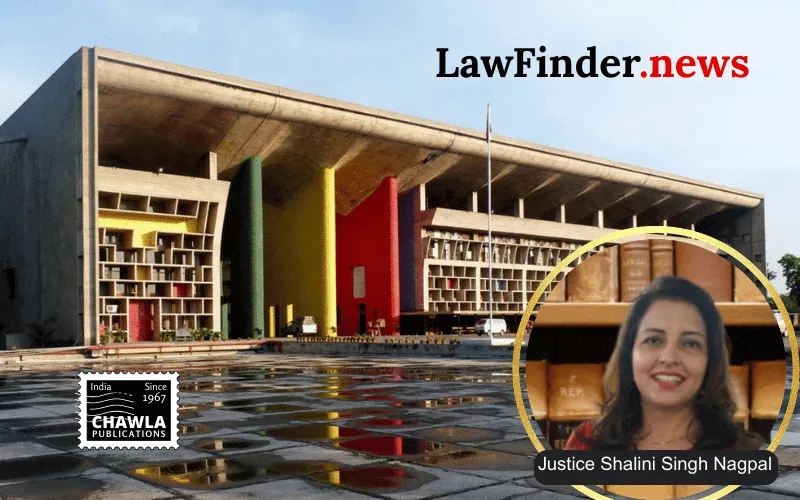
In a significant judgment delivered on September 10, 2026, the Punjab and Haryana High Court, presided over by Justice Shalini Singh Nagpal, ruled in favor of Harjeet Kaur, granting her custody of her 2.5-year-old daughter, Gurnaaz Kaur, in a habeas corpus petition against the State of Punjab and others, including the child's father and his family members.
The petitioner, Harjeet Kaur, approached the court seeking the release of her minor daughter from the custody of her father, respondent No. 4, alleging that the child was wrongfully detained. The mother contended that she was subjected to dowry harassment, physical and emotional abuse by the father and his family, leading her to leave the matrimonial home. She claimed that the father took the child from her parental home on false promises and refused to return the minor, demanding an exorbitant sum of money in exchange.
Respondents denied all allegations and contended that the father, as the natural guardian under the Hindu Minority and Guardianship Act, 1956, had lawful custody of the child. They argued that the petitioner had deserted her matrimonial home without cause and was not entitled to custody. They maintained that the minor was well cared for, attending school and receiving affection and support from the father and family.
The Court, after analyzing the arguments and evidence, reiterated the legal principle that the welfare of the minor child is the paramount consideration in custody matters. It emphasized that while the father is the natural guardian, Section 6-A of the Hindu Minority and Guardianship Act provides that custody of a minor below five years of age shall ordinarily be with the mother, unless exceptional circumstances exist.
The Court held that the writ of habeas corpus is maintainable even when the child is in custody of a natural guardian if the detention is wrongful or against the child's welfare. Citing authoritative Supreme Court judgments, including Tejaswini Gaud v. Shekhar Jagdish Prasad Tewari (2019) and Yashita Sahu v. State of Rajasthan (2020), the Court confirmed its jurisdiction to intervene in such cases.
Given the tender age of the child, the Court observed that the mother is better equipped to provide physical, emotional, and moral care. The petitioner's stable employment as a Senior Assistant at Punjab University and financial independence were noted positively. Conversely, the father's vague claims about his employment and educational qualifications and failure to clarify his status during hearings weighed against him.
Rejecting claims that the mother suffered from psychiatric illness due to lack of credible evidence, the Court found no exceptional grounds to deprive the mother of custody. It underscored the special bond between a mother and a child under five years and the statutory presumption favoring maternal custody.
The Court directed the father to hand over custody of the minor to the mother on or before September 22, 2026, at the petitioner's parental home. In case of default, the police were authorized to ensure compliance. The father was granted liberty to pursue custody through appropriate Guardianship or Family Court proceedings, with the Court clarifying that its observations would not influence future custody decisions. Meanwhile, interim visitation rights were granted to the father every Sunday and for video calls, ensuring continued contact.
The Court also instructed authorities to provide necessary protection to the mother and child from any harm by the respondents during the custody transition period.
This judgment reinforces the principle that child welfare trumps all other considerations in custody disputes and affirms the mother's role as the primary caregiver for young children under the law, while balancing the father's visitation rights and legal remedies.
Bottom Line:
In child custody cases, the welfare of the minor is paramount, and custody of a child below five years of age shall ordinarily be with the mother as per Section 6 of the Hindu Minority and Guardianship Act, 1956.
Statutory provision(s): Hindu Minority and Guardianship Act, 1956 Section 6, Section 13; Guardian and Wards Act, 1890 Section 17; Constitution of India Article 226 (Writ Jurisdiction)
Harjeet Kaur v. State of Punjab, (Punjab And Haryana) : Law Finder Doc Id # 2976830