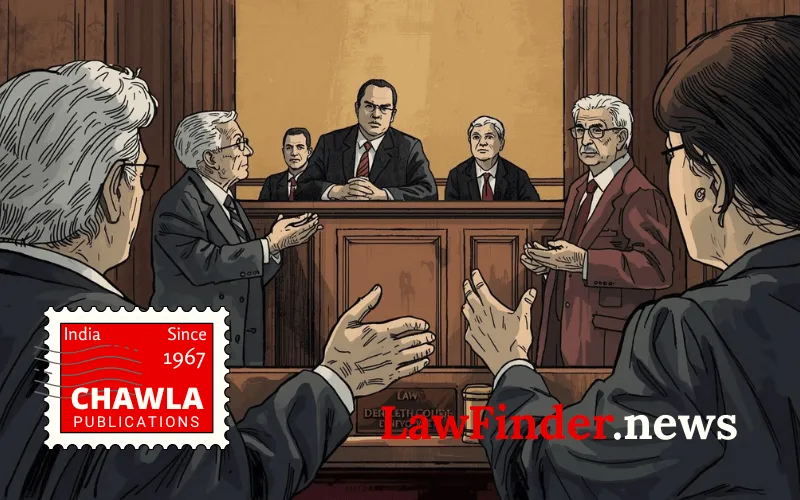
Court acknowledges retrospective applicability of Juvenile Justice Act, 2000, altering Shiv Kumar’s sentence to time already served.
In a significant judgment, the Punjab and Haryana High Court has modified the sentence of Shiv Kumar, an appellant convicted under Sections 363, 366-A, and 376 of the Indian Penal Code (IPC), recognizing his status as a juvenile at the time of the offence. The decision is rooted in the retrospective application of the Juvenile Justice (Care and Protection of Children) Act, 2000, which extends its benefits to individuals who were below 18 years at the time of the crime, even if their trial concluded before the Act's enforcement.
The case, titled Shiv Kumar v. State of Haryana, involved the appellant Shiv Kumar, who was 16 years, 5 months, and 17 days old when the offence occurred on June 19, 1999. His initial conviction and sentence were rendered under the 1986 Act, which defined juvenility as below 16 years for boys. However, the Juvenile Justice Act of 2000 expanded this age to 18 years, allowing for retrospective claims of juvenility.
The court's decision came after a detailed inquiry ordered by the High Court and conducted by the District & Sessions Judge, Yamuna Nagar, which confirmed Shiv Kumar’s age through school records. Despite the appellant having served 2 years, 8 months, and 16 days of his sentence, the court adjusted his sentence to time already served, aligning with the maximum penalty allowed under the Juvenile Justice Act, 2000, which is up to three years.
In its analysis, the court referenced several Supreme Court rulings, including Dharambir v. State (NCT of Delhi) and Hansraj v. State of UP, which solidified the principle that juvenility can be claimed at any stage of legal proceedings. This acknowledgment by the judiciary underscores the Act's intent to rehabilitate rather than penalize juvenile offenders.
The court’s judgment not only respects the legislative intent behind the Juvenile Justice Act but also upholds the principles of justice by ensuring that Shiv Kumar's sentence reflects his status as a juvenile offender at the time of the crime. This decision marks a critical interpretation of juvenile rights, reinforcing the importance of assessing the age of accused individuals at the time of their alleged offences and adjusting legal outcomes accordingly.
Bottom line:-
Juvenility can be raised at any stage, even after the conclusion of the trial, and individuals who were below 18 years of age on the date of the offence are entitled to the benefits of the Juvenile Justice Act, 2000, even if their trial concluded before the Act came into force.
Statutory provision(s): Juvenile Justice (Care and Protection of Children) Act, 2000 Sections 2(k), 2(l), 7A, 20, 49; Juvenile Justice (Care and Protection of Children) Act, 2015 Section 25; Indian Penal Code Sections 363, 366-A, 376; Criminal Procedure Code, 1973 Section 391.
Shiv Kumar v. State of Haryana, (Punjab And Haryana) : Law Finder Doc id # 2935789