Court Emphasizes Right to Dignified Disposal of Mortal Remains and Directs Police to Ensure Security, Restricts Political Interference in Cremation of Daljeet Singh
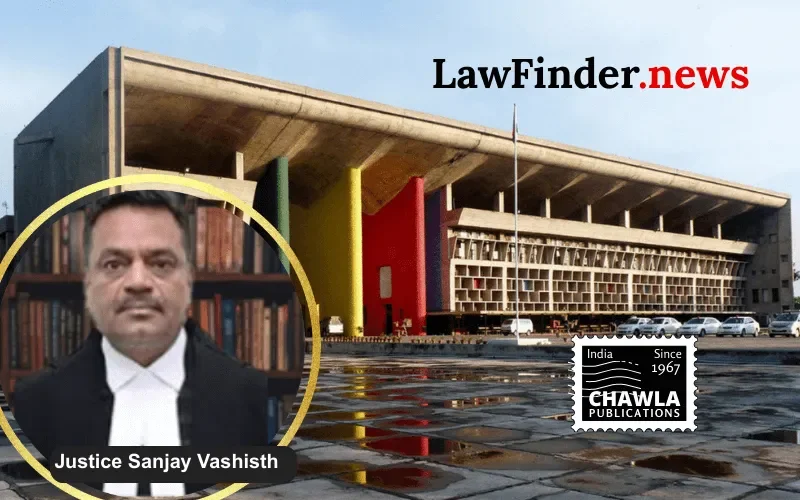
In a significant judgment delivered on November 3, 2026, the Punjab and Haryana High Court, presided over by Justice Sanjay Vashisth, addressed the sensitive issue surrounding the suspicious death of Daljeet Singh in District Mansa, Punjab. The Court acknowledged the serious concerns arising from conflicting accounts of the cause of death and the consequent public unrest that threatened law and order in the area.
The petitioner, Amarjeet Kaur, sister of the deceased, had filed a Criminal Writ Petition under Article 226 of the Constitution seeking multiple directions. These included protection for her and her family against alleged police atrocities, conducting a post-mortem at the Postgraduate Institute of Medical Education and Research (PGIMER), Chandigarh, and entrusting the investigation to the Central Bureau of Investigation (CBI) or any other independent agency.
The Court highlighted two recent unnatural death incidents in Mansa, which had caused widespread public agitation. The first incident involved Parminder Singh @ Jhota, whose body was withheld by protestors, and the second was that of Daljeet Singh, found dead under suspicious circumstances. Amarjeet Kaur asserted that her brother died from an overdose of narcotic substances, and the community wished to stage a peaceful procession with his mortal remains to protest the ongoing drug menace.
Notably, the Court underscored the constitutional right to a dignified disposal of mortal remains, emphasizing that this right extends beyond death and must be respected regardless of the circumstances. Given the conflicting versions - including an earlier post-mortem report from AIIMS Bathinda detailing eight injuries on Daljeet Singh's body - the Court ordered a fresh post-mortem at PGIMER, Chandigarh, to ascertain the true cause of death and resolve doubts about the nature and timing of the injuries.
The Court directed the Director Generals of Police of Punjab and Chandigarh UT, and PGIMER authorities to coordinate the fresh post-mortem and expedite the forensic examination of viscera. The mortal remains were to be handed over to PGIMER authorities by 10:00 AM on November 4, 2026.
Further, to maintain public peace and order, the Court mandated stringent police security arrangements and cordoning of the cremation ground at Sector 25, Chandigarh, allowing only family members, widow, minor children, close relatives, and friends to attend the last rites. The Court explicitly prohibited political parties, politicians, and other groups from participating or interfering in the cremation proceedings to prevent any disturbances.
The judgment reflects a balanced approach by the judiciary to uphold human dignity after death while ensuring law and order amid a volatile public atmosphere. The Court's directions are aimed at safeguarding the sentiments of the bereaved family, preventing misuse of the deceased's mortal remains for political or other agendas, and ensuring a thorough investigation into the suspicious death.
The case has been adjourned for further proceedings on November 5, 2026.
Bottom Line:
Right to dignified disposal of mortal remains is part of human dignity even after death - In view of conflicting versions regarding cause of death and pending cremation, High Court directed fresh post-mortem at PGIMER, Chandigarh, expedited viscera examination, and coordinated police protection for peaceful cremation restricted to family members and close friends, excluding political interference.
Statutory provision(s):
Constitution of India, Article 226
Amarjeet Kaur v. State of Punjab, (Punjab And Haryana) : Law Finder Doc Id # 3012539