Court holds that a Rs. 3,500 monthly income ceiling in executive instructions cannot override statutory medical attendance rules; says old-age allowance is not “income” and women employees may claim for parents-in-law.
The Punjab and Haryana High Court has set aside Haryana government orders rejecting medical reimbursement claims of several employees for treatment of their dependent parents, holding that the State cannot deny genuine medical expenses on a technical income criterion fixed through executive instructions.
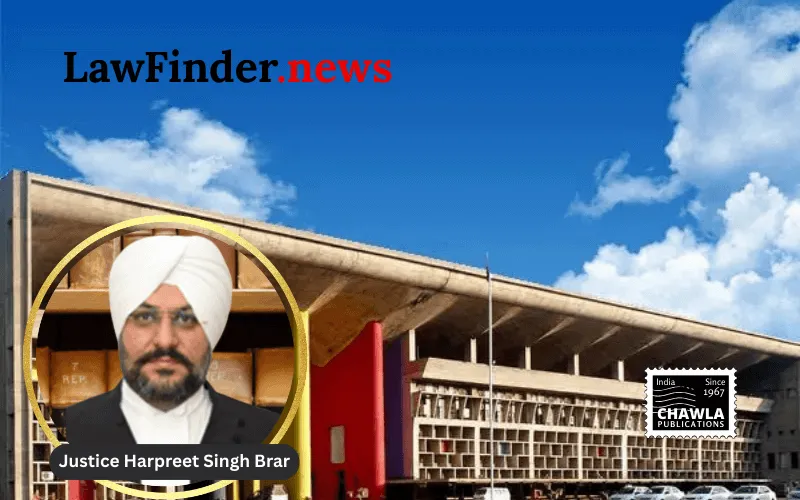
Justice Harpreet Singh Brar, while deciding a batch of connected writ petitions, ruled that the 1940 Punjab Medical Attendance Rules, which govern medical reimbursement for Haryana government employees, include “wholly dependent” parents within the definition of family and do not impose any rigid monetary ceiling. The Court said the State’s administrative instructions dated 14 December 2007, which prescribed a monthly income limit of Rs. 3,500 for dependents, cannot override the statutory rules.
The petitions arose after the authorities rejected reimbursement claims, including one for Rs. 3,72,502 spent on the treatment of a 70-year-old mother suffering from chronic ailments, solely because the annual family income reflected in official records exceeded the prescribed limit. The Court noted that the treatment, hospitalisation, bills and expenditure were undisputed, and the claims had been denied only on a hyper-technical ground.
Emphasising the constitutional dimension of the issue, the Court said the right to health and medical care is an integral part of the right to life under Article 21 of the Constitution. It observed that a welfare State cannot evade its obligation to provide medical aid by citing financial constraints, especially where the medical need and expenditure are genuine and admitted.
The Court also clarified that “wholly dependent” should not be interpreted in a narrow financial sense alone. Relying on Supreme Court precedent, it held that dependency includes physical dependence as well, particularly in the case of aged and infirm parents who require care, support and supervision.
A significant part of the judgment dealt with the Haryana government’s Old Age Samman Allowance of Rs. 3,000 per month. The Court accepted the petitioners’ argument that this amount is a social welfare allowance and not income. It referred to a clarification issued by the Director General Health Services, Haryana, stating that the allowance is an awarded amount and should not be counted as income for deciding medical reimbursement eligibility.
The Court further held that female employees cannot be denied reimbursement for treatment of their parents-in-law if the policy permits such claims. It noted that the Medical Reimbursement Policy expressly allows women employees to opt for either their own parents or their mother-in-law and father-in-law, and that the existence of a separate Family ID does not destroy dependency recognized under the rules.
Distinguishing earlier decisions relied upon by the State, the Court said the case of Dr. Manoj Kumar involved a dependent who was already drawing a substantial pension and had also availed cashless insurance benefits, which was not the situation in the present cases. Here, the dependents were elderly villagers, farmers or housewives receiving only nominal social security support.
Allowing the petitions, the Court quashed the impugned rejection orders and directed the respondents to process, sanction and release the admissible medical reimbursement amounts within two months.
Bottom Line:
Medical reimbursement - Haryana Government employees - Dependent parents/parents-in-law - Executive instructions prescribing income ceiling of Rs. 3,500/- per month cannot override Punjab Medical Attendance Rules, 1940 - Expression "wholly dependent" includes not merely financial but also physical dependence - Old Age Samman Allowance of Rs. 3,000/- cannot be treated as income to deny reimbursement - Female employee can claim reimbursement for parents-in-law as per policy - Rejection of genuine claims on technical income ground held arbitrary.
Statutory provision(s): Articles 21 and 47 of the Constitution of India, Punjab Medical Attendance Rules, 1940, Haryana Government Instructions dated 14.12.2007, General Condition No. 3 Note (iii) of Medical Reimbursement Policy
Sunil Kumar v. State of Haryana, (Punjab And Haryana) : Law Finder Doc id # 2995630