Court says PCIT ignored CBDT guidelines, gave no proper reasons on genuineness and hardship, and cannot justify rejection with new grounds later
The Punjab and Haryana High Court has set aside an order of the Principal Commissioner of Income Tax (PCIT), Panchkula, which had rejected the request of former HMT Limited employees to condone delay in filing revised income tax returns for assessment year 2017-18. The employees had sought to claim refund by changing the tax treatment of their voluntary retirement compensation from Section 10(10C) to Section 10(10B) of the Income-tax Act, 1961.
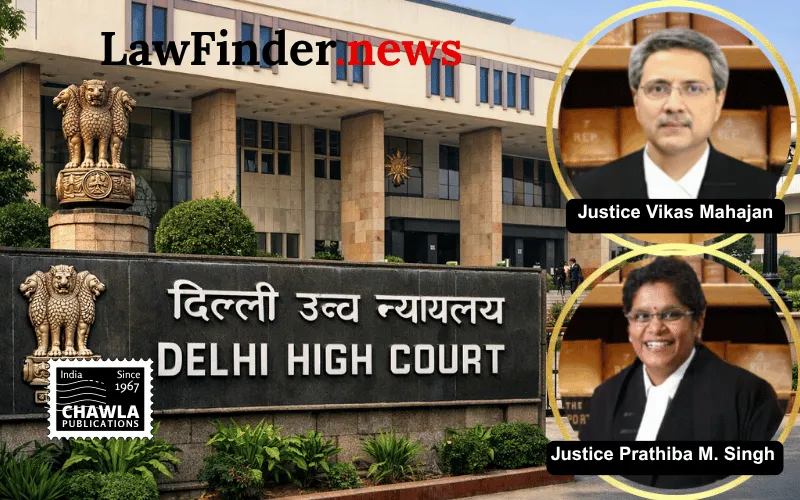
A Division Bench of Justice Deepak Sibal and Justice Sunish Bindlish held that the PCIT failed to apply the correct legal test under Section 119(2)(b) of the Income-tax Act and CBDT Circular No. 9/2015 dated 09.06.2015. The Court said the authority was required to examine whether the refund claim was “correct and genuine” and whether the case involved “genuine hardship.” Instead, the rejection order relied on irrelevant considerations and did not contain any independent reasoning.
The petitions were filed by 21 former employees of HMT Limited’s Tractor Division at Pinjore, Haryana. The employees had accepted voluntary retirement after the division was closed. According to the petitioners, they had originally filed returns based on Form 16 issued by the employer, which treated the VRS amount as taxable after allowing exemption under Section 10(10C). Later, in similar cases, appellate authorities had held that the amount was eligible for exemption under Section 10(10B), and those decisions had attained finality.
One of the petitioners, Rajbir Singh, had approached the PCIT seeking permission to file a revised return and claim a refund of over Rs. 7.19 lakh. However, the PCIT rejected the application on the ground that the appellate order in favour of a similarly placed employee had not been accepted on merits by the Revenue and was not challenged only because of low tax effect. The PCIT also held that no genuine hardship was shown.
The High Court found this reasoning unsustainable. It observed that the PCIT had not independently examined whether the petitioner’s claim under Section 10(10B) was correct or genuine. The Court also held that the finding of “no hardship” was cryptic and ignored the fact that the petitioner had lost employment after the closure of the undertaking and was seeking a substantial refund.
The Bench further noted that the department could not defend the rejection order by introducing a new argument before the Court that the petitioner had failed to explain the delay. Relying on the Supreme Court’s ruling in Mohinder Singh Gill v. Chief Election Commissioner, the Court said an administrative order must stand or fall on the reasons recorded in it, and fresh grounds cannot be added later through affidavits or arguments.
The Court also clarified that the test under Section 119(2)(b) is different from the “sufficient cause” standard under Section 5 of the Limitation Act. It said the relevant inquiry is whether the claim is correct, genuine and involves genuine hardship, not whether the assessee gave a detailed day-by-day explanation of delay.
Finding the impugned order mechanical, unreasoned and based on irrelevant factors, the High Court quashed it and remitted the matter back to the PCIT for fresh consideration. The Court directed the authority to pass a reasoned order within three months after giving the petitioner an opportunity of hearing.
Bottom Line :
Income Tax - Condonation of delay under Section 119(2)(b) of the Income-tax Act for filing revised return claiming refund - Competent authority must examine whether claim is correct, genuine and whether case involves genuine hardship - Rejection of application on irrelevant grounds or by mechanical order is unsustainable - Fresh reasons cannot be supplied before Court to support administrative order.
Statutory provision(s): Section 10(10B), Section 10(10C), Section 119(2)(b), Section 139, Section 237, Section 239, Income-tax Act, 1961