Court Rules That Resorting to Legal Remedies by Accused Does Not Constitute Bail Violation; Bail Cancellation Demanded by DLF Limited is Dismissed
In a significant judgment delivered on November 13, 2026, the Punjab and Haryana High Court dismissed the petition filed by DLF Limited seeking cancellation of regular bail granted to its former Managing Director, Mr. Ramesh Sanka. The case revolved around allegations of blackmail and misuse of the company's confidential data by the accused, who was granted bail on December 9, 2025, after being incarcerated for nearly 11 months.
Background:
The controversy began following the registration of FIR No. 253 dated August 8, 2024, at the Police Station DLF Phase 1, Gurugram, under various sections of the Indian Penal Code (IPC) including 381 (theft), 385 (extortion), 409 (criminal breach of trust), 506 (criminal intimidation), and Section 66 of the Information Technology Act, 2000. The petitioner alleged that Mr. Sanka, who held the position of Chief Financial Officer and later Managing Director at DLF Cyber City Developers Limited from June 1, 2004, to July 2, 2014, had misappropriated sensitive company data during his tenure.
DLF Limited contended that Mr. Sanka had violated a contractual confidentiality clause and resorted to blackmail by threatening to leak confidential information to extort Rs. 311 crores. Post his bail release, the petitioner claimed, Mr. Sanka initiated multiple litigations in various courts including the Supreme Court and High Courts of Delhi, Telangana, and Madras, allegedly misusing confidential information to intimidate and threaten the petitioner and witnesses.
Legal Proceedings and Arguments:
The State of Haryana supported the petitioner's request by highlighting the accused's prior criminal record and the recovery of significant digital evidence - including laptops, a mobile phone, and a hard disk containing voluminous data pertaining to the petitioner's confidential business operations.
Conversely, Mr. Sanka's defense argued that the bail cancellation was unwarranted, emphasizing that filing legal petitions does not amount to misuse or violation of bail conditions. The defense pointed out that the accused had resigned in 2014 and that documents used in litigation were either part of the final report submitted by the police or related to legitimate contractual disputes over professional fees. The accused also asserted that he has not misused any confidential data and that his legal actions were within his rights.
Judicial Analysis:
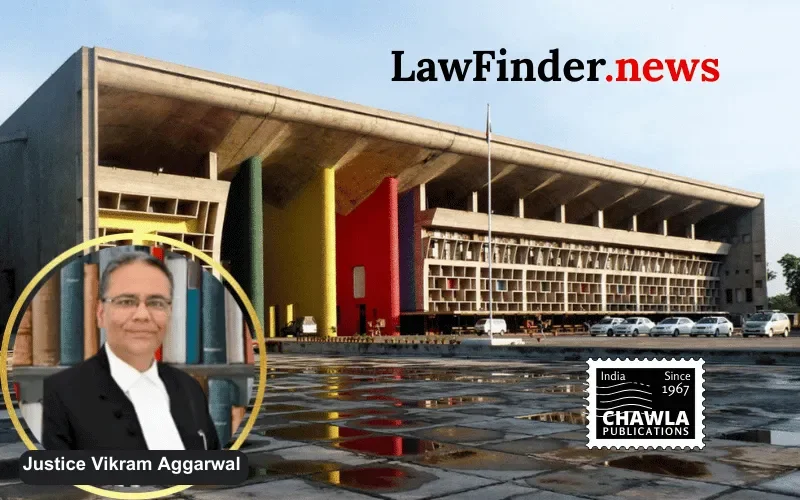
Justice Vikram Aggarwal, presiding over the case, meticulously analyzed the law on cancellation of bail, citing landmark Supreme Court judgments including Dolat Ram v. State of Haryana (1995), Abdul Basit v. Mohd. Abdul Kadir Chaudhary (2014), Abhimanue v. State of Kerala (2025), and Deepak Yadav v. State of UP (2022). The court reiterated that cancellation of bail is a drastic step that should not be resorted to mechanically and only under cogent and overwhelming circumstances such as:
- Interference or attempt to interfere with the due course of justice,
- Attempt to evade justice,
- Abuse of bail privileges,
- Misuse of liberty by engaging in criminal activities,
- Tampering with evidence or intimidating witnesses,
- Likelihood of absconding or evading court proceedings.
The Court observed that resorting to legal remedies, including filing writ petitions and appeals in higher courts, cannot be construed as a violation of bail conditions absent specific evidence of intimidation, tampering, or misuse of confidential information.
Judgment:
After thorough consideration of the facts, arguments, and relevant law, the High Court concluded that the accused had not wilfully violated the bail conditions. The petitions and litigation initiated by Mr. Sanka were found to be within his legal rights and did not amount to misuse or intimidation. The Court emphasized the importance of distinguishing between genuine legal recourse and criminal misconduct.
The petition filed by DLF Limited seeking cancellation of bail was accordingly dismissed, and the bail granted to Mr. Ramesh Sanka stands upheld.
Significance:
This judgment underscores the principle that bail, once granted, should not be cancelled lightly or mechanically. It protects the right of an accused to access legal remedies without fear of bail revocation unless clear, convincing evidence of misconduct emerges. The ruling also clarifies that allegations of misuse of confidential data must be substantiated beyond mere assertions, especially when the data is part of official investigation records.
Bottom Line:
Cancellation of bail is a drastic measure and should not be resorted to mechanically. Resorting to legal remedies by an accused cannot be deemed as a violation of bail conditions unless it involves inducing, threatening, or intimidating the complainant or witnesses.
Statutory provision(s): Bharatiya Nagarik Suraksha Sanhita, 2023 Section 483(3), Criminal Procedure Code, 1973 Section 439(2), Indian Penal Code Sections 381, 385, 409, 506, Information Technology Act, 2000 Section 66
DLF Limited v. State of Haryana, (Punjab And Haryana) : Law Finder Doc Id # 3102696