Court Rules Rule 12 of Bar Council’s Attendance Norms Does Not Bar Relief Under Article 226 in Extraordinary Medical Cases; University’s Appeal Dismissed with Costs
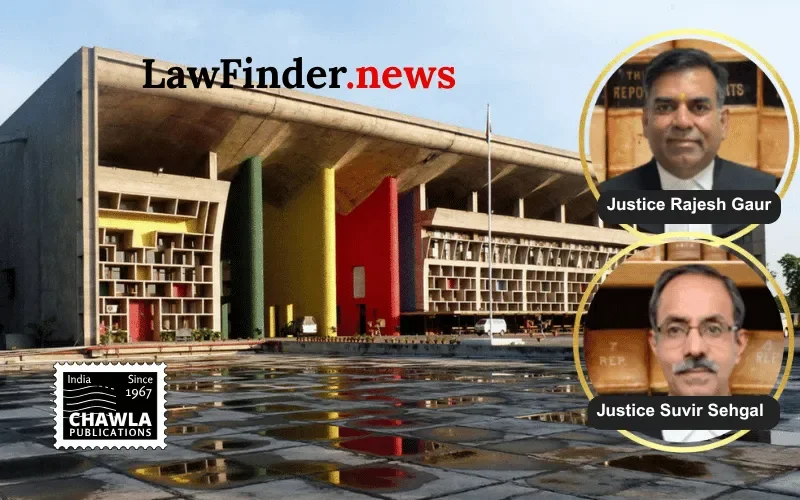
In a significant judgment delivered on November 13, 2026, the Division Bench of the Punjab and Haryana High Court, comprising Justices Suvir Sehgal and Rajesh Gaur, dismissed the Letters Patent Appeal filed by SVKM’s Narsee Monjee Institute of Management Studies challenging an interim order permitting a law student to appear in semester examinations despite falling short of the mandatory attendance requirement due to a severe medical emergency.
The case arose when the respondent, a student enrolled in the five-year integrated B.B.A. LLB program at the university, suffered grievous injuries in a vehicular accident on July 23, 2026. The accident caused fractures and required immediate surgery on his right thigh and hip, followed by prolonged hospitalization and bed rest. Consequently, the student’s attendance in the 5th semester plummeted to below the 70% threshold mandated under Rule 12 of the Bar Council of India, Rules of Legal Education, 2008. The university refused him permission to sit for the semester exams, prompting the student to file a writ petition before the High Court.
The Single Judge had granted interim relief, directing the university to provisionally allow the student to appear in the November 2026 semester exams, subject to the final outcome of the writ petition. The university challenged this order, arguing that the mandatory attendance rule permitted a maximum relaxation only up to 65% attendance and the student’s shortfall of approximately 23% could not be condoned.
The Division Bench, after hearing the parties and examining the case records, upheld the Single Judge’s exercise of judicial discretion. The court emphasized that Rule 12 prescribes a minimum attendance standard of 70%, with a maximum relaxation to 65%, but this does not preclude the High Court’s extraordinary equitable jurisdiction under Article 226 of the Constitution to intervene in exceptional circumstances such as serious medical emergencies.
The court noted that the student had a consistent past attendance record ranging between 75% to 87% in the previous four semesters, and the shortfall in the current semester was solely due to the severe injuries and medically mandated bed rest and physiotherapy. The interim order was held to be a balanced exercise of discretion, safeguarding the university’s interests by making the permission provisional and subject to the final adjudication of the writ petition. Denying the student the opportunity to appear would have caused irreparable harm by resulting in the loss of an entire academic year.
Consequently, the court dismissed the university’s appeal with costs of Rs. 25,000 to be deposited in the High Court Lawyers Welfare Fund within four weeks. The judgment clarified that the final decision on the writ petition remains open for determination by the Single Judge uninfluenced by observations made in this interim order appeal.
This ruling reinforces the principle that rigid attendance norms cannot override constitutional equitable jurisdiction in cases involving extraordinary medical circumstances, ensuring students are not unfairly deprived of academic opportunities due to unforeseen health emergencies.
Bottom Line:
Rule 12 of the Bar Council of India, Rules of Legal Education, 2008, which prescribes minimum attendance requirements, does not act as a bar on the extraordinary equitable jurisdiction of the Constitutional Court under Article 226 of the Constitution of India in cases involving extraordinary medical emergencies.
Statutory provision(s):
Article 226 of the Constitution of India, Rule 12 of Bar Council of India, Rules of Legal Education, 2008