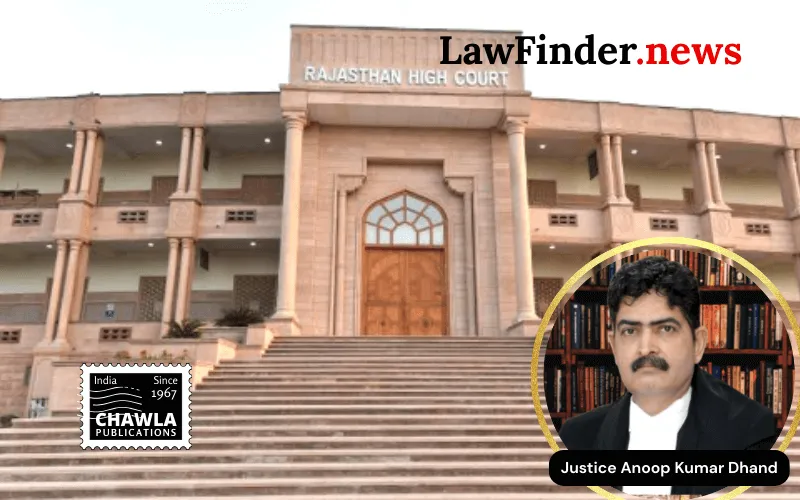
Jodhpur, Aug 25 The Rajasthan High Court has banned the sale of carbonated drinks, chips and other junk food in school canteens and within 50 metres of school gates as it issued a slew of directions on balanced food and nutrition besides expressing concern over paper leaks, excessive screen time and inadequate infrastructure in rural schools.
Taking suo motu cognisance of "systemic deficiencies" in foundational institutions meant to nurture Gen Z, Gen Alpha and Gen Beta, a Jodhpur bench of Justice Anoop Kumar Dhand directed every school to constitute a food safety and nutrition committee, display menu boards in canteens carrying information on calorie count, ingredients and nutritional value, and ensure that mid-day meals conform to balanced-diet guidelines.
The court on Monday issued notices to the Union Education and Human Resource Secretary, Union Ministry of Consumer Affairs, Food and Public Distribution, Rajasthan Chief Secretary, Additional Chief Secretary (Education), Secretary (Food and Civil Supplies), Food Safety and Standards Authority of India (FSSAI) and Rajasthan State Commission for Protection of Child Rights.
They have been directed to respond within eight weeks.
"This court is deeply concerned that where on the one hand, the nation prepares 'Gen Z', 'Gen Alpha' and 'Gen Beta' to lead India in 2047 (100 years of independence of our Nation) and beyond, on the other hand, the foundational institutions meant to nurture them, particularly the government schools in rural and village areas continue to suffer from systemic deficiencies," the court said in the order.
It said students currently studying in schools, colleges and universities across the nation and the state, especially in government schools situated in urban or rural and village areas, where they study in primary, upper-primary and secondary schools belong to the "Generation Alpha"; the newly born babies, i.e. "Generation Beta", who are supposed to get admission in nursery and primary schools soon; and the students studying in colleges and universities belong to the "Generation Z".
"In short these three generations are the ones who are going to be leading the nation in coming future," the order said.
The court banned the sale of high-fat, high-sugar and high-salt (HFSS) food items in school canteens and within 50 metres of school gates. The prohibited items include carbonated drinks, chips, trans-fat-containing bakery products and other junk food.
The court directed every school to constitute a food safety and nutrition committee within four weeks, comprising teachers, parents and student representatives. Details of the committees are to be uploaded on the education department's website.
Within eight weeks, school canteens will also have to display menu boards carrying information on the calorie count, ingredients and nutritional value of food items, besides implementing a traffic-light labelling system.
The state government has been asked to file an affidavit within six weeks detailing steps taken to implement the 2020 regulations on safe and balanced food in government, aided and private schools.
The court further directed that mid-day meals and other nutrition schemes conform to FSSAI's balanced-diet guidelines. A dedicated portal and helpline are also to be established for complaints regarding violations of food-safety norms.
The bench expressed concern over increasing mobile screen time among children and the excessive dependence on technology. While recognising that AI and digital learning are essential for preparing students for global competition, it cautioned that technology should not replace fundamental learning skills.
It stressed the need to preserve handwriting, book reading, note-making, independent thinking and written examinations, maintaining a balance between digital education and traditional methods of learning.
The bench also expressed concern over repeated paper leaks, observing that they adversely affect students' mental health and academic schedules and undermine public confidence in the examination system.
It called for a foolproof mechanism to prevent paper leaks.
The court directed authorities to address deficiencies in rural and remote government schools, including vacant teacher posts, smart classrooms, computers, internet connectivity, health check-ups, toilets, drinking water and sports facilities.
District collectors have been asked to conduct surprise inspections of rural schools and submit reports within eight weeks. A quarterly monitoring cell headed by the chief secretary has also been ordered to oversee implementation of the directions.
The court additionally asked the Centre and state governments to prepare an action plan to address challenges concerning Gen Z, including the education-employment gap, social security for gig workers, affordable hostels and housing, digital detox programmes, data privacy and cyber security.
Advocates have been appointed as amici curiae to assist the court in examining issues affecting the three generations.
The matter has been directed to be placed before the Acting Chief Justice for listing before an appropriate bench.