Court holds that public sector corporation cannot indefinitely retain private property after lease expiry without valid renewal; arbitration clause does not bar writ petition for restoration of possession.
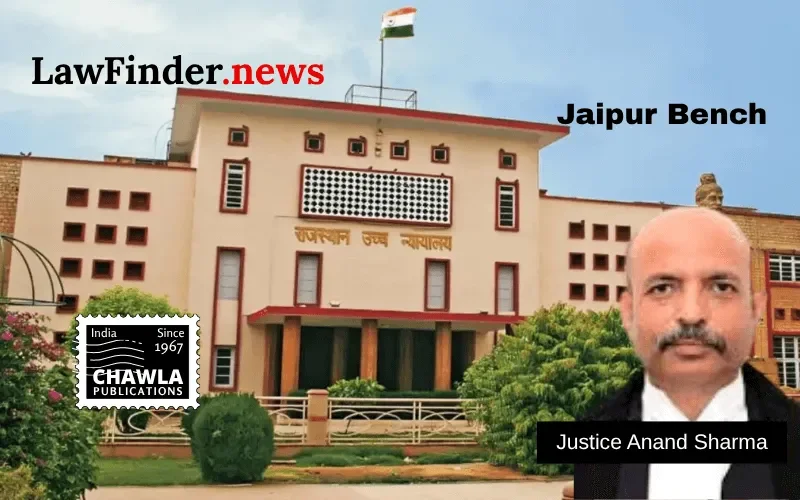
In a significant judgment delivered on November 18, 2026, the Rajasthan High Court (Jaipur Bench) ruled in favor of Suma Minerals Private Limited, directing Indian Oil Corporation Limited (IOCL) to vacate land and hand over peaceful possession following the expiry of a lease agreement. The Court emphasized that a public sector corporation, despite having an arbitration clause in the contract, cannot claim an indefinite right to retain possession of private property once the lease has expired and no valid renewal has been executed.
Background:
The dispute arose from a lease agreement dated March 16, 2004, between Suma Minerals (the petitioner) and IOCL, granting IOCL possession of land for establishing and operating a petroleum outlet for 19 years and 11 months, expiring on February 15, 2024. The lease agreement included a clause permitting renewal up to 2034, subject to execution of a fresh lease deed by both parties. Notably, the word “automatic” renewal was struck off with mutual consent, underscoring that renewal required explicit agreement and formal documentation.
After the lease expired, Suma Minerals repeatedly requested IOCL to vacate the premises and remove its fixtures, equipment, and unsold petroleum stock. Despite these demands, IOCL continued to occupy the land, remitting partial rent without a renewed lease, which the petitioner returned, refusing to accept it as rent under any new tenancy.
Legal Proceedings and Arbitration:
IOCL filed a civil suit seeking renewal of the lease, which was dismissed following the petitioner’s successful invocation of the arbitration clause under the Arbitration and Conciliation Act, 1996. IOCL subsequently initiated arbitration proceedings and sought appointment of an arbitrator through the High Court. However, the Court noted that while arbitration governs contractual disputes, it does not grant IOCL a right to continue possession post-expiry without a valid lease.
Key Legal Findings:
The High Court extensively analyzed the arbitration provisions and constitutional writ jurisdiction under Article 226 of the Indian Constitution. It reaffirmed that:
1. Arbitration Clause and Writ Jurisdiction:
Arbitration agreements do not bar the High Court’s constitutional writ jurisdiction, especially when the relief sought concerns unlawful or arbitrary retention of private property by a State instrumentality like IOCL. The Court distinguished between contractual disputes suitable for arbitration and possession restoration claims that fall within public law remedies.
2. Lease Renewal Clause Interpretation:
The deliberate removal of the word “automatic” and insertion of the requirement for a separate lease deed evidenced the parties’ intention that renewal must be formal and consensual. IOCL’s continued occupation without a fresh lease deed constituted unauthorized possession.
3. Public Sector Corporation’s Duty:
As a State instrumentality, IOCL is bound to act fairly and lawfully. It cannot indefinitely hold possession of private property without valid legal entitlement. The Court underscored the need for compliance with statutory safety norms, especially given the hazardous petroleum products on the site.
4. Distinction Between Contractual Claims and Possession Relief:
Monetary claims, outstanding rent, dealership charges, and reimbursement issues fall within the scope of arbitration. However, the writ petition seeking possession restoration stands on a distinct footing and is maintainable.
5. Precedents Cited:
The Court relied on Supreme Court judgments including Hindustan Petroleum Corporation Ltd. v. Dolly Das (1999), Harbanslal Sahnia v. Indian Oil Corporation Ltd. (2003), National Company v. Bharat Petroleum Corporation Ltd. (2019), and Unitech Ltd. v. Telangana State Industrial Infrastructure Corporation (2021), which support the exercise of writ jurisdiction against State instrumentalities for arbitrary actions despite arbitration clauses.
Order and Directions:
The Rajasthan High Court directed IOCL to:
- Vacate the land at Ajmer Road, Madanganj Kishangarh, District Ajmer, and hand over peaceful and vacant possession to Suma Minerals within 60 days.
- Remove all fixtures, equipment, installations, and petroleum stock from the premises in coordination with the Petroleum and Explosives Safety Organisation (PESO) and comply with safety regulations.
- Pursue outstanding lease rent, dealership charges, and other contractual claims through arbitration proceedings already initiated.
Implications:
This ruling clarifies that public sector corporations cannot rely solely on arbitration clauses to indefinitely retain private property beyond lease terms. It affirms the High Court’s constitutional jurisdiction to intervene in cases of unlawful possession, ensuring the protection of property rights against State instrumentalities.
Bottom Line:
A public sector corporation cannot claim an indefinite right to retain possession of private property after the expiration of a lease, particularly when no valid renewal of the lease has taken place, and the owner has repeatedly demanded restoration of possession.
Statutory provision(s):
Article 226 of the Constitution of India, Arbitration and Conciliation Act, 1996 – Sections 5, 8, 11, 21