Court orders fresh adjudication by independent authority, citing conflict in roles of CGST officials
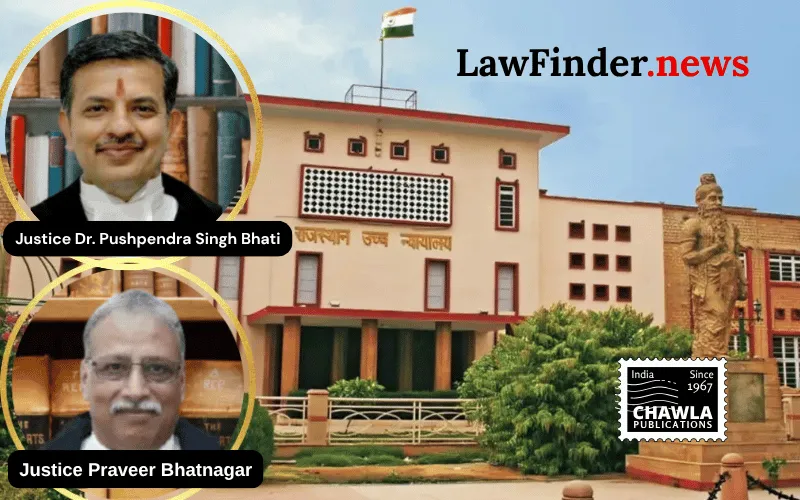
In a significant judgment, the Rajasthan High Court has quashed the penalties imposed on M/s Gajmukhi Bullion under the Central Goods and Services Tax Act, 2017, citing a reasonable apprehension of bias. The decision was delivered by a division bench comprising Dr. Pushpendra Singh Bhati and Praveer Bhatnagar, JJ., who emphasized the importance of impartiality in quasi-judicial proceedings.
The petitioner, M/s Gajmukhi Bullion, contested the penalties on grounds that the Additional Commissioner, who approved the investigation report, also acted as the quasi-judicial authority to adjudicate the matter. This dual role was argued to undermine the foundational principles of natural justice.
The case involved the interpretation of Sections 122 and 132 of the CGST Act, where the petitioner was penalized for alleged contraventions. A show-cause notice issued on May 21, 2024, proposed these penalties, which were later confirmed by an appellate authority.
M/s Gajmukhi Bullion, represented by Mr. Prateek Gattani, challenged the involvement of the same officer in both investigative and adjudicative capacities. The Court found this to create a reasonable apprehension of bias, a principle upheld in previous judgments, including the Supreme Court's ruling in Ashok Kumar v. State of Haryana.
The High Court's judgment emphasized that justice must not only be done but must also appear to be done, and remanded the case for fresh adjudication by an independent authority. This ensures that the roles of investigator, approving authority, and quasi-judicial officer are not conflated, maintaining the integrity of the adjudication process.
The judgment also clarified that the sanctioning authority under Section 132(6) is the Commissioner, not the Additional Commissioner, addressing another contention raised by the petitioner.
This decision underscores the judiciary's commitment to upholding natural justice and impartiality in quasi-judicial proceedings, providing a precedent for similar cases involving the dual roles of officials in legal processes.
Bottom line:-
Principle of natural justice - Reasonable apprehension of bias arises when the same officer who approved the investigation report also acts as the quasi-judicial authority to adjudicate the matter. This arrangement undermines the foundational principles of a quasi-judicial function.
Statutory provision(s): Central Goods and Services Tax Act, 2017 Sections 122(1), 132, 132(6)