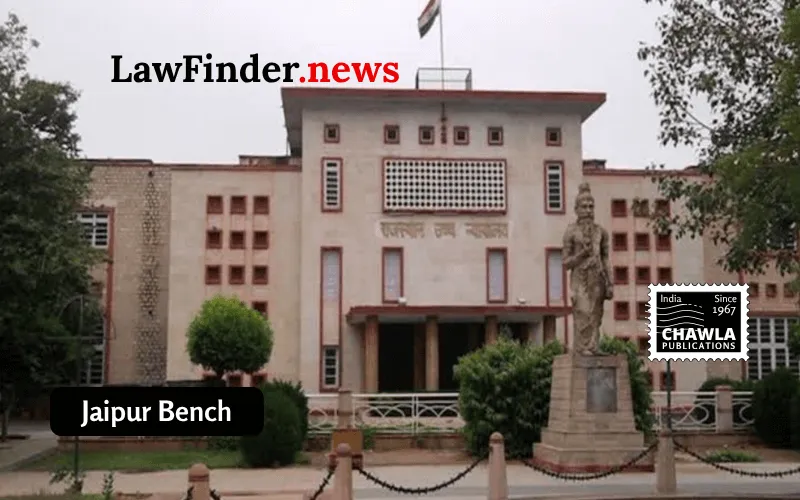
Court clarifies that while subsequent acquittal nullifies conviction, it does not erase prior legal consequences; back-wages granted only for period after unlawful termination following acquittal
In a significant judgment dated September 25, 2026, the Rajasthan High Court (Division Bench, Jaipur) addressed the contentious issue of entitlement to back-wages for a government employee dismissed following his criminal conviction and later acquitted. The case of Dalbeer Singh v. State of Rajasthan revolves around the legal consequences flowing from conviction and acquittal in the context of service law.
Dalbeer Singh, the appellant, was convicted on May 15, 2017, under Section 409 of the Indian Penal Code and sentenced to rigorous imprisonment along with a fine. However, the conviction was reversed and he was acquitted on June 28, 2017. Despite the acquittal, the State dismissed him from service on August 8, 2017, only to reinstate him on February 16, 2018, upon recognizing the acquittal.
The Single Judge had earlier quashed the dismissal order but denied monetary benefits, prompting the appeal. The key question before the High Court was whether Dalbeer Singh was entitled to back-wages from the date of dismissal till reinstatement.
The Court relied on binding precedents, including the Supreme Court's decisions in Ranchhodji Chaturji Thakore v. Gujarat Electricity Board (1996), Union of India v. Jaipal Singh (2004), and State Bank of India v. Mohammed Abdul Rahim (2013). These judgments establish that while acquittal obliterates conviction, it does not operate retrospectively to wipe out legal consequences already suffered due to conviction. Moreover, the principle of "no work, no pay" applies if the employee was absent due to his own conduct leading to conviction.
Applying these principles, the Court observed that Dalbeer Singh's termination on August 8, 2017, was illegal as it occurred after his acquittal on June 28, 2017. Therefore, he was entitled to back-wages only from the date of unlawful termination (post acquittal) till reinstatement on February 16, 2018. The Court set aside the earlier order to this extent and allowed the appeal.
This judgment reinforces the legal position that termination based on conviction is justified, but termination after acquittal is impermissible, entitling the employee to monetary relief for that period. It balances the interests of public service discipline with protection of employees' rights following acquittal.
Bottom Line:
Service Law - Employee dismissed on basis of conviction and later acquitted - Subsequent acquittal does not retrospectively wipe out legal consequences of conviction - However, where termination order is passed after acquittal, employee is entitled to back-wages from date of termination till date of reinstatement.
Statutory provision(s): Section 409 IPC
Dalbeer Singh v. State of Rajasthan, (Rajasthan)(DB)(Jaipur) : Law Finder Doc Id # 2990614