Court Refuses to Stall Election Process, Citing Article 243-O of Constitution; Reservation Challenges Involving Factual Disputes Deemed Inappropriate During Election Period
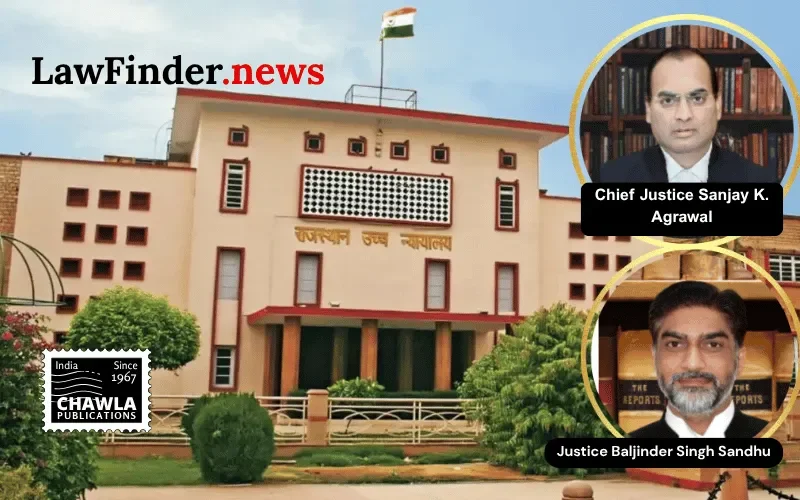
In a significant judgment dated October 15, 2026, the Rajasthan High Court, in a Division Bench comprising Chief Justice Sanjay K. Agrawal and Justice Baljinder Singh Sandhu, dismissed a special appeal filed by Kanti Lal challenging the reservation of wards and the post of Gram Panchayat Majhiwala for Scheduled Castes/Scheduled Tribes in the upcoming Panchayat elections.
The appellant contended that the reservation was flawed, pointing out that only 14 voters belonged to the Scheduled category in the Gram Panchayat and alleged that the population figures used for reservation were fabricated. The appellant further questioned the validity of the notification issued under Rule 23 of the Rajasthan Panchayat Raj Election Rules, 1994. However, the Court found that the election process had already been set in motion following the publication of the State Election Commission's election programme on October 3, 2026, which constituted the formal commencement of elections under Article 243-O of the Constitution of India.
The Court emphasized that Article 243-O imposes a bar on judicial interference in election matters once the election process has begun to prevent disruption, delay, or postponement. The notification under Rule 23, issued subject to the general directions of the Commission, was held to be part of this ongoing process. The Court referred to precedents including the Supreme Court rulings in Election Commission of India v. Ashok Kumar (2000), Lakshmi Charan Sen v. A.K.M. Hassan Uzzaman (1985), and Anugrah Narain Singh v. State of U.P. (1996), which collectively underscore judicial restraint during imminent or ongoing elections.
The judgment also acknowledged the appellant's legal argument relying on the recent Supreme Court decision in Union Territory of Ladakh & Ors v. Jammu and Kashmir National Conference (2023 INSC 804), which noted that the jurisdiction under Article 226 is not absolutely barred. However, the Rajasthan High Court clarified that challenges involving disputed questions of fact, especially those related to administrative exercises such as reservation and delimitation, are not suitable for interference during the election process.
Further, the Court observed that the election process for Gram Panchayats in Rajasthan is scheduled to conclude by November 17, 2026, and any disruption at this stage would be detrimental to the democratic exercise. While the writ petition was dismissed, the appeal was admitted on the legal question regarding maintainability, and the matter was listed for hearing after six weeks.
This ruling reiterates the principle that courts must exercise caution in election matters, balancing the need for judicial scrutiny with the imperative of facilitating smooth and timely elections, particularly in local governance institutions such as Panchayats.
Bottom Line:
Panchayat Elections - Challenge to reservation of wards/Gram Panchayat after publication of State Election Commission election programme - Once election process is set in motion, High Court should refrain from interference under Article 226 in view of bar under Article 243-O of Constitution of India - Reservation/delimitation related challenge involving disputed questions of fact not to be entertained so as to interrupt, delay or postpone election process.
Statutory provision(s):
Article 226, Article 243-O of the Constitution of India; Rule 23, Rajasthan Panchayat Raj Election Rules, 1994
Kanti Lal v. State of Rajasthan, (Rajasthan)(DB) : Law Finder Doc Id # 3001716