Court Rules Reduction of Regular Pay-Scale Without Notice Violates Natural Justice, Sets Aside Society's Order
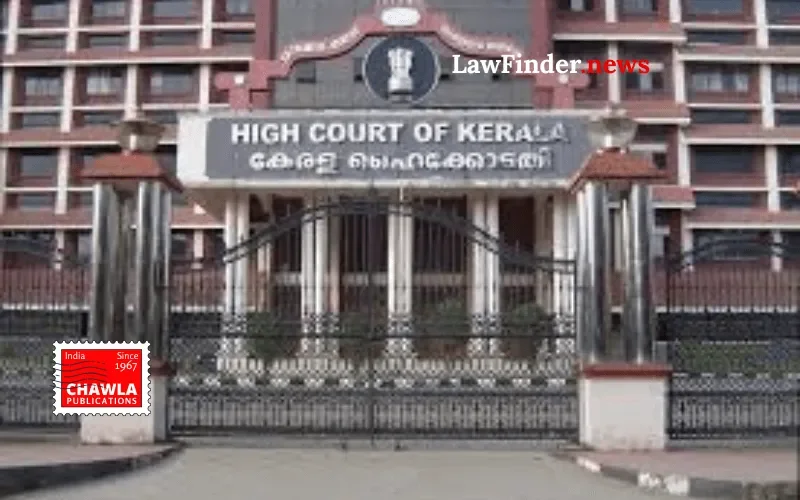
In a significant judgment delivered on September 10, 2026, the Rajasthan High Court (Division Bench) dismissed the special writ appeals filed by the Mukhya Vyavasthapak of Banswara Kray Vikray Sahakari Samiti Limited, upholding the earlier order of the Single Judge that quashed the Society's decision to reduce the regular pay-scale of certain employees without affording them an opportunity of hearing. The judgment reinforces the foundational principle of natural justice that no employee should suffer financial loss due to a reduction in pay without being heard.
The case arose when several employees, initially engaged as Lower Division Clerks (LDCs) on a consolidated remuneration of Rs. 12,000 per month, were later appointed against regular posts and granted regular pay-scales by the Banswara Kray Vikray Sahakari Samiti. However, during an audit conducted on February 2, 2018, irregularities were detected in the appointments of four employees. Responding to the audit's objection, the Society withdrew the regular pay-scale and reverted the employees to their original fixed consolidated remuneration without any prior notice or hearing.
Aggrieved by this abrupt pay reduction, the affected employees filed writ petitions challenging the Society's order. The Single Judge ruled in favor of the employees, holding that such a reduction constitutes civil consequences and therefore mandates an opportunity of hearing as per the principles of natural justice. The Society, dissatisfied with this ruling, approached the Division Bench through special writ appeals.
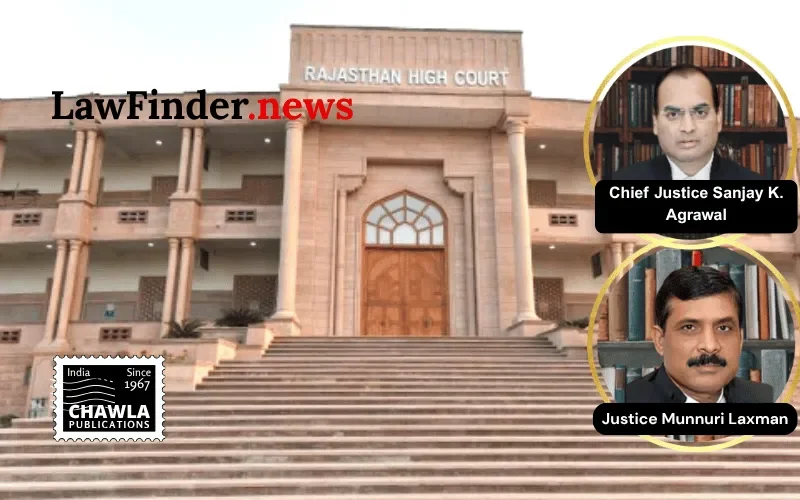
The Division Bench, comprising Chief Justice Sanjay K. Agrawal and Justice Munnuri Laxman, heard arguments from both sides. The Society contended that the appointments were irregular and even fraudulent, justifying the withdrawal of the regular pay-scales. They argued that since the appointments themselves were unauthorized, no hearing was necessary before restoring the status quo ante.
However, the Court emphasized the binding precedent set by the Supreme Court in Mukund K. Pai v. Punjab National Bank (2025 SCC Online SC 2345) and Bhagwan Shukla v. Union of India ((1994) 6 SCC 154). These rulings clarified that any action leading to reduction or re-fixation of pay which results in recurring financial loss must be preceded by an opportunity to be heard. The Court observed that the Society's order was passed behind the employees' backs without notice, violating the audi alteram partem rule.
Quoting the Supreme Court, the Bench highlighted that "fair play in action warrants that no such order which has the effect of an employee suffering civil consequences should be passed without putting the concerned employee to notice and giving him a hearing." Applying these principles, the Rajasthan High Court held that the Single Judge rightly set aside the pay reduction order as it was passed in violation of natural justice.
The Court dismissed the appeals, thus reinstating the employees' entitlement to their regular pay-scales unless due procedure including notice and hearing is followed. The judgment sends a strong message to employers that financial detriment caused by pay revisions cannot be imposed unilaterally, especially when appointments or pay-scales are under scrutiny.
This ruling serves as a reminder that irrespective of internal irregularities or fraud allegations, procedural fairness must be maintained to safeguard employee rights in service matters. The Society's disciplinary action against the former Manager responsible for irregular appointments was noted but was not a substitute for adhering to principles of natural justice vis-a-vis affected employees.
In conclusion, the Rajasthan High Court's judgment reinforces the legal safeguard that a reduction in pay-scale, which has civil consequences, is unsustainable if effected without prior notice and opportunity of hearing, thereby upholding the fundamental doctrine of audi alteram partem in service law.
Bottom Line:
Service Law - Reduction of regular pay-scale to consolidated remuneration without affording opportunity of hearing violates principles of natural justice - Reduction in pay entails civil consequences - Order passed without notice or hearing is liable to be set aside.
Statutory provision(s):
Principles of Natural Justice, Service Law provisions relating to pay-scale fixation and reduction.