Shree Cement Ltd. Liable for Excise Duty on Waste and Scrap Despite Lack of Specific Tariff Entry
The Rajasthan High Court, Jaipur Bench, in a significant judgment dated August 3, 2026, dismissed the appeal filed by Shree Cement Ltd., affirming the imposition of central excise duty on the clearance of scrap generated from capital goods on which CENVAT credit had been availed. The court held that even if such scrap is not covered under a specific tariff entry or does not result from any process of manufacture, excise duty is payable under Rule 3(5A) of the CENVAT Credit Rules, 2004.
The case arose when Shree Cement Ltd. cleared various scraps, including refractory bricks, conveyor belts, and discarded plant machinery, without paying central excise duty, arguing that they were non-excisable. The adjudicating authority, however, issued a demand for Rs. 6,33,256/- along with interest and penalty, which was upheld by the Commissioner (Appeals) and the Customs, Excise and Service Tax Appellate Tribunal (CESTAT), New Delhi.
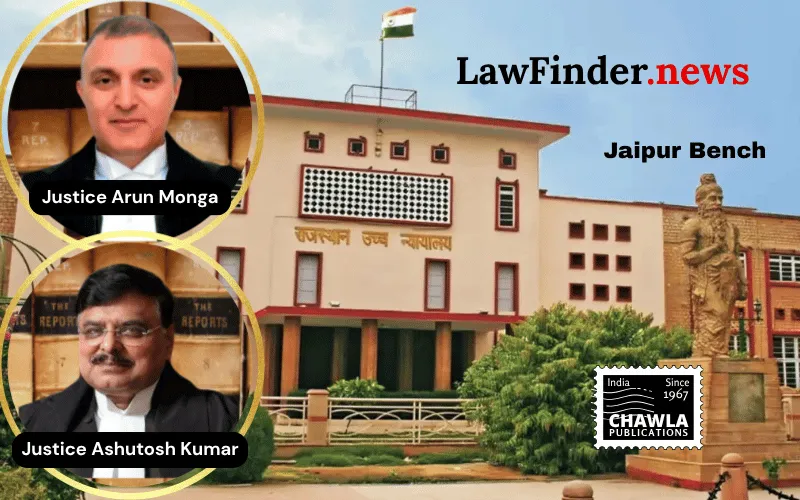
The High Court, led by Justices Arun Monga and Ashutosh Kumar, concurred with the lower authorities' interpretation of Rule 3(5A), which mandates excise duty on the transaction value of waste and scrap of capital goods. The court emphasized that the rule is designed to prevent the conversion of availed CENVAT credit into an unintended fiscal benefit when capital goods are sold as scrap.
In supporting its decision, the court referred to the Gujarat High Court's judgment in GNFC Limited v. Union of India, which set a precedent by confirming that duty is leviable on waste and scrap even if they do not emerge from a manufacturing process. This precedent was upheld by the Supreme Court, lending further weight to the Rajasthan High Court's ruling.
The decision underscores the legal obligation of manufacturers who have availed CENVAT credit to comply with the statutory conditions governing the clearance of capital goods as scrap. The ruling is expected to have significant implications for manufacturing entities dealing with capital goods and availing CENVAT credit.
Bottom Line :
Waste and scrap of capital goods on which CENVAT credit was availed are liable to central excise duty upon clearance, even if such scrap is not covered under any specific tariff entry or does not result from any process of manufacture undertaken by the appellant.
Statutory provision(s): Central Excise Act, 1944, Rule 3(5A) of CENVAT Credit Rules, 2004, Section 3, Rule 57-S(2)(C) of the Central Excise Rules, 1944.