Court Rejects State's Appeal, Citing Supreme Court Precedents and Principles of Fairness Against Exploitative Terminations
In a landmark judgment dated November 3, 2026, the Rajasthan High Court (Division Bench) dismissed the State of Rajasthan's Special Appeal against the regularization of services of Veterinary Officers appointed on a temporary basis under Rule 26 of the Rules of 1963. The Court affirmed the decision of the Single Bench which had directed the State to regularize the services of these employees who have served continuously for over ten years.
The petitioners-respondents, initially appointed in 2013 through a recruitment process under Rule 26, had their services terminated abruptly after three years. They challenged the termination before the High Court and upon successful litigation, continued their service. Later, when their request for service regularization was denied by the State, they filed writ petitions which were allowed by the Single Bench.
The State contended that since the appointments were on an urgent temporary basis and the employees' services were not uninterrupted, regularization was not warranted, relying heavily on the Supreme Court's judgment in State of Karnataka v. Uma Devi (2006) which primarily targets illegal appointments and backdoor entries.
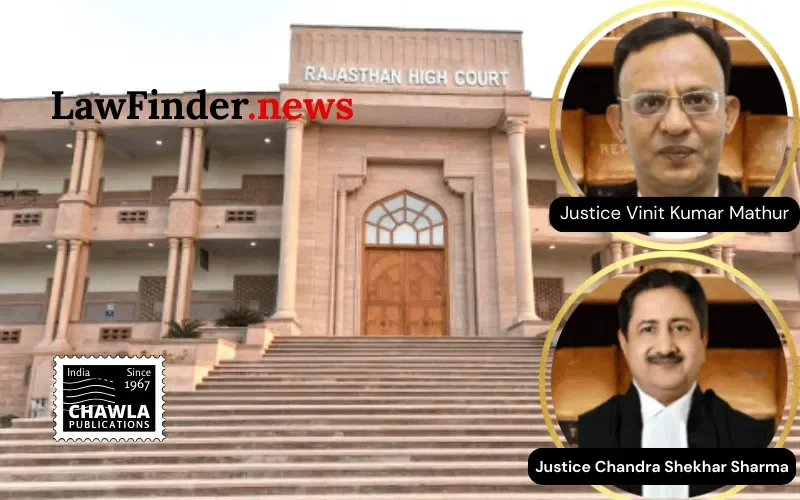
However, the Division Bench, led by Justices Vinit Kumar Mathur and Chandra Shekhar Sharma, relied on recent Supreme Court judgments, notably Jaggo v. Union of India (2024), and Vinod Kumar v. Union of India (2024). The Court emphasized that the label "temporary" cannot override the reality of continuous, indispensable, and sanctioned work performed by these employees over a decade. The Court highlighted that abrupt termination to circumvent regularization was exploitative and against principles of fairness.
The judgment reiterated the distinction between "irregular" and "illegal" appointments made in Uma Devi, clarifying that employees with more than ten years of continuous service in sanctioned posts, even if initially appointed temporarily or irregularly, are entitled to regularization as a one-time measure. The Court stressed that procedural lapses at the time of appointment do not negate accrued substantive rights arising from long-term service.
The judgment also condemned the misuse of temporary contracts as a tool for denying basic rights, career progression, and social security benefits to long-serving employees. It called for government departments to avoid such exploitative practices and to ensure fair treatment and regularization in line with constitutional mandates.
The Court's ruling is a significant reinforcement of workers' rights in government service, ensuring that temporary employees who have served continuously and performed essential duties cannot be denied regularization on technical grounds or through arbitrary terminations.
Bottom Line:
Employment - Regularization of services of employees - Employees appointed on an urgent temporary basis under Rule 26 of the Rules of 1963 and continued for more than 10 years - Termination of services by the employer to deprive employees of regularization termed exploitative - Employees fulfilling the criteria of continuous service for over a decade entitled to regularization under the principles laid down in Uma Devi (2006) and subsequent judgments.
Statutory provision(s): Rule 26 of the Rules of 1963
State of Rajasthan v. Dr. Ramakant Soni, (Rajasthan)(DB) : Law Finder Doc Id # 3017447