Court Rules Section 22 of Specific Relief Act, 1963 Overrides CPC's Order VI Rule 17, Permitting Amendment at Any Stage; Emphasizes Liberal Approach to Avoid Multiplicity of Litigation
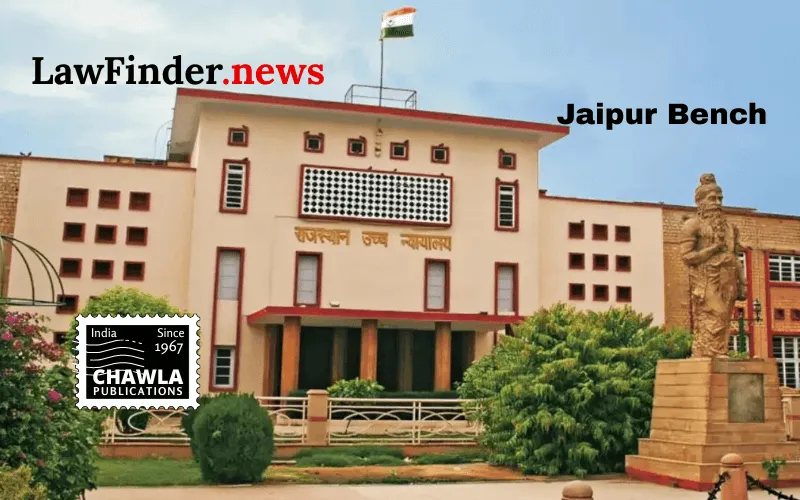
In a significant judgment delivered on September 30, 2026, the Rajasthan High Court dismissed a writ petition challenging an order of the Additional District Judge, Makrana, which permitted the amendment of a plaint in a suit for specific performance to include an alternative relief for recovery of earnest money or advance amount.
The dispute arose from a contract dated April 17, 2019, between Ishwar Chand Jangid (petitioner) and Manoj Kumar Sharma (respondent), under which the respondent agreed to supply mineral stone to the petitioner at mutually settled rates. The respondent-plaintiff instituted a suit seeking specific performance of the contract, alleging that despite receipt of an advance amount, the petitioner failed to supply the agreed quantity. The original plaint contained pleadings regarding the payment and non-refund of the advance amount but did not include a specific claim for refund or recovery of the advance.
At the stage of the plaintiff's evidence, the respondent applied to amend the plaint under Order VI Rule 17 of the Civil Procedure Code (CPC) to include an alternative prayer for refund/recovery of the advance amount. The petitioner opposed the amendment, contending that the proviso to Order VI Rule 17 CPC prohibits amendment after trial commencement unless due diligence is shown. The petitioner also argued that the amendment changed the character of the suit and was a belated attempt to introduce new relief.
The Trial Court allowed the amendment, relying on Section 22 of the Specific Relief Act, 1963, which expressly permits incorporation of a claim for refund of earnest money or deposit at any stage of proceedings, overriding general procedural provisions. The petitioner challenged this order before the High Court, which affirmed the Trial Court's decision after detailed analysis of statutory provisions and case law.
Key findings of the High Court include:
1. Overriding Effect of Section 22: The Court emphasized that Section 22 of the Specific Relief Act contains a non-obstante clause that overrides contradictory provisions in the CPC, specifically the proviso to Order VI Rule 17. This statutory mandate requires courts to allow amendments to include refund claims at any stage of the proceedings.
2. No New Cause of Action Introduced: The amendment was not introducing a new cause of action but sought an alternative relief arising from the same transaction and facts already pleaded in the plaint. The original plaint contained clear averments about the advance amount paid and its non-refund, satisfying the foundational requirements.
3. Liberal Approach to Amendments: Drawing from authoritative Supreme Court judgments such as K.R. Suresh v. R. Poornima and others, the Court reiterated the principle that amendments should be liberally allowed to avoid multiplicity of litigation and decide real controversies between parties. The Court also relied on a Karnataka High Court decision that identified categories where amendments post-trial commencement can be allowed without strict due diligence, including seeking alternative or ancillary reliefs.
4. Limited Scope of Article 227: The Court held that supervisory jurisdiction under Article 227 of the Constitution should be exercised sparingly. There was no perversity, jurisdictional error, or manifest injustice in the Trial Court's order to justify interference.
Consequently, the writ petition was dismissed, affirming that the Trial Court rightly permitted the amendment of the plaint to include the alternative prayer for refund of the earnest money/advance amount. The judgment clarifies the interplay between special statutory provisions under the Specific Relief Act and the general procedural rules of the CPC, reinforcing the protection available to plaintiffs seeking recovery of advance payments in suits for specific performance.
This ruling will be a guiding precedent for litigants and courts dealing with amendments in suits for specific performance, emphasizing that procedural bars cannot override substantive statutory rights granted under special laws like the Specific Relief Act, 1963.
Bottom Line:
Specific Relief Act, 1963 Section 22 overrides proviso to Order VI Rule 17 CPC in a suit for specific performance - Amendment of plaint to add alternative relief of refund/recovery of advance amount/earnest money can be allowed at any stage - Where foundational facts regarding payment and non-refund were already pleaded, such amendment does not change nature of suit - No interference under Article 227 warranted against order allowing amendment.
Statutory provision(s):
Specific Relief Act, 1963 Section 22, Code of Civil Procedure, 1908 Order VI Rule 17, Constitution of India Article 227
Ishwar Chand Jangid v. Manoj Kumar Sharma, (Raj) : Law Finder Doc Id # 2990809