Court Rules Writ Petitions Against Withdrawal Orders Under Bharatiya Nagarik Suraksha Sanhita, 2023 Are Not Maintainable; Alternative Remedy Must Be Exhausted
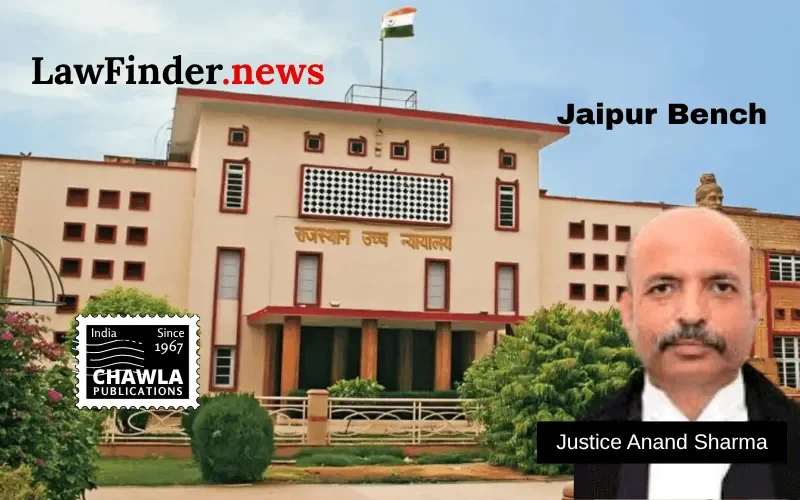
In a significant decision impacting financial institutions and accused persons in cheque dishonour cases, the Rajasthan High Court (Jaipur Bench) has clarified the legal consequences of withdrawal of complaints under Section 280 of the Bharatiya Nagarik Suraksha Sanhita, 2023 (BNSS). The judgment was delivered by Justice Anand Sharma on October 27, 2026, in a batch of writ petitions filed by Ugro Capital Ltd., a finance company, challenging orders passed by the National Lok Adalat on May 9, 2026.
The background of the case involves numerous complaints filed by Ugro Capital Ltd. under Section 138 of the Negotiable Instruments Act, 1881, against borrowers for dishonour of cheques issued as security against loans. These complaints had been admitted by the competent courts and cognizance taken. However, during the National Lok Adalat proceedings, multiple complaints were permitted to be withdrawn, resulting in the acquittal of the accused as mandated by Section 280 of BNSS. The finance company contended that the withdrawal of several complaints was due to clerical error; no compromise had been reached, nor had dues been recovered. The petitioner argued that such erroneous withdrawals caused serious prejudice and sought to quash the withdrawal orders and restore the complaints.
Justice Anand Sharma, after hearing the counsel for the petitioner and examining the relevant law, dismissed the writ petitions holding that the withdrawal of a complaint under Section 280 BNSS necessarily results in acquittal of the accused. The Court emphasized that once acquittal is granted through such withdrawal, the aggrieved party cannot bypass the statutory remedy provided under BNSS by filing writ petitions under Articles 226 and 227 of the Constitution of India. The Court reiterated that the remedy against acquittal is available under the BNSS and must be exhausted before approaching the High Court through writ jurisdiction.
The Court further clarified the scope of Section 280 BNSS, which permits the complainant to withdraw a complaint before the final order on sufficient grounds, and mandates that the accused be acquitted on such withdrawal. This statutory provision aims to balance the interests of complainants and accused by providing a clear legal mechanism for withdrawal and consequent acquittal.
In conclusion, the Rajasthan High Court held that while the petitioner's grievances about erroneous withdrawal may be genuine, they are to be addressed by the competent court through the statutory remedy under BNSS. The writ petitions were dismissed with liberty to pursue appropriate remedies under the law. The Court also directed that the judgment be placed on the record of each writ petition.
This ruling reinforces the principle that statutory remedies must be exhausted before invoking constitutional writ jurisdiction and clarifies the consequences of complaint withdrawal under the newly enacted Bharatiya Nagarik Suraksha Sanhita, 2023, thereby providing legal certainty in cheque dishonour litigations.
Bottom Line:
Withdrawal of complaint under Section 280 of Bharatiya Nagarik Suraksha Sanhita, 2023 results in acquittal of accused; therefore, against such order, writ petition under Articles 226/227 is not maintainable when alternative statutory remedy is available.
Statutory provision(s):
Bharatiya Nagarik Suraksha Sanhita, 2023 Section 280, Negotiable Instruments Act, 1881 Section 138, Constitution of India Articles 226, 227
Ugro Capital Ltd. v. Khaderam Yadav, (Raj)(Jaipur Bench) : Law Finder Doc Id # 3012544