New Delhi, Nov 25 The Centre on Wednesday opposed in the Supreme Court a plea filed by Balwant Singh Rajoana seeking commutation of his death sentence to a life term in the 1995 assassination of the then Punjab chief minister, Beant Singh, saying he does not have faith in the Constitution or the courts.
Rajoana, who has been incarcerated for around 30 years, including on death row for over 15 years, has sought commutation of his death sentence to a life term due to the delay in deciding his mercy petition.
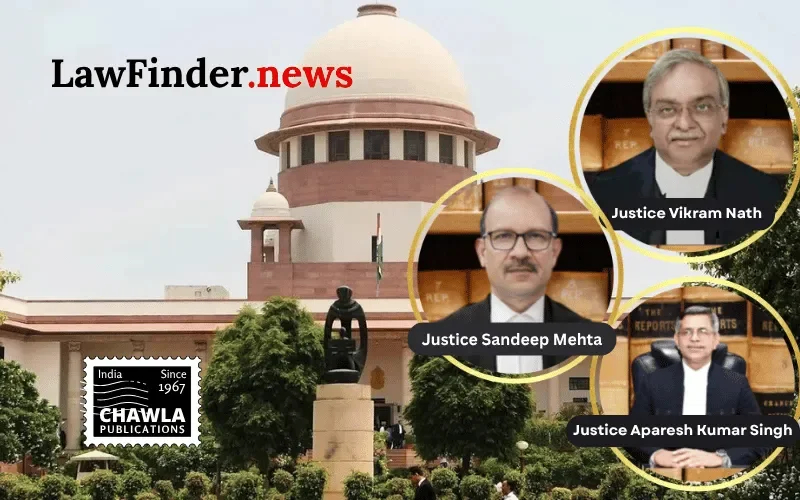
A bench of Justices Vikram Nath, Sandeep Mehta and Aparesh Kumar Singh reserved its decision on the plea of Rajoana and asked the parties to file their written submissions within three weeks.
Appearing for the Centre, Additional Solicitor General (ASG) K M Nataraj opposed the plea and said that Rajoana has stated that he does not believe in the Constitution and does not have faith in the courts, and his statements are recorded in the trial court judgment.
He submitted that Rajoana never filed any appeal against his death sentence awarded by the trial court before the high court and never filed any mercy petition or reference against the capital punishment.
The ASG also relied on the 2025 Constitution bench opinion in the presidential reference concerning the powers of governors and the president over state bills and argued that the relief could not be granted by invoking Article 142, as Article 142 cannot substitute the constitutional powers of remission under Articles 72 and 161.
Senior advocate Mukul Rohatgi, appearing for Rajoana, said that the man, who was "misguided" at some point of time due to the prevailing circumstances then in Punjab, has spent around 30 years in jail and cannot be allowed to continue under the sword of death sentence.
He said that his death sentence be commuted to life term and benefit of remission be granted to him.
Rohatgi accepted that Rajoana has never filed any mercy petition nor has he filed any appeal against the death sentence before the high court but the co-accused in the case have been granted bail by the top court. One other accused Jagtar Singh Hawara, who was awarded death sentence, had his sentence commuted to life by the high court, he added.
"Yes, he has not filed any representation nor has he filed any mercy petition. He has also not filed any appeal against the death sentence.
"A mercy plea was filed by the Shiromani Gurdwara Parbandhak Committee (SGPC) on behalf of Rajoana in March 2012. The SGPC is part of my community," Rohatgi submitted.
He argued that the Supreme Court's May 2023 judgment, which declined to commute his death sentence at that stage, left the competent authority free to consider the mercy petition in due course.
Rohatgi submitted that nearly three-and-a-half years have since passed without a decision.
The bench said if the facts are not disputed, then it is reserving its decision and parties may file their written submissions within three weeks.
On October 28, the Centre had opposed Rajoana's plea for commutation of death sentence, saying such a relief cannot be granted.
In September 2024, the top court sought responses from the Centre, the Punjab government and the administration of the Union Territory of Chandigarh on Rajoana's plea.
Beant Singh and 16 others were killed in a blast at the entrance of the civil secretariat in Chandigarh on August 31, 1995. A special court sentenced Rajoana to death in July 2007.
Rajoana's plea sought a direction for his release.
On May 3, 2023, the apex court refused to commute his death sentence and said the competent authority could deal with his mercy plea.
In his fresh plea filed in 2024, Rajoana highlighted having undergone 28.8 years in jail, of which he has spent more than 15 years as a death row convict.
He said the SGPC submitted a mercy petition under Article 72 (of the Constitution) in March 2012, seeking clemency on Rajoana's behalf.
The plea contended that more than a year had elapsed since the top court directed the competent authority to deal with the mercy plea and take further decision.
It referred to an April 2023 order of the top court in a separate matter, which directed all the states and appropriate authorities to decide pending mercy petitions at the earliest, without any inordinate delay.