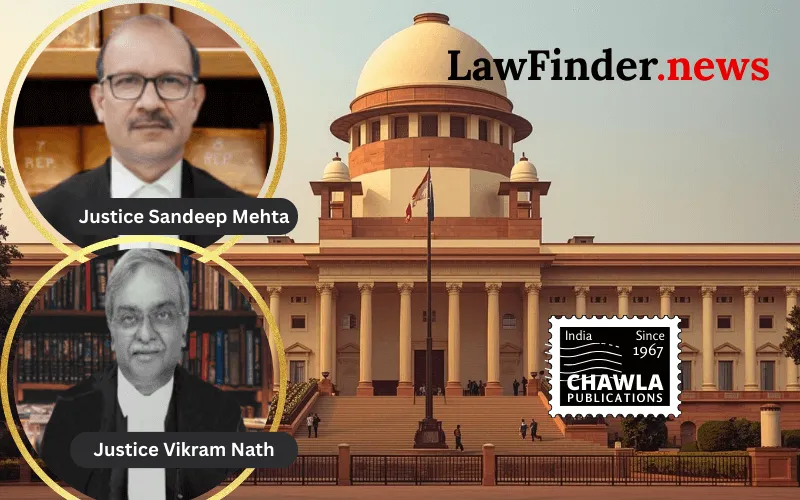
New Delhi, Sep 10 The Supreme Court on Thursday sought responses from the Uttar Pradesh government and others on a plea challenging the validity of certain provisions of a 1980 Act which provide for pension and other facilities to sitting and former MLAs and MLCs of the state.
A bench of Justices Vikram Nath and Sandeep Mehta agreed to hear the plea which challenged a verdict of the Lucknow bench of the Allahabad High Court in May this year.
The high court had dismissed the plea challenging the constitutional validity of certain provisions of the Uttar Pradesh State Legislature (Members' Emoluments and Pension) Act, 1980.
The high court had noted that apparently these provisions confer upon sitting and former MLAs and MLCs a range of salary, allowances and other facilities, and further extend pension, family pension, free travel, medical facilities and other amenities to their spouse, family members and companion.
The top court issued notice on the petition challenging the high court verdict and posted it for hearing after four weeks.
The petitioner 'Lok Prahari' had moved the high court contending that the state legislature has, in effect, made itself the "judge in its own cause" and showered benefits upon itself and its former members in a manner that is "manifestly arbitrary" and contrary to the basic constitutional idea that a public office is meant for public service and not for personal gain.
"The core grievance of the writ petitioner is that all these provisions travel far beyond the limited power conferred by Article 195 of the Constitution of India, which speaks only of 'salary and allowances' to 'members' and makes no mention of pension, post-retirement benefits, facilities to family/companion or 'other facilities'," the high court had noted.
Article 195 of the Constitution deals with salaries and allowances of members of the Legislative Assembly and Legislative Council of a state.
The high court had observed that the challenge mounted by the petitioner was essentially rooted in a policy disagreement rather than any demonstrable Constitutional infirmity.
"The constitutional scheme does not inhibit the Legislature from enacting provisions relating to pension, allowances, or allied benefits in favour of its 'members', including 'former members'," it had said.
While dismissing the petition, the high court had said, "There exists no constitutional embargo upon the state legislature in enacting a measure of social security for its 'members', as well as 'former members'".