New Delhi, Nov 4 The Supreme Court on Wednesday agreed to hear pleas of RJD MP Manoj Jha and activist Arun Agrawal challenging the constitutional validity of a law provision granting blanket immunity from prosecution to the Chief Election Commissioner and the Election Commissioners.
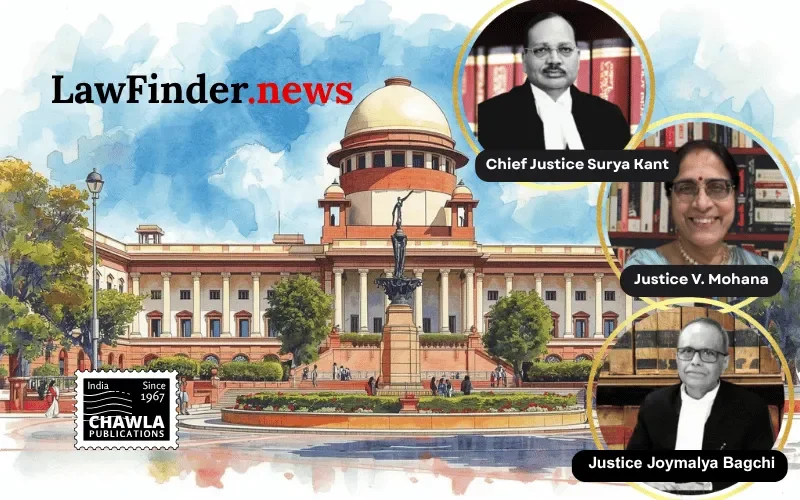
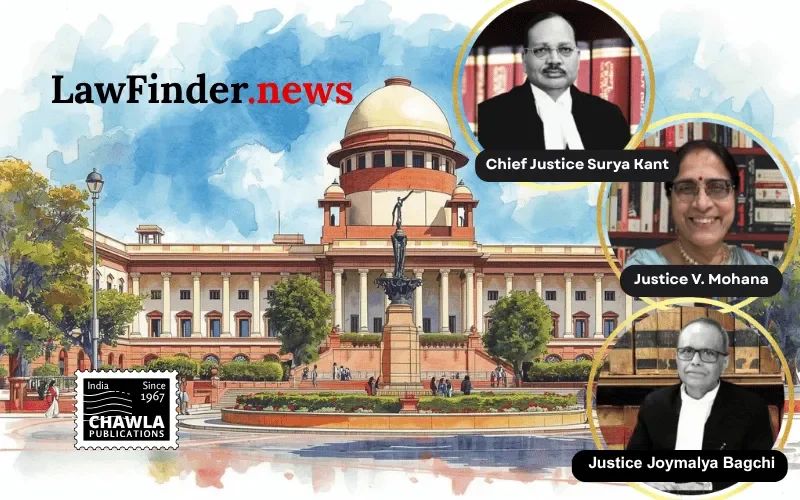
A bench of Chief Justice Surya Kant and justices Joymalya Bagchi and V Mohana issued notice to the Centre and sought its response in four weeks.
The bench told advocate Fauzia Shakil, appearing for Jha, and advocate Neha Rathi, appearing for Agrawal, that the court is tagging the matter with a petition pending on the similar issue.
It listed the matter for hearing on December 18.
Jha in the plea said it challenges the constitutional validity of Section 16 of the Chief Election Commissioner and other Election Commissioners (Appointment, Conditions of Service and Term of Office) Act, 2023, which bars every court in the country from entertaining or continuing any civil or criminal proceeding against any person who is or was a CEC or EC, for anything done "or purporting" to be done in the discharge of official duty.
Section 16 of the Act reads as "Notwithstanding anything contained in any other law for the time being in force, no court shall entertain or continue any civil or criminal proceedings against any person who is or was a Chief Election Commissioner or an Election Commissioner for any act, thing or word, committed, done or spoken by him when, or in the course of acting or purporting to act in the discharge of his official duty or function".
The Rashtriya Janata Dal (RJD) MP said that Section 16 of the Act confers on unelected officials a shield that the Constitution withholds from the President of the republic, from every member of Parliament, and from every judge of this court and of the high courts.
"Parliament, by a late official amendment to an ordinary Bill, has handed the Chief Election Commissioner and the Election Commissioners a protection wider than all of them: civil and criminal, during office and for life after it, with no carve-out for corruption, mala fides or crime, and with no authority anywhere empowered to lift it," Jha's plea said.
He contended that the fallacy lies in the fact that the head of the republic i.e. the President can be prosecuted for a crime the day the term ends, however, a former election commissioner cannot be prosecuted ever.
"A Member of Parliament who takes a bribe to vote can be tried but an Election Commissioner who takes a bribe while "purporting" to act in office arguably cannot. A sitting judge of this court can be prosecuted with sanction yet a retired election commissioner cannot be prosecuted with or without it. The Constitution places no functionary above the law, however Section 16 of the CEC does," the plea said.
Jha added that what Parliament cannot do directly by amending the Constitution, it cannot do indirectly by ordinary legislation and immunity from the ordinary law is, in the constitutional scheme, a matter the Constitution itself decides.
"Where the framers intended a functionary to be shielded, they said so in the text. For example, Article 361 for the President and Governors, Articles 105 and 194 for legislators. Article 324 contains no such protection for the Election Commission. The framers gave the Chief Election Commissioner security of tenure i.e. removal only in the manner of a Supreme Court Judge as per Article 324(5), however they never intended or gave immunity from prosecution," the plea said.
Similarly, Agrawal in his plea said the bare perusal of the text of section 16 discloses the width of the protection granted under the said section in so far as it bars all kinds of prosecution including corruption, forgery and other serious offences.
"The term "is or was" provides for lifelong immunity, "purporting to act" covers acts that may be outside lawful authority but is projected as an official act and most importantly does not contain any good faith condition," his plea said, adding that the provision is "unconstitutional and arbitrary" as it wrongly equates independence with freedom from the law, placing the authorities responsible for conducting elections beyond judicial scrutiny.
Agrawal contended that this constitutional scheme demonstrates that the Constitution envisages independence and effective functioning of the constitutional bodies by preserving the security of tenure and protecting from arbitrary removal by the government of the day.
"Hence blanket protection from legal proceedings conferred by Section 16 of the 2023 Act to secure the object of independence is bad in law and has no nexus to the object of safeguarding the independence of the Election Commission," his plea said.
The plea further said the objective of protecting Election Commissioners from vexatious proceedings can be achieved through less restrictive measures, such as safeguards against frivolous complaints and prior judicial scrutiny.
"Granting blanket immunity is therefore excessive and goes beyond what is necessary to protect the independence of the Election Commission. The said section takes away every civil and criminal remedy against the CEC and ECs for their acts," it said.
The plea added that a voter whose name is wrongly deleted from the electoral roll, a candidate prejudiced by a mala fide act, and any citizen aggrieved by corruption in the functioning of the Commission are left without a remedy.