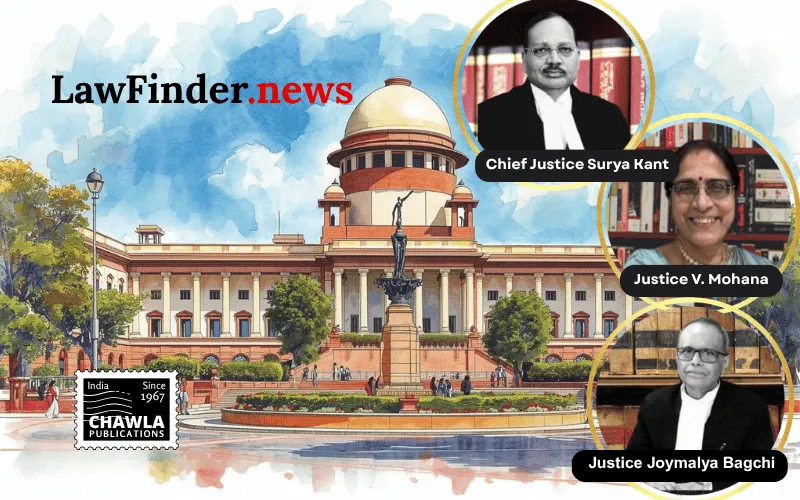
New Delhi, Sep 28 The Supreme Court on Monday asked its registry to forward a copy of a petition seeking a comprehensive framework to curb the manufacture and sale of counterfeit and adulterated medicines to authorities for consideration.
"Have you given any suggestions to the authorities before filing this petition?" a bench of Chief Justice Surya Kant and Justices Joymalya Bagchi and V Mohana asked petitioner Ashwini Kumar Upadhyay.
Upadhyay referred to the "vacuum" in the existing framework and said there were reports about how fake cancer drugs were supplied to many hospitals in Bengaluru.
"We will send your writ petition to be treated as a representation. That will be more effective than keeping the petition pending here," the bench observed.
It noted that the petitioner had not approached the authorities before filing the writ petition.
"In such circumstances where different kinds of actions are required to be undertaken by the respondents, we dispose of this writ petition without expressing any opinion on the merits with a direction to the registry to forward a copy of the writ petition to the respondent authorities for their consideration," the bench said.
In his PIL filed through advocate Ashwani Kumar Dubey, the petitioner had made the union ministries of Health and Family Welfare, Law and Justice and Women and Child Development, all states and union territories and the Law Commission as parties.
The plea sought directions to the Centre and states to complete investigations into fake medicine cases within three months and trials within one year.
It also calls for standard operating procedures for search, seizure and sampling, time-bound forensic examination of seized medicines, and mandatory digital recording and videography of investigative proceedings.
"There is no standard investigation procedure, time-bound trial and sentencing policy in cases of adulterated and spurious drinks and drugs. Despite the Drug and Cosmetics Act being in force since 1940, sale and manufacturing of fake medicines, syrup, injection and vaccine continue to rise," the plea submitted.
It sought a direction to the Centre and states to "mandatorily do the digital recording and videography of search, seizure, sampling and inventory proceedings".
The plea sought directions to the Centre to frame a graded sentencing policy to ensure stringent proportionate punishment for fake drug manufacturers and sellers.
"Direct the Law Commission of India to prepare a report suggesting the necessary changes in existing laws to prevent fake drugs," it said.
The plea raised concerns over the alleged gaps in the enforcement of the Drugs and Cosmetics Act, 1940, saying the absence of uniform investigation procedures, dedicated mechanisms for speedy trials and effective financial investigations has hampered action against organised counterfeit medicine networks.