New Delhi, Nov 19 The Supreme Court on Thursday asked the Taj Trapezium Zone (TTZ) Authority and the Central Empowered Committee (CEC) to hold a fresh meeting concerning the development of a manufacturing industrial setup under the integrated manufacturing cluster project at Agra.
The apex court on September 3 had asked the TTZ Authority to process, in consultation with the CEC and the National Environmental Engineering Research Institute (NEERI), the pending applications for setting up non-polluting micro, small and medium enterprises (MSMEs) in the ecologically sensitive area around the Taj Mahal.
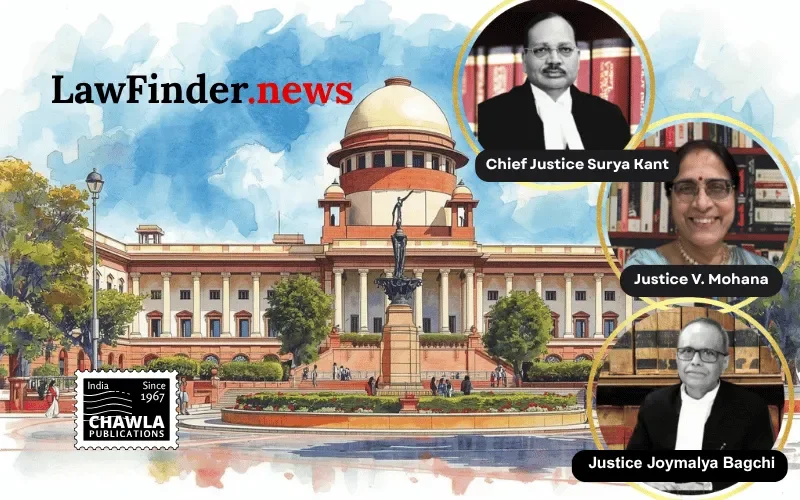
On Thursday, the matter came up for hearing before a bench of Chief Justice Surya Kant and Justices Joymalya Bagchi and V Mohana.
The bench was informed that the TTZ Authority and representatives of the CEC held a meeting on September 22 and decided to grant permission for development of the proposed industrial setup under the project subject to 13 conditions.
The top court was also informed that CEC member A K Mohanty sent an e-mail on November 6 expressing reservation over the decision purportedly taken in the meeting.
"It seems to us that there is a necessity to hold a fresh meeting between the TTZ Authority and the CEC to iron out the creases and submit a joint comprehensive report," the bench said.
It said the fresh meeting be held and a joint comprehensive report be filed within three weeks.
While hearing the matter on September 3, the apex court directed the TTZ Authority to associate with the top court-appointed CEC and the NEERI in dealing with the applications for setting up non-polluting industries.
On July 23, the top court had permitted the TTZ Authority to process around 400 pending applications for setting up non-polluting MSMEs under its ecologically sensitive area around the Taj Mahal.
It had directed that every proposal be scrutinised by experts from the CEC and NEERI, and in case of any objection, the application concerned "shall not be accepted without the leave of this court".
It had heard the long-pending matter concerning industrial activity in the 10,400-sq km TTZ, where the court has, since 1996, imposed stringent restrictions to protect the Taj Mahal from pollution.