New Delhi, Aug 17 The Supreme Court on Monday refused to entertain a separate plea of the Nirmohi Akhara seeking a direction to the Centre to reconstitute the Shri Ram Janmabhoomi Teerth Kshetra Trust, which manages the affairs of the Ram temple in Ayodhya, as a “public trust”.
The Nirmohi Akhara, an ancient Ramanandi Hindu monastic order devoted to Lord Ram, had played a major role in the Ayodhya Ram Janmabhoomi legal dispute. It was one of the main litigants in the title dispute, claiming rights to manage Ram Lalla and the site.
The Akhara recently approached the top court seeking changes to the Shri Ram Janmabhoomi Teerth Kshetra Trust, including greater transparency and public-trust status, and a role for itself in the temple administration.
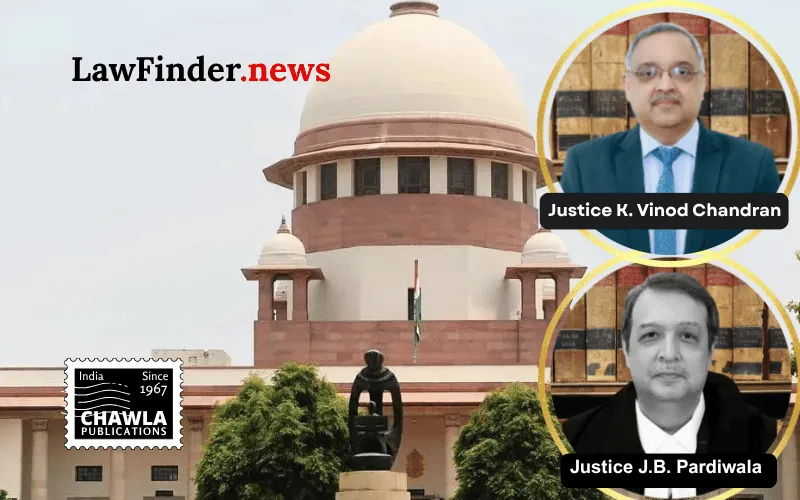
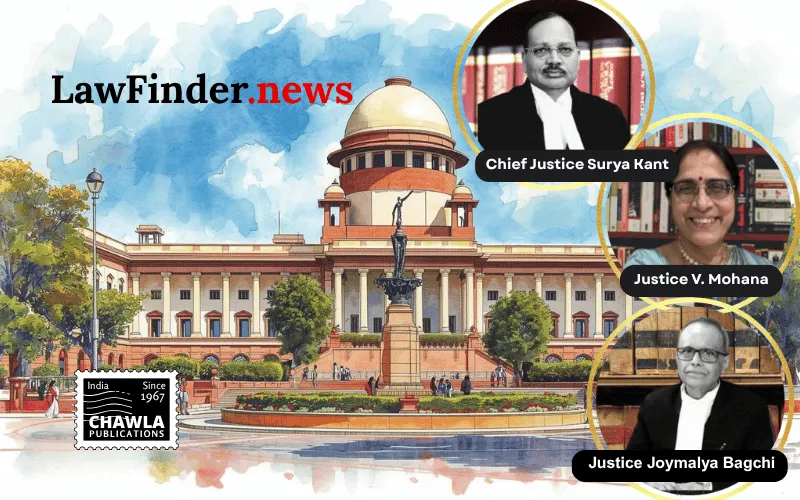
On Monday, a bench comprising Chief Justice Surya Kant and Justices Joymalya Bagchi and V Mohana, while hearing pleas relating to donation theft, asked a court-appointed Special Investigation Team (SIT) probing the alleged embezzlement of donations at the Ram temple in Ayodhya to complete its investigation expeditiously and take it to a logical conclusion.
Senior advocate Sushil Jain, appearing for the Akhara, sought directions declaring that the existing structure and composition of the Trust as a "private trust" was inconsistent with the spirit and intent of the top court's November 2019 verdict in the Ram Janmabhoomi-Babri Masjid land dispute case.
They are seeking implementation of the 2019 judgement of the five-judge bench in the main case, a lawyer said.
“These are the perils of live streaming (of the proceedings),” Solicitor General Tushar Mehta said when Jain persisted with his arguments.
“File a proper petition,” the CJI said while refusing to entertain the plea of the Akhara.
The application was filed in the disposed of matter in which the apex court on November 9, 2019, delivered a landmark verdict that paved the way for the construction of the Ram temple in Ayodhya.
The 2019 verdict also directed the Centre to allot a five-acre plot to the Sunni Waqf Board for building a mosque.
The Nirmohi Akhara had filed the application through Mahant Raja Ramchandracharya Ateet Guru Raghunath Das.
It has sought a direction to the Centre "to suitably recast the scheme and reconstitute the Trust as a public trust and include therein structural safeguards for appropriate oversight of the decisions of the board of trustees by the seers of Ramanandi Bairagi Sampradaya with supervisory powers over the decisions of the board".
The application also sought to lay down the guiding principles for the appointment of trustees by the Centre.
“Direct that all rituals, sewa, bhog, puja and religious ceremonies in the Ram temple be conducted strictly according to the Ramanandi Sampradaya and the long-established customs and usages historically followed by the Nirmohi Akhara before the acquisition of the disputed site,” it said.
The plea also sought a direction for the "restoration of the original deities of Shri Ram Lalla Virajman attached on January 5, 1950, and February 16, 1982, to the sanctum sanctorum, holding that the Trust had no authority in law to substitute or replace the original idols or in the alternative to restore the said deities to the applicant who can ensure that they are duly cared for appropriately”.
It sought the appointment of an independent committee to examine whether the directions contained in the November 2019 judgement were “faithfully” implemented by the Trust.
The application also sought the appointment of a forensic auditor to carry out an audit of all the financial transactions and property-related transactions effected by the existing board of trustees.
It said the Nirmohi Akhara, which was one of the parties in the Ram Janmabhoomi-Babri Masjid land dispute case, is a panchayati mutt and all its decisions are taken by a democratic process at a meeting of the panchayat, which is chaired by its 'sarpanch' and attended by the 'panchs'.