New Delhi, Aug 7 Issuing a slew of directions, the Supreme Court on Friday directed the Rajasthan government to constitute within a week an "Integrated Coordination Group" (ICG) headed by the chief secretary to deal with the issue of contamination in the Jojari, Bandi and Luni rivers in the state.
The apex court was hearing a suo motu case concerning contamination in the Jojari river and had also flagged the issue of pollution in the Bandi and Luni rivers.
The top court said the chief secretary can include senior officers of the concerned departments of the state, including the departments of environment, forest, water resources and industries among others.
It said the ICG shall hold detailed consultative deliberations with the High-Level Ecosystem Oversight Committee, formed earlier, on the issues highlighted in the present order with a view to evolving an integrated, coordinated and time-bound framework for implementation of the measures.
The Jojari river passes through Jodhpur, the Bandi river flows through Pali and the Luni river runs through Balotra. The Bandi and Jojari rivers merge with the Luni river near Balotra city.
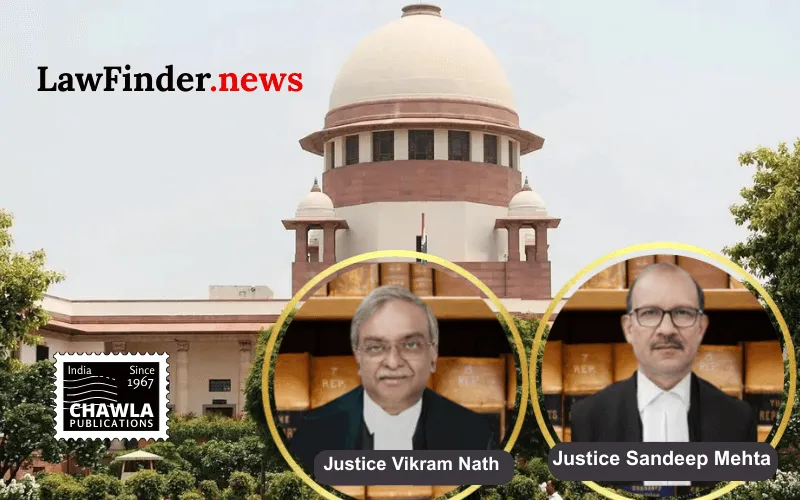
A bench of Justices Vikram Nath and Sandeep Mehta said the report clearly demonstrates severe degradation of the riverine ecosystem, contamination of water bodies, illegal discharge of industrial effluents, deficiencies in land-use regulation, challenges related to the protection of wildlife habitats and restoration of the affected ecology.
"Upon completion of the aforesaid deliberative exercise, the Integrated Coordination Group, in consultation with the Committee, shall prepare a Comprehensive Resolution Plan for prevention of environmental degradation, pollution abatement, ecological restoration, conservation of riverine ecosystems, protection of groundwater resources, preservation of biodiversity and strengthening of the institutional framework governing river basin management.
"The Resolution Plan shall identify the action points, the authority responsible for implementation, the implementation framework, measurable milestones and definite timelines for completion of each component," the bench said.
The top court said ICG shall function under the overall supervision and chairmanship of the chief secretary of the Rajasthan government, who shall periodically review the implementation of the resolution plan and ensure effective interdepartmental coordination.
"The CETPs (Common Effluent Treatment Plants), industrial units through their recognised associations, trade bodies, and any other stakeholder having a direct interest in the issues arising in the present proceedings shall be at liberty to submit representations before the Integrated Coordination Group as well as the Committee.
"Any such representation/s shall be considered on its own merits and in accordance with law, keeping in view the larger objective of environmental protection and sustainable development. However, there shall be no requirement to provide oral audience in the exercise to be conducted by the Integrated Coordination Group," the bench said.
It asked ICG, after holding due consultations with the committee, to formulate and submit, within a period of three weeks, a comprehensive resolution plan, containing clearly identified action points, implementation timelines, monitoring mechanisms and the responsibilities of the concerned Departments and statutory authorities.
"The State of Rajasthan shall constitute an independent and adequately empowered River Commission/River Rejuvenation Authority for the State of Rajasthan, with a mandate to oversee the conservation, rejuvenation and integrated management of rivers, river basins and catchment areas, including the scientific determination and demarcation of the High Flood Line, protection of riverine ecosystems and coordinated river basin governance throughout the State," it said.
The apex court directed the Rajasthan government to establish an Integrated Public Reporting and Environmental Grievance Redressal Mechanism to facilitate timely reporting of environmental violations and allied illegal activities affecting the riverine ecosystem.
" The mechanism shall provide for a QR Code-based digital platform, with QR Codes prominently displayed on the website of RSPCB as well as at the industrial areas, CETPs, Government offices, Gram Panchayat offices, Forest Check Posts, municipal offices and such other conspicuous locations as may be identified by the Integrated Coordination Group.
"The platform shall enable any person having credible information to report instances of illegal discharge of industrial effluents, unauthorised operation of industrial units, illegal extraction of groundwater, encroachments upon riverbeds, illegal dumping of hazardous waste, destruction of wildlife habitats and any other environmental violations by uploading photographs, videos, geo-tagged information or such other electronic material as may be necessary," the bench said.
The top court also directed the state to examine the feasibility of instituting an appropriate incentive scheme for rewarding credible information leading to the detection of serious environmental violations, while ensuring adequate confidentiality and protection of the identity of informants.
The apex court in November last year constituted a high-level ecosystem oversight committee to detect the fundamental maladies in the system, to supervise the remedial measures required to arrest further pollution and to give long-term suggestions for reversal of the damage already caused.