New Delhi, Oct 12 The Supreme Court on Monday said there was a need to balance religious sentiments with public health concerns while considering restrictions on firecrackers in Delhi-NCR.
The top court said that people should voluntarily adopt less polluting ways of celebrating festivals rather than relying on restrictive judicial orders.
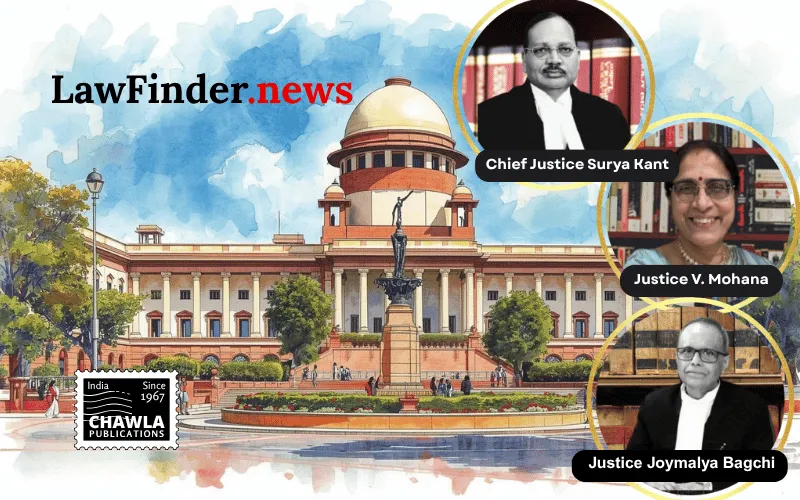
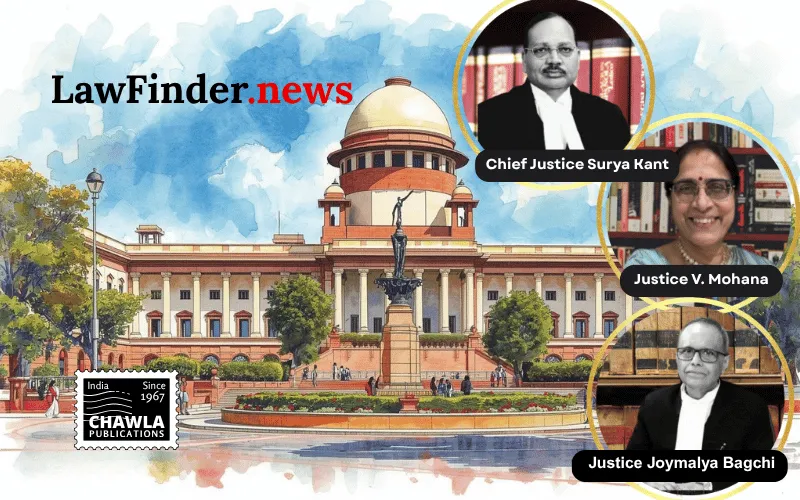
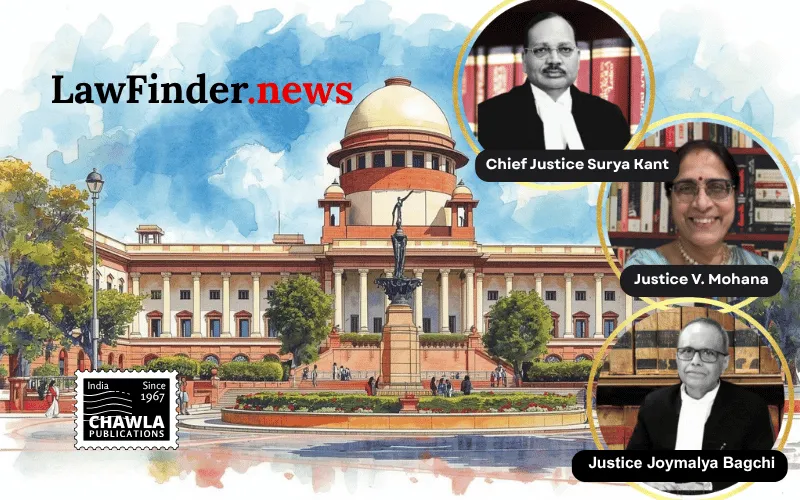
A bench comprising Chief Justice Surya Kant and Justices Joymalya Bagchi and V Mohana said it was not inclined to hurt religious sentiments but stressed the importance of making citizens aware of the harmful effects of firecrackers and encouraging safer practices.
"We will not hurt religious sentiments but at the same time, people should themselves come forward and opt for it. The whole exercise should involve a balancing approach," the CJI said.
The CJI said that awareness among citizens and civil society would be the most effective way forward.
The bench was hearing suo motu proceedings concerning air pollution in the National Capital Region (NCR) covering issues such as firecrackers, stubble burning and solid waste management.
During the hearing, Justice Bagchi questioned the religious basis for bursting firecrackers.
"What is religious about bursting crackers?" he asked.
Senior advocate Aparajita Singh, who is assisting the bench as the amicus curiae, referred to health risks associated with air pollution, particularly for children, elderly people and those suffering from health vulnerabilities.
"Gods would be aghast if they knew that children were suffering and getting sick in their name," Singh said, while responding to arguments linking firecrackers with religious practices.
She also flagged persistent enforcement failures, saying that restrictions on the duration of firecracker use were unlikely to achieve their intended purpose without effective implementation.
"It sounds really nice in court, that it is only two hours or one hour. But the court also knows that it is not implemented. It is impossible for police officers to be on every street all the time," the amicus said.
Singh suggested that the issue be referred to the Commission for Air Quality Management (CAQM), the statutory body responsible for air quality management in the region, so that it could examine the available material and consider the associated medical concerns.
The bench, however, cautioned against imposing restrictions that could prove difficult to enforce on the ground.
"We have to be extremely careful in passing an order unless we are in a position to make it manageable and enforceable," the CJI said, adding that restrictive directions were often perceived by people as coercive action.
Emphasising the need for a practical approach, the CJI said there was sufficient time to appeal to people to celebrate festivals in their preferred manner while limiting firecracker use to specified hours, as had been done previously.
The court also discussed measures to promote less polluting alternatives and curb the sale of highly polluting firecrackers.
"We have to make people wiser, bring awareness and tell them which firecrackers are harmful and which are less harmful," the CJI said.
He suggested promoting a culture centred on traditional practices such as lighting lamps and using sparklers, alongside restricting the availability of more harmful varieties.
The bench also considered publishing awareness material to encourage people to minimise firecracker use and observe specified timings to reduce air and noise pollution.
It indicated that suggestions on the issue could be placed before the CAQM for consideration.
The hearing also covered measures to prevent stubble burning ahead of the upcoming pollution season.
Justice Bagchi referred to proposals by states to purchase crop residue and explore its commercial utilisation.
The CJI said that crop residue had acquired commercial value and could provide financial benefits to farmers, emphasising the need to develop a market for it.
Additional Solicitor General Aishwarya Bhati informed the bench that a policy framework was in place for both in-situ and ex-situ management of crop residue.
She said the Centre would file a detailed affidavit outlining the steps taken to address the problem.
The amicus acknowledged that the government had introduced various schemes and financial incentives to tackle stubble burning.
The law officer subsequently said an updated status report would be placed before the court, detailing measures already implemented, preventive steps undertaken and plans to combat air pollution.
The matter will be heard next on October 15.