New Delhi, Sep 2 The Supreme Court on Wednesday granted divorce to an estranged couple noting that they were residing separately since December 2005 and the woman had abandoned the matrimonial relationship.
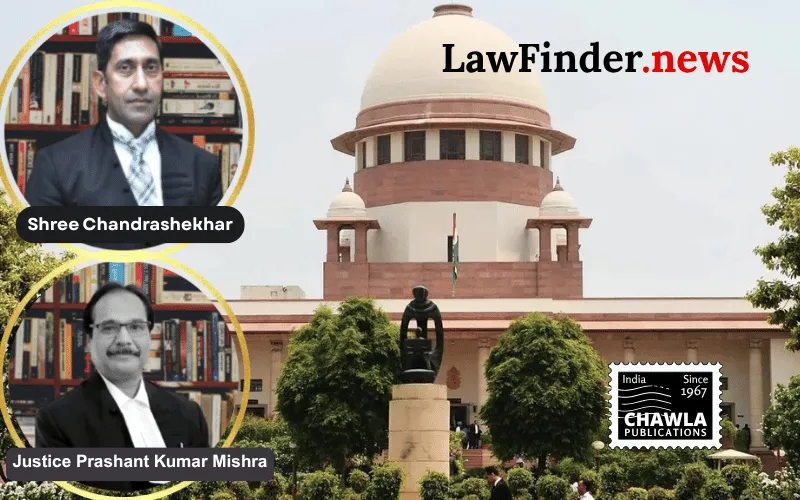
While dissolving their marriage, a bench of Justices Prashant Kumar Mishra and Shree Chandrashekhar directed the man to pay Rs 7 lakh towards permanent alimony to the woman.
Referring to a previous verdict of the apex court, the bench noted it was underscored that though marriage preservation remains the primary objective of the matrimonial law, however, where the parties remain separated for a long time, the law must acknowledge the reality of such a situation.
"In the present case before us, the fact remains that the parties are living separately and even though the respondent (wife) has asserted in her deposition that she was ready to discharge her marital obligations, however, mere assertion cannot be sufficient when the conduct reflects otherwise," the bench said.
It also referred to another judgment of the top court which had observed that a prolonged period of separation would constitute a significant factor in evaluating whether the marital bond has become incapable of restoration.
The bench delivered its verdict on a petition filed by the man challenging an order of the Madhya Pradesh High Court which had held that he failed to establish either cruelty or desertion so as to entitle him to a decree of divorce.
"Considering that it was proven before the trial court that the parties had not cohabited with each other since December 2005, in our view, the high court was wrong in inferring that there was no intention on the part of the respondent (wife) to desert the appellant (husband)," it said.
The bench said the record reflected that the husband had gone to take his wife to her matrimonial home, but she refused to go with them without any reasonable cause.
It noted that there were no children born out of wedlock and all attempts at reconciliation had failed.
"In these circumstances, compelling the parties to continue in marriage would fail to serve the ends of justice," it said.
"Thus, we hold that the respondent-wife had abandoned the matrimonial relationship and that the appellant has successfully established the ground of desertion," the bench said.
While partly allowing the appeal, the top court set aside that part of the high court judgment which held that the element of desertion was not proved regarding the wife.
The bench said this case presented an unfortunate situation where the husband and wife, having been in continuous separation since 2005, have not been able to resolve their marital dispute.
It noted that marriage between the parties was solemnised in June 2003.
"It is stated that right after marriage, the respondent drifted away from the appellant on account of his educational qualifications, which even led to the respondent insulting him by calling him 'illiterate', 'rustic'," the bench noted, adding that the woman went back to her parental home in November 2005.
In June 2007, the husband filed a petition under Section 13 of the Hindu Marriage Act, 1955, for divorce on the ground of desertion and mental cruelty.