New Delhi, Aug 31 The Supreme Court on Monday sought the Centre's response on whether the retail sale of acid should be completely banned or subjected to stringent regulation after concerns were raised over its continuing easy availability despite 2013 directions regulating its retail sale.
The top court also directed the Centre, all the states and Union Territories (UTs) to formulate "appropriate rehabilitation measures for victims of acid attacks" within six weeks.
It also asked the Union government to consider framing a model scheme and providing necessary assistance to states for its effective implementation.
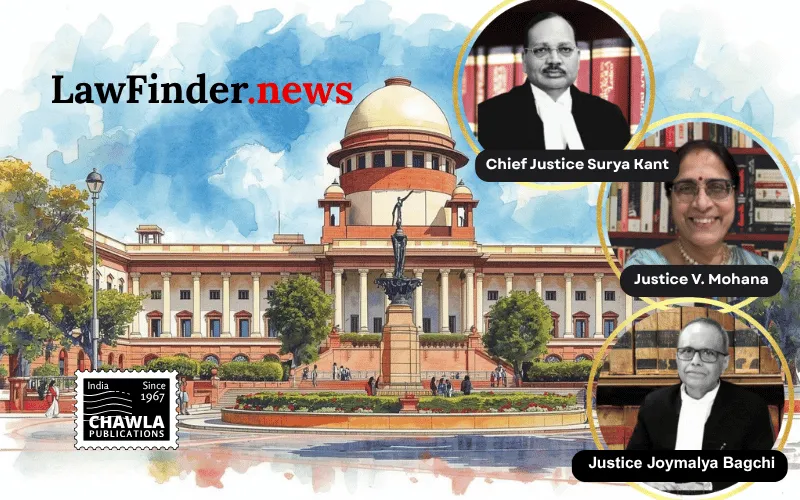
A bench comprising Chief Justice Surya Kant and Justices Joymalya Bagchi and V Mohana said that the rehabilitation schemes must deal with grant of compensation, rehabilitation, medical aid and free education up to higher levels to the victims of acid attacks.
"We are informed that certain guidelines were laid down in 2013, which have more or less become obsolete and are not being followed. That brings us to the Government of India," the bench said.
It asked the Centre to consider formulating a scheme to ensure strict regulation of the retail sale of acid in the market.
"The Union shall also respond as to why a complete ban on the retail sale of acid should not be imposed, or, in the alternative, whether such sale should be permitted subject to stringent regulatory measures. All the state governments which have not framed rules shall do so," the bench said.
The bench additionally asked the states and UTs to "furnish information with respect to incidents of acid attacks reported, whether chargesheets in those cases had been filed or not and how many cases were still pending at the trial or appellate stage".
The bench issued notice on a fresh application seeking a ban on retail acid sales while hearing a PIL filed by acid attack survivor Shaheen Malik.
She had sought a direction to the Centre to amend the law to cover the cases of those who have forcibly been made to consume acid or have suffered internal injuries without any outer disfigurement.
Solicitor General Tushar Mehta, appearing for the Centre, had said on July 14 that the government made changes in the Rights of Persons with Disabilities Act, 2016 to extend the benefits of the law to those acid attack victims who suffer internal injuries due to forced ingestion.
During the hearing on Monday, senior advocate Saurabh Kirpal, appearing in the matter, told the bench that a survey conducted by volunteers had found that acid could still be purchased easily, with "virtually no regulatory supervision", despite the safeguards laid down by the Supreme Court in its earlier judgment in 2013.
Kirpal said that while acid was required for industrial purposes, its retail use could largely be replaced with alternative cleaning products already available in the market.
"Rather than regulating it, the court could consider banning the retail sale of acid," he suggested.
The CJI said the bench would seek the Centre's view on the issue and examine how acid was manufactured and made regularly available in the market.
The bench also discussed possible measures for stricter regulation, including requiring purchasers to disclose the purpose of purchase, maintaining records of buyers and introducing an automated, real-time mechanism to track the quantity of acid entering and being sold in the market.
The bench said that it was conscious that merely framing guidelines may not be sufficient if they were not effectively implemented.
Additional Solicitor General Archana Pathak Dave, appearing for the Centre, said that the Union government had earlier issued an advisory and framed model rules following the Supreme Court's directions in the Laxmi case.
However, several state governments had neither constituted the required committees nor effectively implemented the regulatory framework, the law officer said.
The law officer said that the Centre would write to the states and take stock of compliance, adding that regulations were reportedly not being followed in around 20 states.
Saheen Malik, herself an acid attack survivor, also addressed the court and strongly pressed for a ban on retail sales, saying that the 2013 guidelines had not been effectively implemented despite repeated directions from courts.
The CJI said the issue required urgent attention and identified two major concerns, "whether there should be a complete ban or an extremely restrictive and highly regulated system for the sale of acid, and the lack of awareness about immediate treatment and response after an acid attack".
The CJI said that awareness about emergency treatment and preventive measures was equally important and the NGOs could assist in developing study material for schools and colleges.
On the issue of acid sales, the bench noted that the guidelines framed in 2013 had "more or less become obsolete" and were not being followed effectively.
The NGOs assisting the court have been asked to submit suggestions within four weeks regarding awareness programmes and curriculum for schools and colleges on preventive measures, emergency protocols and post-attack treatment.
The CJI said the court would continue to monitor the matter and expressed hope that it would be taken to a "logical conclusion".