New Delhi, Sep 18 Observing that "complete alcohol ban often drives the liquor trade underground", the Supreme Court on Friday struck down provisions of the Maharashtra Poisons Rules that required methanol to be mixed with specified colourant and bitterant before its sale to non-drug manufacturers to avert hooch tragedies, saying the restrictions violated fundamental rights.
The top court instead suggested a slew of measures for states and Union Territories (UTs) to prevent hooch tragedies, calling for a coordinated, multi-department approach to curb the illegal manufacture, transportation and sale of spurious liquor.
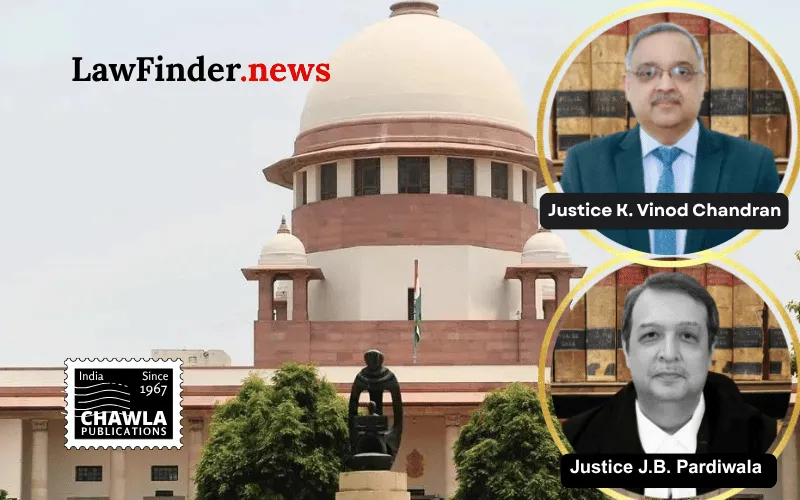
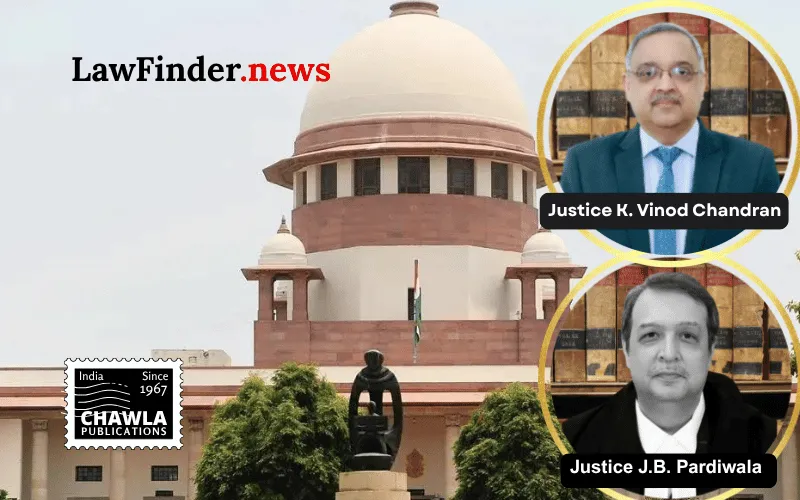
A bench of Justices J B Pardiwala and K Vinod Chandran held that Rules 18A and 18B, introduced through a 2011 notification following a major hooch tragedy in Mumbai, in the Maharashtra Poisons Rules violated Articles 14 (right to equality) and 19(1)(g) (right to occupation) of the Constitution.
"We are of the considered opinion that the impugned rules fail to pass the test of proportionality, and result in violation of the fundamental rights guaranteed under Article 19(1)(g) of the non-drug manufacturers," the bench held.
The state had inserted the rules following the hooch tragedy of 1991 in which around 250 persons consumed spurious liquor purchased from one Chhaya Bar at Andheri in Mumbai.
"The persons, who had consumed liquor, had no idea that what was consumed by them was methanol, which is no less than poison. As a result, around 93 persons lost their lives," the bench said.
"We are, in this case, concerned with the measures adopted by the Administration in the wake of a hooch tragedy to make methanol, both unpalatable and unrecognisable. Mark Twain has famously said, 'Evidence has been brought forward which proves that prohibition only drives drunkenness behind doors and into dark places, and does not cure it or even diminish it'," Justice Pardiwala, who authored the judgment, said.
It said experience suggested that "forced temperance" was no solution for alcoholism.
"Neither the taste nor colour matters, for the one craving and in making such a measure, the fallout is the death knell of an industry. To adulterate methanol with a bitterant and colourant would not quell the craving and to achieve unavailability, there should be stricter regulatory measures for transportation and storage as put forth in the excise laws. The present exercise puts at jeopardy an industry itself and would result in 'missing the woods for the trees'," the verdict said.
It said there are five evils associated with prohibition and said it leads to loss of revenue on taxes, expenditure on implementation and good money spent, corruption in police and excise, illegal distilling and resultant drug menace.
"History bears eloquent testimony to the fact that complete alcohol ban often drives the liquor trade underground, increasing the prevalence of unregulated, lethal brews," it said, and gave the example of a recent hooch tragedy in Gujarat, which has a strict prohibition policy and is a dry state.
"The state has witnessed at least ten major mass hooch tragedies since the state's formation and Independence, claiming the lives of over 600 people," it added.
The verdict was dealing with petitions filed by methanol-using industries and an appeal concerning the validity of the amended rules.
Under Rule 18A, sellers were required to ascertain the intended use of methanol by verifying the purchaser's Form A licence.
Rule 18B provided for confiscation of methanol found in possession without a valid Form A licence.
The verdict said that methanol is a hazardous and toxic substance and agreed that its sale and possession require effective regulation.
However, it held that the measures adopted by Maharashtra failed the constitutional tests of reasonableness and proportionality.
It said the Parthasarthy Committee, constituted after the 1991 Chhaya Bar hooch tragedy in Mumbai, had identified several causes behind liquor-related deaths, including illegal diversion of methanol, pilferage, confusion between methyl and ethyl alcohol, corruption in enforcement agencies and the availability of methanol as a cheaper alternative to ethyl alcohol.
The bench held that the state failed to demonstrate that the impugned measures had a reasonable and proximate nexus with the objective of preventing methanol-related hooch tragedies.