New Delhi, Aug 4 The Supreme Court was on Tuesday informed that experts from AIIMS have suggested that self-styled godman Asaram does not require hospitalisation for treatment but needs round-the-clock medical assistance.
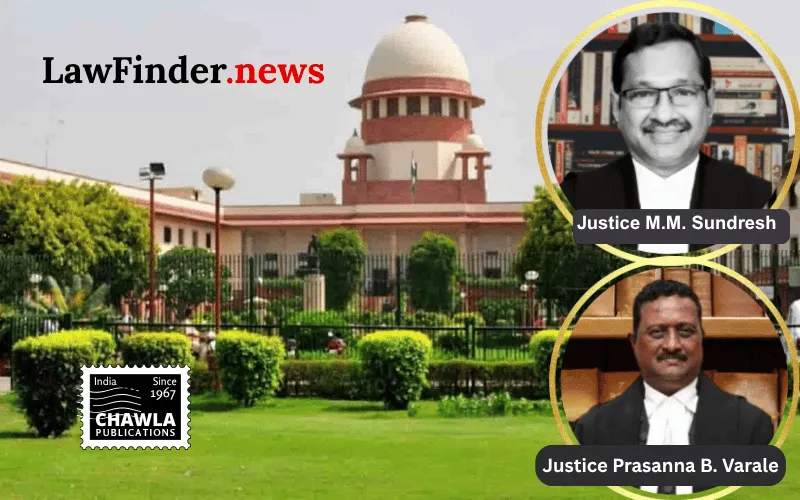
A bench of Justices M M Sundresh and P B Varale was apprised of the All India Institute of Medical Sciences (AIIMS) report while hearing Asaram’s plea seeking an interim bail on health grounds.
"The report (of AIIMS) says there is no need for any hospitalisation," one of the lawyers appearing for the Rajasthan government said, adding, "He (Asaram) is getting all the medical facilities".
The lawyer representing Asaram said the report has to be read as a whole.
The bench posted the matter for hearing on August 6.
On July 21, the apex court had asked AIIMS to constitute a medical board to assess Asaram’s condition.
The Rajasthan High Court on May 27 upheld the conviction and life sentence awarded to Asaram in a case of rape of a minor in 2013.
On June 30, the apex court sought response from the Rajasthan government on Asaram's plea challenging the high court order.
The high court had upheld Asaram's conviction in the case, but acquitted him of charges related to alleged gangrape and penetrative sexual assault on a child under the erstwhile Indian Penal Code and the Protection of Children from Sexual Offences (POCSO) Act.
However, the high court upheld his conviction under IPC Section 376(2)(F) pertaining to rape of the minor, thereby retaining the sentence of life imprisonment awarded by the trial court.
The high court had also upheld convictions under several other provisions, including Sections 342 (wrongful confinement), 370(4) (trafficking), 506 (criminal intimidation), 509 (insulting the modesty of a woman), 354(A) (sexual harassment) of the IPC, along with Sections 7/8 of the POCSO Act and Section 23 of the Juvenile Justice Act.
Earlier, Asaram was convicted on April 25, 2018, for sexually assaulting a minor student at his ashram and was sentenced to life imprisonment under multiple provisions of the IPC, the POCSO Act, and the Juvenile Justice Act.