New Delhi, Oct 7 The Eknath Shinde faction on Wednesday defended in the Supreme Court the Election Commission’s decision recognising it as the real Shiv Sena and allotting it the party’s bow-and-arrow symbol.
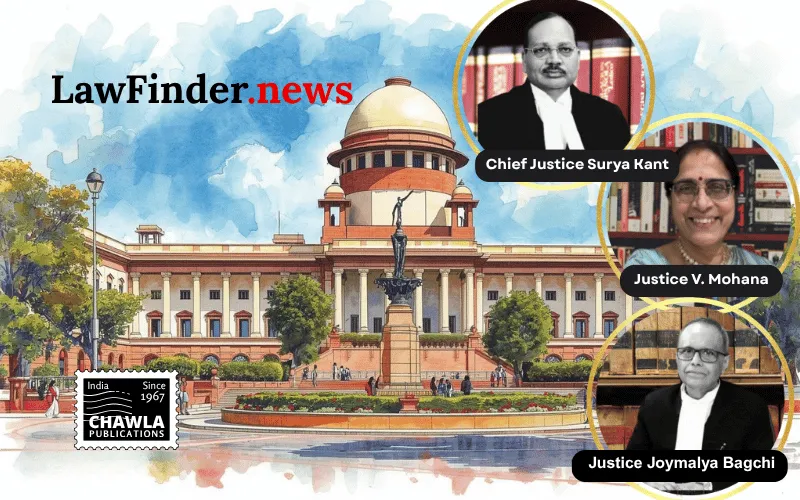
A bench comprising Chief Justice Surya Kant and Justices Joymalya Bagchi and V Mohana was told by senior advocate N K Kaul, appearing for the Shinde faction, that there was “not a shred of evidence” that any Shiv Sena constitution subsequent to the 2011 version had ever been submitted to the Election Commission (EC).
The senior lawyer focused, among other issues, on the party constitution, inner-party democracy, the EC's jurisdiction and the timing of its decision to resolve the symbol dispute.
He told the bench that the poll body itself had recorded in two orders that the only party constitution available with it was the 2011 constitution, which had been brought into conformity with the poll body's requirements.
“We brought it in conformity. That was the mandate of the leadership at that time. It was brought in conformity with what the Election Commission wanted in 2011,” he said.
He argued that the dispute arose later when an attempt was made to alter the party constitution and subsequently claimed that the revised document had been submitted to the EC.
“The EC says, ‘We never received it.’ Every letter they annex talks about party elections. When they write to the EC, they never annex the Constitution. There is not a shred of evidence to show that any new Constitution was handed over to the EC,” Kaul said.
Referring to submissions made by Shiv Sena leader Subhash Desai in the earlier proceedings, Kaul said the party itself had stated that it would abide by the constitution available with the Election Commission.
He then relied on judicial precedents to argue that political parties must adhere to principles of inner-party democracy.
Citing a decision of the top court, Kaul said that political parties form the “base of the democratic pyramid” and must themselves practise democracy.
“Failure to hold periodic elections and uphold inner-party democracy undermines a political party’s claim to promote democracy nationally,” he said.
On the argument that the EC should have waited for the Speaker to decide the disqualification petitions against the rebel MLAs before deciding the party-symbol dispute, he said the filing of a disqualification petition and its eventual outcome were two distinct matters.
“Filing of a disqualification and what the ultimate result is are two completely different things. Till that day, you are fully entitled to exercise every right that you have,” he said.
He defended the EC against allegations that it had adopted a new approach by examining the party constitution while deciding disputes over organisational control.
Kaul said that the poll body had been examining party constitutions for a considerable period and that there was no basis to suggest that it had suddenly created a new jurisprudence in the Shiv Sena case.
On the timing of the EC's decision, he said repeated attempts had been made to prevent the poll body from proceeding with the symbol dispute while the disqualification proceedings were pending.
The hearing remained inconclusive and will continue on Thursday.
During Tuesday's hearing, Justice Bagchi had asked whether the “sentiment of the symbol” would operate in favour of persons who had committed what he described as the “constitutional sin” of defection, or those who had complained of such defection.
Earlier, the bench had asked whether the Election Commission had adequately considered the possibility of denying the reserved bow-and-arrow symbol to both factions and requiring them to contest elections on separate symbols.
It had also questioned whether legislative strength could be regarded as a “safe test” when disqualification proceedings were pending against the very MLAs whose numbers formed the basis of that majority.
Kaul has maintained that 40 MLAs supporting Shinde accounted for 76 per cent of the votes polled in favour of the 55 Shiv Sena MLAs who won seats in the 2019 Maharashtra Assembly elections.
He also cited Lok Sabha figures, saying 13 MPs supporting Shinde accounted for 73 per cent of the votes polled in favour of the party’s 18 elected MPs.
He had said that the pendency of disqualification proceedings, by itself, could not prevent the Election Commission from deciding the party-symbol dispute under Paragraph 15.
He also pointed out that the 2019 Maharashtra Assembly had since been dissolved and a new House constituted after the 2024 elections.
The lead plea, filed by Sunil Prabhu of the Uddhav Thackeray faction, challenges the Maharashtra Assembly Speaker’s January 10, 2024 decision declining to disqualify MLAs of the Shinde faction under the Tenth Schedule of the Constitution.
A connected plea filed by Uddhav Thackeray challenges the EC's decision recognising the Shinde faction as the official Shiv Sena and allotting it the party symbol.