Appointment of Ms. Smriti Chettri as Protocol-cum-Liaison Officer Quashed for Violation of Recruitment Rules and Procedural Fairness; Court Emphasizes Need for Transparency and Institutional Integrity
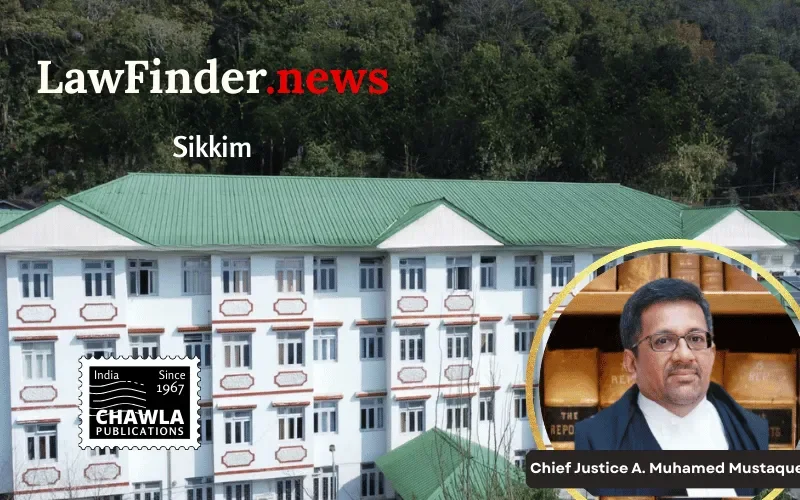
In a landmark judgment dated November 16, 2026, the Sikkim High Court, led by Chief Justice A. Muhamed Mustaque, ruled that the appointment of Ms. Smriti Chettri to the post of Protocol-cum-Liaison Officer was illegal and void, as it was made beyond the single notified vacancy and in contravention of the prescribed recruitment rules. The Court underscored that appointments to public posts must strictly adhere to statutory provisions and the principles of equality enshrined under Articles 14 and 16 of the Constitution of India.
The case arose after Ms. Chhetri, who submitted her application after the prescribed last date with necessary experience certificates, was selected along with two other candidates, despite only one vacancy being advertised. Subsequently, the High Court administration converted two existing posts of Lower Division Assistant-cum-Typist into Protocol-cum-Liaison Officer posts and appointed these three candidates, including Ms. Chhetri. This led to public outrage and challenges to the legality of such appointments.
The Full Court of the Sikkim High Court later decided to terminate Ms. Chhetri's service on the ground that her appointment was made beyond the advertised vacancy and violated recruitment rules requiring competitive examinations for Group 'C' posts. The Court observed that the acceptance of documents after the cut-off date breached the principle of a level playing field and compromised transparency and fairness.
Rejecting the petitioner's contention that merit and equitable considerations should govern, the Court emphasized that sympathy cannot override the Rule of Law. It highlighted that the Chief Justice's powers under Article 229 of the Constitution to create and fill posts are not unfettered and must comply with recruitment rules and require prior sanction from the State Government. The Court pointed out that the appointments lacked such sanction and were therefore invalid.
In its detailed analysis, the Court referred to Supreme Court precedents establishing that appointments exceeding notified vacancies violate constitutional guarantees of equal opportunity and are impermissible except in rare, emergent circumstances supported by policy decisions. The judgment also stressed that appointments to public employment must be through a fair and transparent process, and any deviation undermines institutional credibility.
The Court expressed grave concern over the pattern of irregular appointments by the High Court administration over the past two years, which threatens the sanctity and public trust in the judiciary as a model employer and guardian of the Rule of Law. It called for institutional introspection and corrective measures to restore faith and uphold justice.
The petition was dismissed with liberty granted to Ms. Chhetri to invoke her lien in her previous State Government employment if legally permissible, as her probation period with the High Court had not been declared.
This judgment sends a strong message that legality and procedural propriety must guide recruitment in public institutions, reaffirming that no individual or authority is above the law.
Bottom Line:
Recruitment - Appointment of candidates beyond notified vacancies and in contravention of recruitment rules is illegal and void. Sympathy or equity cannot override Rule of Law or statutory provisions.
Statutory provision(s):
Articles 14, 16, 229 of the Constitution of India; High Court of Sikkim (Recruitment, Conditions of Service and Conduct) Rules, 1998; Sikkim Government Establishment Rules, 1974
Ms. Smriti Chettri v. High Court of Sikkim, (Sikkim) : Law Finder Doc Id # 3129632