In a dispute arising from a construction contract and insolvency proceedings, the Court says a successful resolution applicant can pursue dues of the corporate debtor, while the creditor’s claim remains extinguished under the “clean slate” principle.
The Supreme Court has clarified the impact of insolvency resolution on contractual disputes, holding that a successful resolution applicant may invoke arbitration to recover dues owed to the corporate debtor, even where the other side had earlier suffered a steep haircut in the corporate insolvency resolution process (CIRP).
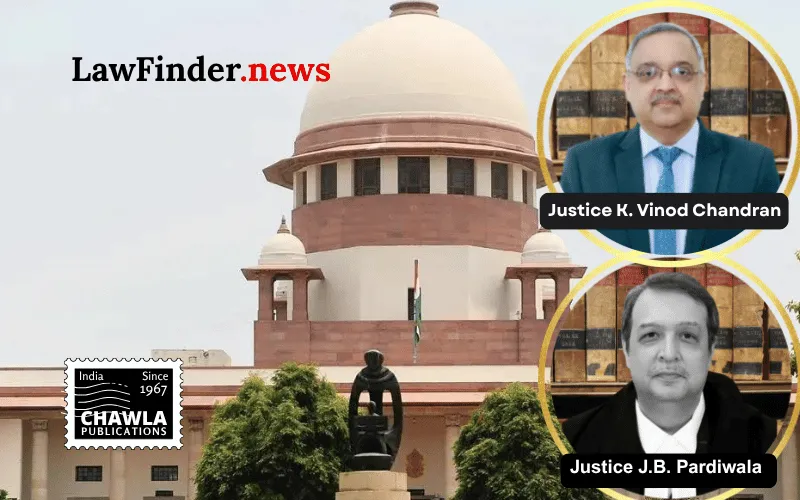
A Bench of Justices J.B. Pardiwala and K. Vinod Chandran was hearing an appeal arising from a construction contract between Modern Asset and KNK Construction Private Limited. The dispute centred on whether KNK Construction, which had been admitted into CIRP, could still be proceeded against in arbitration by the successful resolution applicant for pre-CIRP dues, even though Modern Asset’s own claim had already been filed before the resolution professional and was later settled at only 0.72% under the approved resolution plan.
The Court noted that the contract contained an arbitration clause and that the resolution plan had already been approved by the National Company Law Tribunal. It reiterated the settled position that once a resolution plan is approved, claims against the corporate debtor stand extinguished under the “clean slate” principle. However, the Court drew a clear distinction between claims against the corporate debtor and claims belonging to the corporate debtor itself.
The Bench held that the arbitration agreement survived the termination of the contract and the approval of the resolution plan. It also observed that the successful resolution applicant, stepping into the shoes of the corporate debtor, is entitled to pursue dues owed to the corporate debtor by third parties.
At the same time, the Court found that the creditor, whose claim had already been admitted in the CIRP and substantially reduced under the resolution plan, could not seek any affirmative monetary recovery in arbitration. The only relief available to it would be to raise a counterclaim for the limited purpose of set-off, against any amount that may be found payable to the successful resolution applicant.
The Court said the High Court was right in appointing an arbitrator, but wrong in leaving the effect of the clean slate principle entirely to the arbitral tribunal. Since the legal position was already clear, the Supreme Court modified the order to expressly confine the creditor’s counterclaim to set-off alone.
The Bench also held that the arbitration proceedings were within limitation, excluding the moratorium period under the Insolvency and Bankruptcy Code. It further observed that the fact that the erstwhile promoters had returned as the successful resolution applicants did not alter the legal position, though it did reinforce the need for an equitable adjustment of claims arising from the same contract.
In its final directions, the Court sustained the reference to arbitration but ruled that if any amount is found due from Modern Asset to KNK Construction, the creditor’s counterclaim can be used only to reduce or extinguish that liability, not to generate any independent award in its favour. The Court also left it open to the arbitral tribunal to examine issues relating to the bank guarantee.
Statutory provision(s): Insolvency and Bankruptcy Code, 2016 Sections 18, 19, 21, 29, 30(2), 31, 60(6), 240A, Arbitration and Conciliation Act, 1996 Sections 7, 11, 16, 14
Modern Asset v. KNK Construction Private Limited, (SC) : Law Finder Doc id # 2993208