In a significant ruling, the Court held that breach of the right to be informed of grounds of arrest and detention beyond 24 hours makes arrest unconstitutional; any fresh custody must have judicial approval and strict compliance with procedure.
The Supreme Court on 21 September 2026 delivered an important ruling reinforcing constitutional safeguards against unlawful arrest and detention, holding that an accused who has been released due to violation of Article 22(1) or Article 22(2) of the Constitution cannot be re-arrested at the whim of the investigating agency. Any fresh attempt to take the accused into custody must strictly follow legal procedure and, in cases of breach of Article 22(1), must be backed by judicial sanction and supervisory approval.
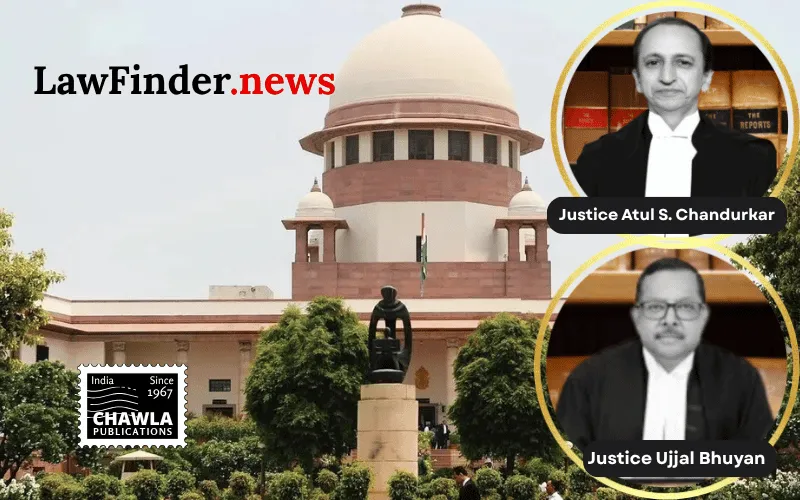
A Bench of Justices Ujjal Bhuyan and Atul S. Chandurkar allowed the appeal filed by Jaskaran Jeet Singh Deol, setting aside the Punjab and Haryana High Court’s order that had refused to restrain the police from seeking his re-arrest. The Court also quashed the Magistrate’s observations that had permitted the investigating agency to proceed in accordance with law after releasing the appellant for non-supply of written grounds of arrest.
The case arose from FIR No. 73/2026 registered in Punjab under the Bharatiya Nyaya Sanhita, 2023 and the POCSO Act. The appellant was arrested on 17 May 2026 but was produced before the Magistrate only the next day, allegedly beyond the 24-hour limit. More importantly, the Magistrate found that the police had failed to furnish written grounds of arrest, in violation of Article 22(1). The appellant was ordered to be released immediately.
The police later filed a fresh custody application and also obtained arrest warrants. The High Court held that the accused could be re-arrested because the earlier release did not create a blanket immunity. The Supreme Court disagreed.
The Court explained that Article 22(1) requires the arrested person to be informed of the grounds of arrest in writing, in a language understood by the accused, and Article 22(2) mandates production before a Magistrate within 24 hours. These are not empty formalities, the Bench said, but fundamental constitutional protections linked to personal liberty under Article 21.
Relying on earlier decisions including Pankaj Bansal, Prabir Purkayastha, Vihaan Kumar, and Mihir Rajesh Shah, the Court reiterated that failure to furnish written grounds of arrest vitiates the arrest and remand. It further clarified that if the investigating agency still believes custodial interrogation is necessary after such release, it must first furnish the written grounds, explain the earlier non-compliance, and move an application before the Magistrate. That application must also carry endorsement from the immediate superior authority. The Magistrate must then decide the request expeditiously, preferably within a week.
On the issue of detention beyond 24 hours, the Court held that illegal detention under Article 22(2) also violates Article 21 and cannot be treated lightly. While the State argued that such violation should not create immunity from future arrest, the Court said any fresh arrest after such a constitutional breach must still comply with law and cannot be automatic or mechanical.
The Bench also noted that compensation may be awarded as a public law remedy for violation of Article 22(2), depending on the facts, without affecting the victim’s private civil remedies.
Setting aside the High Court’s order, the Supreme Court directed that if the State wants custodial interrogation of the appellant, it must follow the procedure laid down in Mihir Rajesh Shah and the present judgment. The Court clarified that it had not expressed any opinion on the merits of the allegations.
The judgment has been directed to be circulated to all Director Generals of Police, High Courts, and State Judicial Academies, underscoring its importance for arrest procedures nationwide.
Statutory provision(s): Constitution of India, 1950 Article 21, Constitution of India, 1950 Article 22(1), Constitution of India, 1950 Article 22(2), Bharatiya Nyaya Sanhita, 2023 Sections 64, 65(1), 351, Protection of Children from Sexual Offences Act, 2012 Section 6, Code of Criminal Procedure, 1973 Section 50(1), Code of Criminal Procedure, 1973 Section 57, Code of Criminal Procedure, 1973 Section 167, Code of Criminal Procedure, 1973 Section 482, Bharatiya Nagarik Suraksha Sanhita, 2023 Section 47, Bharatiya Nagarik Suraksha Sanhita, 2023 Section 58, Bharatiya Nagarik Suraksha Sanhita, 2023 Section 187(2), Bharatiya Nagarik Suraksha Sanhita, 2023 Section 528
Jaskaran Jeet Singh Deol v. State of Punjab, (SC) : Law Finder Doc Id # 2982542