Rules mandating addition of bitterant and colourant to methanol declared arbitrary and disproportionate; Supreme Court Strikes Down Maharashtra's Methanol Regulations as Unconstitutional
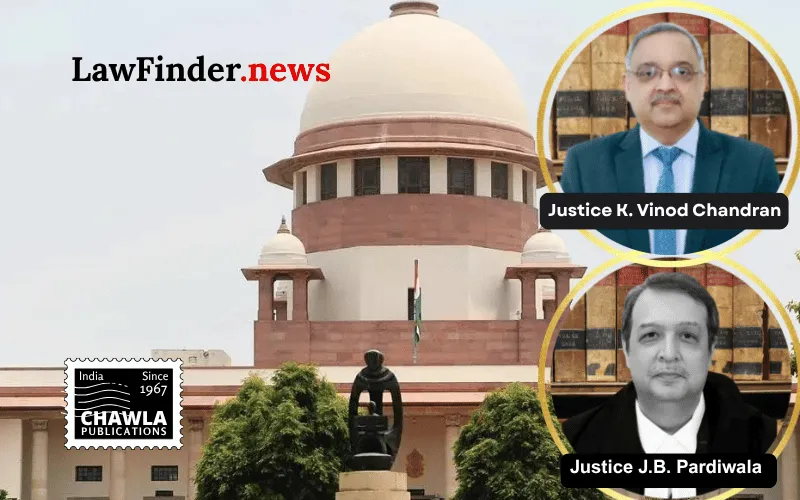
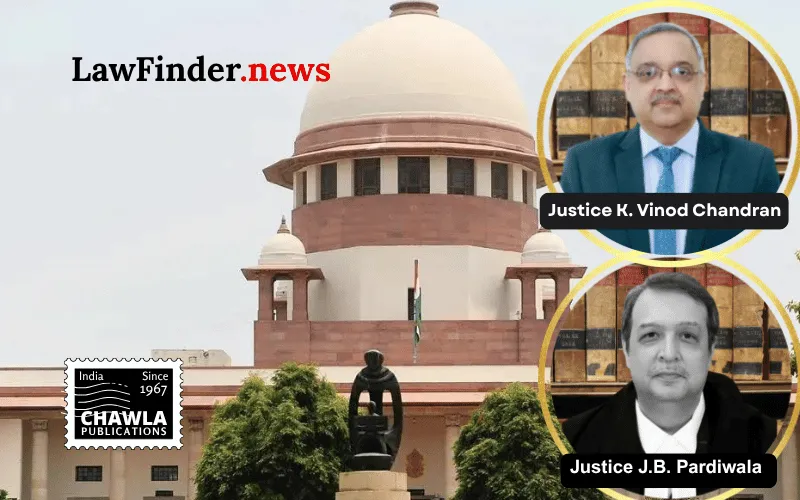
New Delhi, September 18, 2026 — In a landmark judgment, the Supreme Court of India has struck down Rules 18A and 18B of the Maharashtra Poisons Rules, 1972, inserted by the Maharashtra Poisons (Amendment) Rules, 2011, declaring them unconstitutional for violating Articles 14 and 19(1)(g) of the Constitution of India. A bench comprising Justice J.B. Pardiwala and Justice K. Vinod Chandran delivered the ruling in a batch of writ petitions and an appeal filed by chemical and industrial associations challenging the validity of the 2011 amendment notification issued by the Maharashtra government.
Background of the Case
The controversy traces its origins to a devastating hooch tragedy in 1991, when approximately 93 persons lost their lives after consuming spurious liquor laced with methanol at Chhaya Bar in Andheri, Mumbai. In the aftermath, the Maharashtra government constituted a committee under P.R. Parthasarthy to investigate the causes and suggest preventive measures. Acting on the committee's recommendations, the state government amended the Maharashtra Poisons Rules in 2011, inserting Rules 18A and 18B.
Rule 18A(1) required licensees selling methanol to verify that purchasers held a Form A licence before completing any sale. Rule 18A(2) mandated that except when methanol was being purchased for drug manufacturing, a licensee must mix one gram of methylene carmine (a colourant) and four grams of denatonium saccharide (a bitterant) to every 100 litres of methanol before sale. Rule 18B provided for confiscation of methanol found in possession without a valid Form A licence.
Petitioners' Arguments
Challenging these rules, M/s Balaji Formalin Pvt. Ltd., the Chemical and Alkali Merchants Association, and the Indian Chemical Council argued through Senior Advocate Balbir Singh that methanol is a critical industrial raw material used in the manufacture of formaldehyde, disinfectants, paints, resins, and pharmaceutical intermediates. The mandatory addition of colourant and bitterant would render the final products unacceptable to downstream industries, including the pharmaceutical sector. It was also highlighted that the prescribed colourant — methylene carmine — itself contains carcinogenic materials. The petitioners further argued that methanol is already regulated under multiple other legislations, including the Petroleum Rules, rendering the impugned rules both redundant and disproportionate.
State's Defence
The State of Maharashtra, represented by Advocate Anand Dilip Landge, contended that since methanol is colourless and odourless, it can be indistinguishably mixed with potable alcohol, posing grave public health risks. The State argued that the colourant aids visual identification and the bitterant discourages accidental or intentional consumption. The State maintained that the rules merely regulated the sale of methanol and did not prohibit its manufacture or import, and were therefore within the limits of the power conferred by Sections 2 and 8 of the Poisons Act, 1919.
Supreme Court's Findings
The Court categorically rejected the State's arguments. On Rule 18A(1), the Court held that the requirement to verify a Form A licence was unworkable in practice, since Form A licences are issued only to sellers and not to industrial consumers or manufacturers who use methanol as a raw material. The sub-rule rendered Form B permits practically nugatory and disproportionately burdened the industrial sector without serving the stated objective.
On Rule 18A(2), the Court found that the mandatory denaturing requirement lacked a rational and proximate nexus with the objective of preventing hooch tragedies. The Court observed that the major causes of methanol misuse — diversion through unlicensed channels, pilferage, corruption, and the availability of methanol as a cheaper alternative — were entirely unaddressed by the impugned rules. The colourant and bitterant operated only at the regulated point of sale and could easily be masked by anyone manufacturing spurious liquor. The Court noted that several industries including pharma, dyes, and research sectors would be severely impacted, with the bitterant damaging catalysts and the colourant leaving residues unacceptable to end-users including BARC.
On Rule 18B, the Court applied the four-pronged proportionality test from K.S. Puttaswamy v. Union of India (2017) 10 SCC 1 and concluded that while preventing loss of life is a legitimate aim, the confiscation provision was neither suitable nor necessary to achieve that aim. The burden imposed on industries was substantial and continuing, while the benefit was at best a mere possibility.
Comprehensive Guidelines Issued
While striking down the impugned rules, the Court expressed deep concern over recurring hooch tragedies across India, citing recent incidents in Bhavnagar, Gujarat and Sagar, Madhya Pradesh. The Court issued fifteen detailed guidelines for all States and Union Territories, covering inter-departmental coordination between Police, Excise, Transport, Health, and Industries departments; stricter monitoring of methanol transport in sealed, dedicated tankers; periodic reconciliation of methanol stock by licensees; stringent licence renewal procedures; enhanced deaddiction infrastructure; and public awareness campaigns.
The Court directed the Registry to forward copies of the judgment to all High Courts and Chief Secretaries of all States for compliance and implementation.
Bottom Line:
Maharashtra Poisons Rules - Rules 18A and 18B, inserted by the Maharashtra Poisons (Amendment) Rules, 2011, declared unconstitutional for being violative of Articles 14 and 19(1)(g) of the Constitution of India due to manifest arbitrariness, disproportionality, and lack of rational nexus to the intended objective.
Statutory Provision(s):
Article 14 of the Constitution of India, Article 19(1)(g) of the Constitution of India, Article 19(6) of the Constitution of India, Section 2 of the Poisons Act 1919, Section 3 of the Poisons Act 1919, Section 4 of the Poisons Act 1919, Section 5 of the Poisons Act 1919, Section 6 of the Poisons Act 1919, Section 7 of the Poisons Act 1919, Section 8 of the Poisons Act 1919, Rule 3 of the Maharashtra Poisons Rules 1972, Rule 4 of the Maharashtra Poisons Rules 1972, Rule 9 of the Maharashtra Poisons Rules 1972, Rule 10 of the Maharashtra Poisons Rules 1972, Rule 11 of the Maharashtra Poisons Rules 1972, Rule 12 of the Maharashtra Poisons Rules 1972, Rule 14 of the Maharashtra Poisons Rules 1972, Rule 15 of the Maharashtra Poisons Rules 1972, Rule 15A of the Maharashtra Poisons Rules 1972, Rule 18A of the Maharashtra Poisons Rules 1972, Rule 18B of the Maharashtra Poisons Rules 1972, Rule 18C of the Maharashtra Poisons Rules 1972
M/s Balaji Formalin Pvt. Ltd. v. Union of India, (SC) : Law Finder Doc Id # 2981082