Supreme Court Restores Three-Year Practice Requirement, Introduces Transitional Framework with Structured Training
The Supreme Court of India, in a significant ruling, has modified its earlier judgment to restore the requirement of three years' practice at the Bar for candidates aspiring for the post of Civil Judge (Junior Division). The decision comes as part of the Court's efforts to ensure practical exposure for candidates, while also addressing concerns of fairness and accessibility.
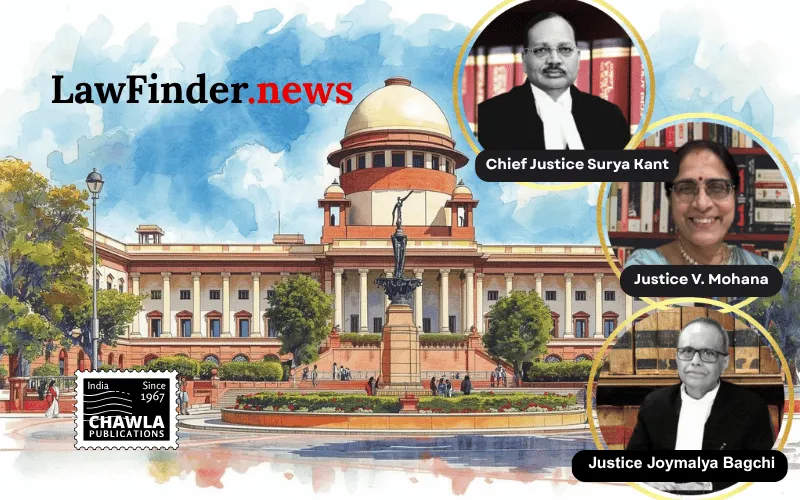
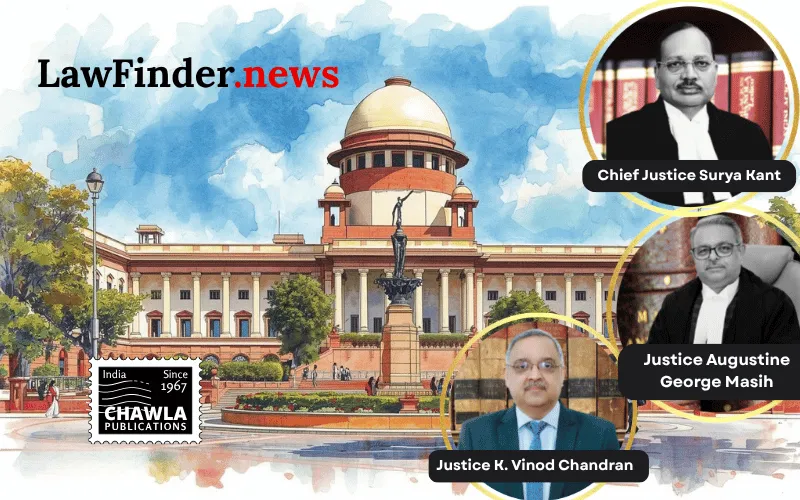
The judgment, delivered by a bench comprising Chief Justice Surya Kant and Justices Augustine George Masih and K. Vinod Chandran, acknowledges the need for candidates to possess practical experience before assuming judicial responsibilities. To balance this requirement with the aspirations of law graduates, the Court has devised a transitional framework.
During the transitional period, all law graduates will be eligible to apply for the position, with a deemed one-year practice period. Selected candidates will undergo structured training at State Judicial Academies, followed by a year of supervised law clerkship. This approach aims to equip candidates with necessary courtroom exposure and judicial skills.
The Court's decision also considers the impact on marginalized groups, emphasizing uniform eligibility conditions while allowing alternative structured legal engagement forms. The Supreme Court has retained supervisory jurisdiction over judicial recruitment policies, mandating periodic reviews to assess the effectiveness of the modified scheme.
This ruling modifies the Court's previous stance, which had removed the practice requirement, citing concerns about the readiness of fresh graduates to handle judicial duties effectively. The new framework seeks to bridge the gap between theoretical knowledge and practical application, ensuring a competent and independent judiciary.
Bottom Line:
Eligibility for Judicial Services - Supreme Court modifies its earlier judgment restoring the requirement of three years' practice at the Bar for the post of Civil Judge (Junior Division) and prescribes a transitional framework, allowing all law graduates to apply for the post during the transitional period while undergoing structured training and law clerkship.
Statutory provision(s): Article 233(2) of the Constitution of India, Continuing Mandamus, Service Law provisions concerning persons with disabilities and economically weaker sections.
Bhumika Trust v. Union of India, (SC) : Law Finder Doc id # 2964515